From Concept to Landmark: The Ultimate Guide to Custom Stainless Steel Sculpture Fabrication
Table of Contents
In modern urban landscapes, high-end commercial displays, and cutting-edge architectural and interior design, stainless steel sculptures have long transcended the traditional category of “artworks.” With their unique metallic luster, boundless spatial tension, and exceptional weather resistance, they have become visual focal points that bridge architecture, space, and human warmth. Whether it’s a mirror-finished landmark towering over a commercial plaza or a rippling water-wave art installation embedded in the lobby of a luxury hotel, stainless steel sculptures use a modern, fluid language to express the sophistication of a space.
However, perfectly transforming a wildly imaginative design concept into a three-dimensional landmark is no simple task. It requires not only a precise understanding of the properties of materials such as 304 and 316 stainless steel but also relies heavily on artisans’ masterful hand-forging and seamless welding techniques. This article will take you on a comprehensive and in-depth exploration of the unique charm of custom stainless steel sculptures—from surface treatments and material selection to core manufacturing processes—to help you perfectly realize your next great spatial vision.
The Soul of Vision: Surface Finishes
The ability of stainless steel artworks to blend seamlessly with various architectural styles depends largely on their diverse surface treatment techniques. Surface treatment is the “skin” of a sculpture; it determines how the sculpture interacts with the surrounding light, environment, and viewers.
| Surface Finishes | |
|---|---|
| Mirror Polishing | Extremely high reflectivity, with a modern and futuristic look that blends seamlessly into the surroundings |
| Brushed | Subtle texture (hairline/vibration pattern), understated luxury, timeless appeal |
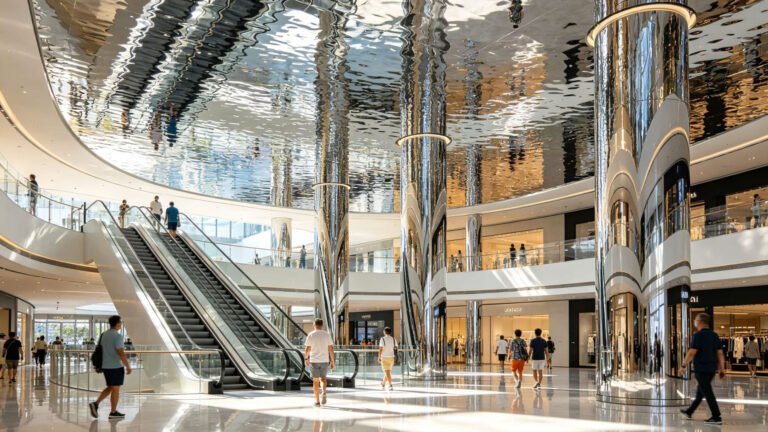
| Water Ripple | Dynamic rippling visual effect, rich in depth and dimension; the top choice for high-end interiors and water features |
| Perforated Design | Light and shadow effects with translucency, light and airy, the centerpiece of nighttime light shows |
Mirror Polishing
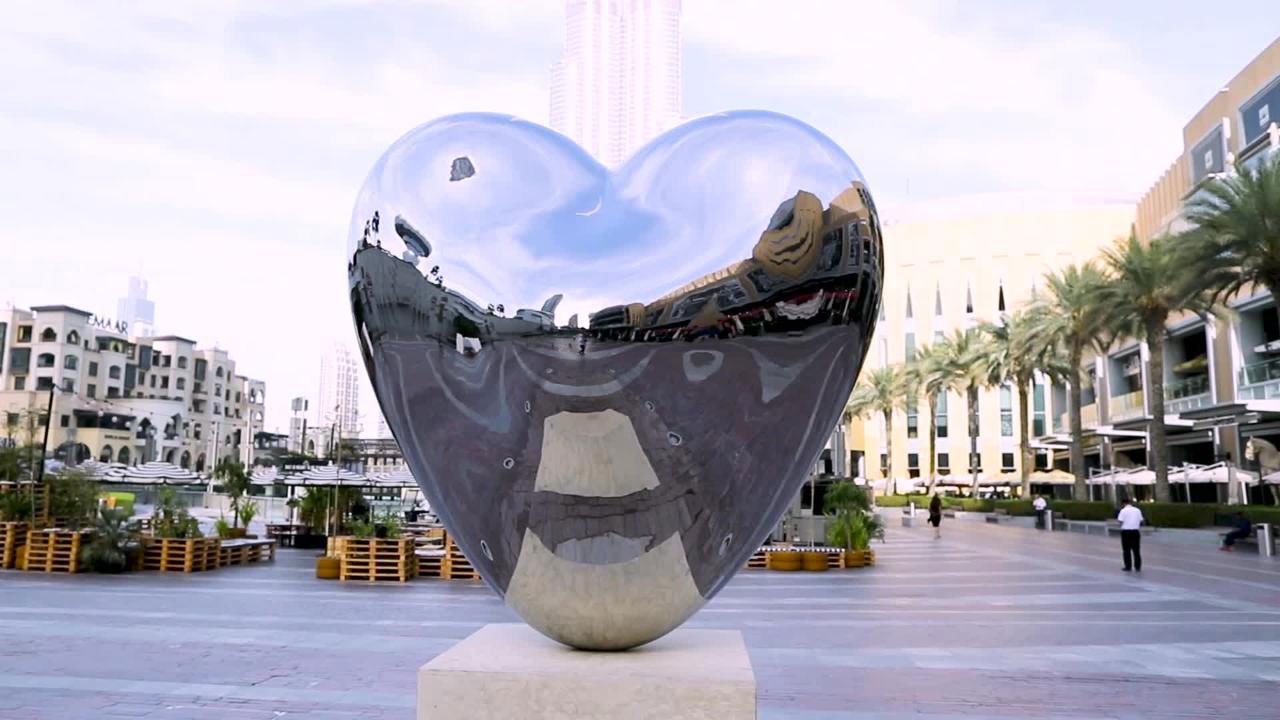
Mirror polishing is the most classic form of artistic expression in stainless steel sculpture. Through a progressive process of grinding and polishing (typically achieving an 8K mirror finish), the stainless steel surface can exhibit an extremely high reflectivity, much like the surface of water.
- Aesthetic Effect: The mirror-polished sculpture itself appears “invisible,” reflecting the sky, white clouds, surrounding greenery, and passing pedestrians onto its surface. As time and seasons change, the sculpture’s visual appearance undergoes constant, dynamic transformations.
- Design Applications: With its distinctly futuristic and high-tech aesthetic, it is the top choice for landmark sculptures in city center plazas, technology parks, and modern commercial complexes.
Brushed: Hairline or Vibration
If you want your sculpture to exude a sense of calm, understated elegance without being glaring, the brushed finish is the perfect choice.
- Hairline: The surface features continuous, uniform, and straight, fine, thread-like lines. It reflects a soft, linear luster.
- Vibration/Distressed: Through irregular rotational polishing, countless tiny overlapping circular textures are formed on the surface. This texture is highly effective at concealing fingerprints and fine scratches.
- Aesthetic Effect: It reduces direct glare from strong light, creates a richer texture, and exudes a strong sense of industrial aesthetics and modern, understated luxury.
Water Ripple
As a “darling of the design world” in recent years, water-ripple stainless steel has revolutionized the visual experience in the field of sculpture.
- Aesthetic Effect: It combines the bright, reflective surface of stainless steel with a three-dimensional, textured finish. When light hits it, it creates a shimmering, rippling visual effect that resembles flowing water. This infuses the cold metal with a natural vitality and sense of movement.
- Design Applications: It is particularly well-suited for use as accent walls in luxury hotel lobbies, as water outlet features in water features, or as art installations in high-end private clubs.
Perforated Design
Using CNC punching or laser cutting technology, holes are arranged in specific patterns on stainless steel sheets.
- Aesthetic Effect: The perforated pattern breaks away from the inherent heaviness of metal, creating a sense of “breathability” and lightness. During the day, sunlight filters through the holes, casting dappled patterns of light and shadow; at night, when combined with the sculpture’s built-in LED lighting system, the sculpture instantly transforms into a dazzling work of light and shadow art.

Material Selection: Balancing Performance & Budget
In the specifications for mirror stainless steel sculptures, the choice of material directly determines the sculpture’s lifespan, corrosion resistance, and overall budget. The two most common materials on the market are AISI 304 and AISI 316.
304 Stainless Steel: The Gold Standard for Value
- Properties: 304 stainless steel contains 18% chromium and 8% nickel, offering excellent corrosion resistance, good formability, and outstanding weldability.
- Suitable Applications: Outdoor plazas, park landscapes, commercial decorative installations in most inland cities, and all indoor decoration projects.
- Budget Advantages: With a relatively moderate price, it is currently the most widely used and cost-effective standard material in stainless steel sculpture manufacturing.
316 Stainless Steel: The Worry-Free Choice for Extreme Environments
- Properties: 2–3% molybdenum (Mo) is added to the 304 composition. This gives 316 stainless steel exceptional resistance to pitting and crevice corrosion in chloride-containing (e.g., saline) and acidic environments. 316L is a low-carbon variant that is less prone to intergranular corrosion after welding.
- Suitable Environments: Coastal cities (exposed to sea breezes and salt fog), beach resorts, the interiors of musical fountains containing chemical purifiers, and areas with severe industrial pollution.
- Budget Considerations: While the cost is higher than that of 304, it ensures that sculptures will not rust or fade for decades in harsh environments, significantly reducing long-term maintenance costs.
In the early stages of a project, we provide customized material solutions based on the specific geographic location of the client’s project (whether it is located near the coast), the installation environment (whether it will be exposed to water features), and the budget cap, ensuring optimal use of the budget while meeting service life requirements.
The Craftsmanship: 8 Core Steps of Fabrication
An exceptional custom metal sculpture is by no means a cold, mass-produced item from an assembly line; rather, it is the result of a deep integration of modern digital technology and traditional handcrafted forging techniques. To achieve the perfect “double-curved surface” effect, our production process follows these extremely rigorous steps:
01
3D Modeling / Drawing Review
02
Foam Molding / 3D Printing
03
Surface Panel Marking
04
Laser Cutting
05
Hand-Forged Comparison
06
Full-Weld Assembly & Shaping
07
Multi-stage Sanding & Polishing
08
PVD / Powder Coating
We use necessary cookies to operate this website. With your consent, we also use analytics and advertising cookies to measure traffic and campaign performance. Read our Cookie Policy and Privacy Policy.
Whether an internal frame is required depends on the sculpture’s dimensions and design. All internal carbon steel frameworks have undergone rigorous anti-corrosion coating treatment to ensure that the entire sculpture possesses exceptional resistance to wind loads and vibrations, as well as excellent self-supporting capacity.
From 2D to 3D—Digital Verification of 3D Models
All manufacturing begins with a precise interpretation of the design. Once a client provides a flat image, design sketch, or CAD concept drawing, our digital engineering team uses professional software such as Rhino, ZBrush, or SolidWorks to create high-precision 3D digital models. Through multi-angle renderings, clients can visually preview the sculpture’s proportions and lines before production begins.
Bringing Concepts to Life—Foam Molds and 3D Printing
Once the 3D drawings have been finalized and approved by the client, we import the digital data into a CNC engraving machine.
- For large-scale sculptures, we carve high-density foam molds (EPS molds) at a 1:1 scale.
- For complex, small-scale artworks that require extremely high precision, we use 3D printing technology to create rigid molds.These physical molds serve as an indispensable “absolute reference standard” for the subsequent hand-forging stage.
Deconstructing Art—Scientific Segmentation of the Stainless Steel Skin
Stainless steel sheets are inherently flat; to achieve smooth curves and hyperbolic surfaces, they must undergo a scientific “deconstruction.” Based on the sculpture’s structural load-bearing requirements and the direction of its curves, our engineers use 3D software to scientifically divide the entire sculpture’s skin into countless irregular “small panels” and unfold them into two-dimensional drawings.
Precision Cutting— Laser Cutting
Using an ultra-high-power fiber laser cutting machine, high-quality stainless steel sheets ranging in thickness from 1.2 mm to 3.0 mm are precisely cut according to the unfolded two-dimensional drawings. Laser cutting ensures that the edges of each stainless steel sheet are smooth and burr-free, laying a perfect foundation for subsequent seamless welding.
The Essence of Craftsmanship—Hand-Forging and Ultimate Double-Curved Surface
This is the core stage of the entire manufacturing process that most tests craftsmanship and requires the most labor hours.
- Hand-Forging: Experienced forging masters, armed with specialized tools, manually hammer and adjust the heat of each cut stainless steel sheet tens of thousands of times, following the curves of the foam model.
- Repeated Comparison: The craftsmen constantly place the steel sheets being forged onto the foam mold to check their fit. Whether a section is too high or too low is determined solely by the naked eye and decades of tactile experience. Through tireless repetition of comparison and fine-tuning, they ensure that the curvature of each sheet perfectly matches the original design on a 1:1 scale, thereby achieving exceptionally smooth and natural hyperbolic surface lines.
Seamless Assembly—Welding and Structural Correction
Once all the individual steel plates have been forged and fitted seamlessly to the mold surface, the master welders take over. They use TIG welding to perform spot welding for positioning, followed by full-perimeter welding. During the welding process, temperature must be strictly controlled to prevent localized deformation of the stainless steel plates caused by thermal expansion and contraction.
Rebirth Through Refinement—Multiple Rounds of Meticulous Sanding and Polishing
The surface of a freshly welded sculpture is covered with black weld seams and burn marks. The sanding master uses lath wheels, sandpaper, and cloth wheels of varying grits, undergoing as many as a dozen sanding processes—from coarse to fine to precision sanding.
- Objective: To thoroughly smooth out all raised weld seams, making the joints between panels completely disappear.
- Result: Whether touched or viewed, the entire sculpture appears as if cast from a single piece, with no trace of artificial assembly.
Color Enhancement—PVD Coating or Powder Coating (Optional)
If the client’s design has specific color requirements, the sculpture will undergo color treatment after polishing is complete:
- PVD Coating: In a high-vacuum chamber, titanium metal is ionized and deposited onto the sculpture’s surface. This process can produce luxurious, highly metallic finishes such as champagne gold, rose gold, black titanium, and sapphire blue.
- Powder Coating / Painting: Suitable for highly saturated, custom colors (such as bright red or vivid yellow). We use high-grade, eco-friendly outdoor-grade paint that is baked at high temperatures to ensure the color remains vibrant and durable even when exposed to the elements outdoors.
Inspiring Application Scenarios
Thanks to their remarkable adaptability to any space, landscape stainless steel sculptures can enhance virtually any type of modern space. Here are the four most common applications:
Urban Landmarks & Public Parks
In spacious city squares, green belts at intersections, or large municipal parks, large modern metal art sculptures often serve as “city landmarks.” Their massive scale, combined with their mirror-like reflections, easily draws the eye and enhances the city’s modern feel and artistic atmosphere.
Commercial Plazas & Real Estate Frontages
High-end shopping malls, plazas in front of office building lobbies, and sales offices for luxury residential developments are the most common locations forcommercial metal sculptures. A highly creative and interactive sculpture—such as a modern piece incorporating flowing water, lighting, or bubble installations—can quickly become a “viral photo spot” on social media, driving significant foot traffic and enhancing brand value for commercial spaces.
Luxury Hotel Lobbies & Indoor Atriums
In interior spaces, decorative stainless steel sculptures often take on more refined and delicate forms. For example, streamlined artistic stainless steel installations suspended from the atrium ceiling, or artistic stainless steel feature walls with a rippled finish placed behind the reception desk. Under the soft glow of sophisticated interior lighting, the light refracted by the metal instantly enhances the sense of luxury throughout the entire space.
Corporate Headquarters & Tech Parks
Headquarters buildings of modern companies—especially those in the technology, finance, and new energy sectors—often feature abstract geometric stainless steel sculptures that exude a sense of power and speed. Not only do these sculptures perfectly highlight the companies’ innovative and forward-thinking corporate culture, but their modern, high-tech aesthetic also complements the modernist glass curtain-wall architecture.

Conclusion
A perfect stainless steel sculpture is the perfect fusion of a designer’s boundless imagination and a manufacturing facility’s masterful craftsmanship. From the initial 3D digital model, to the tens of thousands of crisp hammer strikes during hand-forging, to the radiant luster achieved after final polishing, every step embodies our unwavering pursuit of quality.
Whether you are an architect planning a city landmark or an interior designer seeking a striking accent for a luxury hotel, JYF METAL is committed to providing you with a one-stop, end-to-end custom solution—from 3D drawing development and professional material recommendations to 1:1 precision hand-forging, as well as international safety crate packaging and overseas logistics. Let us use the strength and elegance of stainless steel to forge timeless spatial art for your next great project.