Corten Steel for Landscape & Sculpture: Why Architects Love the "Rusty" Look?
Table of Contents
In modern landscape design, there is a material that defies convention: covered in rust, yet regarded as the epitome of luxury and avant-garde; appearing weathered and aged, yet indestructible. This is weathering steel ( Corten Steel ).
When clients first encounter weathering steel landscapes or sculptures, they often ask, “Isn’t this just rusty sheet metal? Why is it so expensive?” Or, “Will it just keep rusting until it falls apart?” As JYF METAL, a company with years of deep expertise in the custom metal industry, we need to dispel these misconceptions. Weathering steel is not ordinary scrap metal; it is an artistic material that “uses rust to prevent rust.” This article will take you on an in-depth exploration of the logic behind weathering steel’s application in landscape sculpture and explain why it has become a “favorite” among the world’s top designers.
Hardcore Science Explained: What Exactly Is Weathering Steel?
We need to make it clear to our clients that the technical name for weathering steel (Corten Steel) is atmospheric corrosion-resistant steel.
The Chemical Logic of “Rust-Preventing Rust”
When ordinary steel rusts, the rust layer is porous and absorbs water like a sponge, thereby accelerating internal corrosion. However, after adding alloying elements such as copper, chromium, and nickel, weathering steel forms a dense, amorphous oxide layer (a rust-red film) on its surface.
- Self-healing Properties: This film adheres tightly to the substrate’s surface, blocking further intrusion of oxygen and moisture. Even if the surface is scratched, it will automatically repair itself under natural conditions, regrowing a new rust layer.
- Longevity Advantages: In landscape applications, weathering steel typically lasts 5–8 times longer than ordinary carbon steel and requires no coating protection.
The Evolution of Color: Time Is the Best Colorist
The most fascinating aspect of weathering steel lies in its“color-changing phase”.
- Initial Stage: Resembles ordinary yellow steel plates.
- Intermediate Stage (1–3 years): The color gradually shifts to a bright orange-yellow or reddish-brown.
- Mature Stage (5–10+ years): It eventually stabilizes into a deep chocolate brown or dark purple.
This ability to change color over time gives landscape sculptures a sense of life.
3 Core Applications of Weathering Steel in Landscape Design
Retaining Walls & Steps
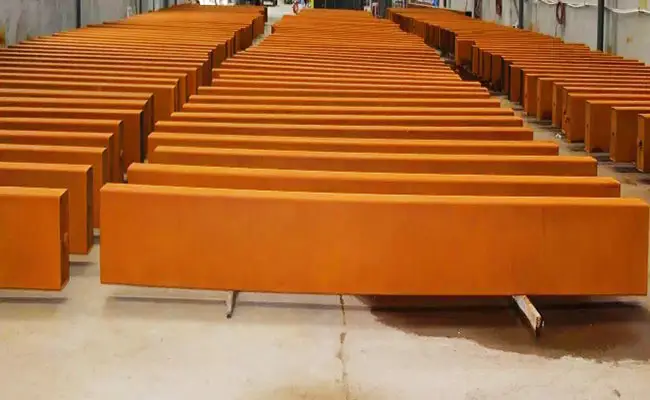
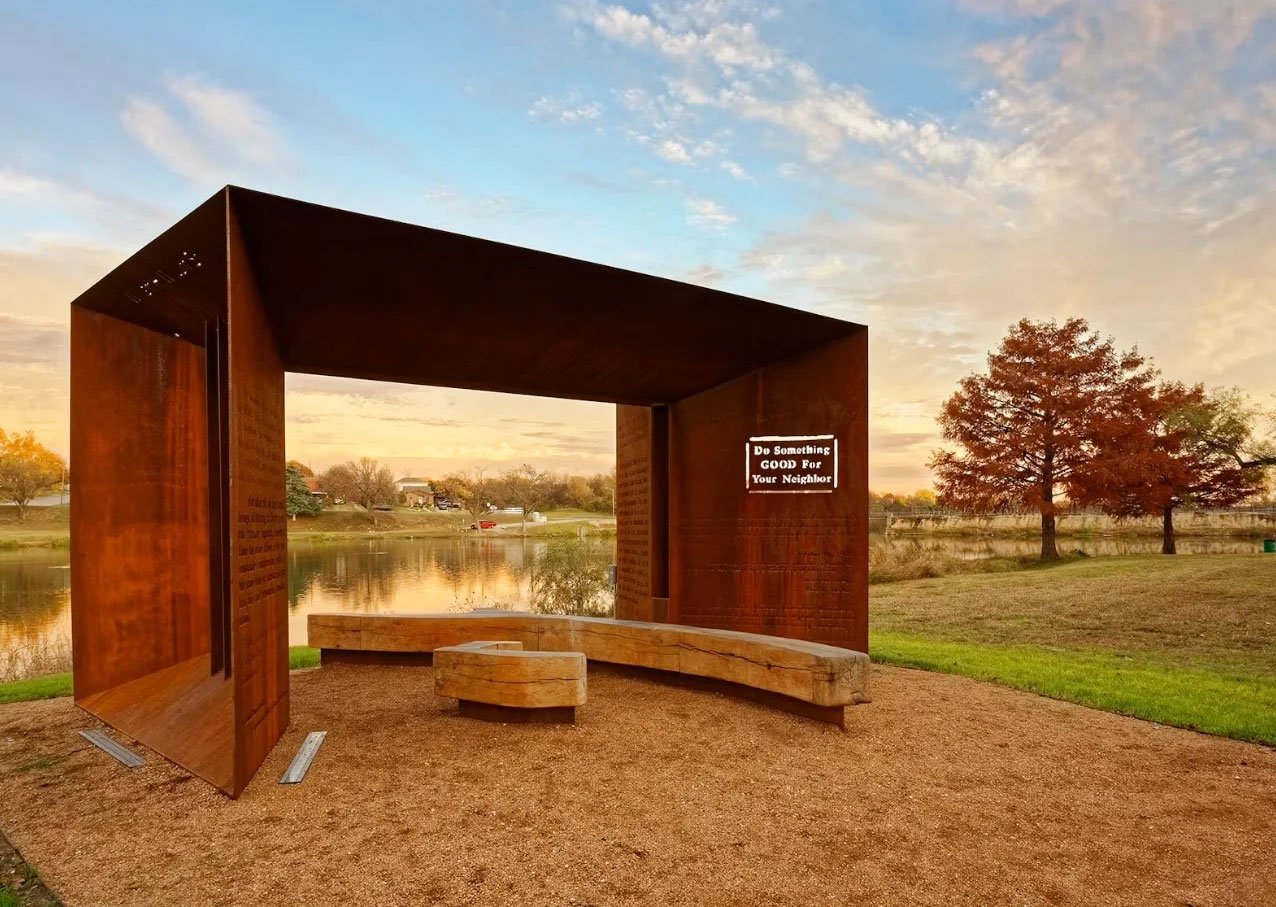
In sloped landscapes, weathering steel retaining walls—due to their thin profiles (typically 6mm–10mm in thickness yet capable of achieving extremely high strength)—can save a significant amount of space compared to heavy concrete walls.
- Visual Contrast: When rust-red steel plates meet green vegetation and gray gravel, the resulting color contrast creates a striking visual tension.
Art Sculptures and Installations
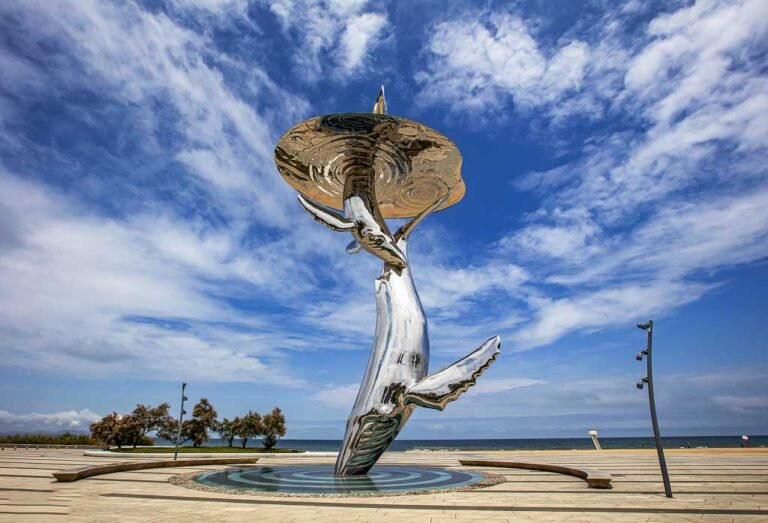
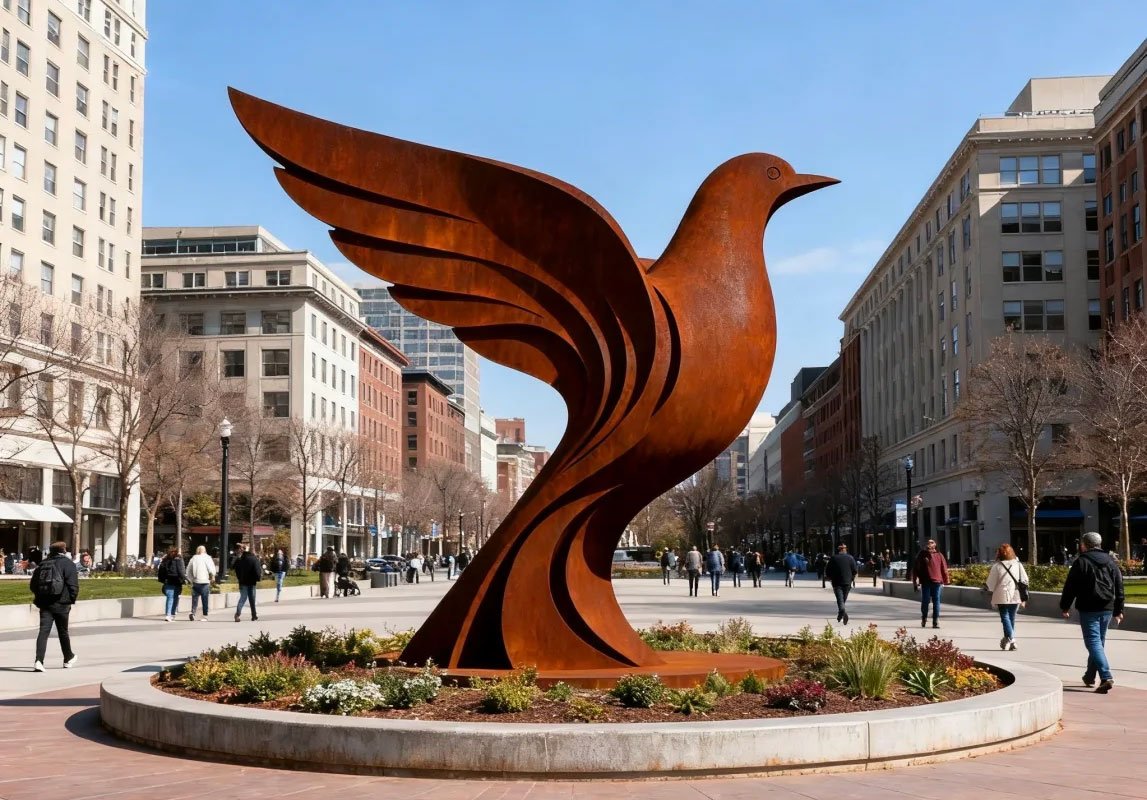
Due to weathering steel’s excellent ductility and weldability, it is ideally suited for creating large-scale, irregularly shaped sculptures.
- Industrial Aesthetics: Whether abstract geometric forms or intricate openwork patterns, weathering steel imbues sculptures with a sense of “post-industrial” weight and substance.
Building Facades and Fencing
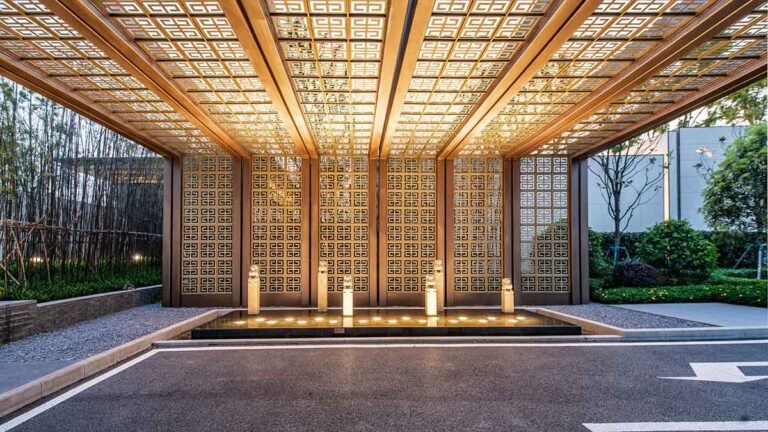
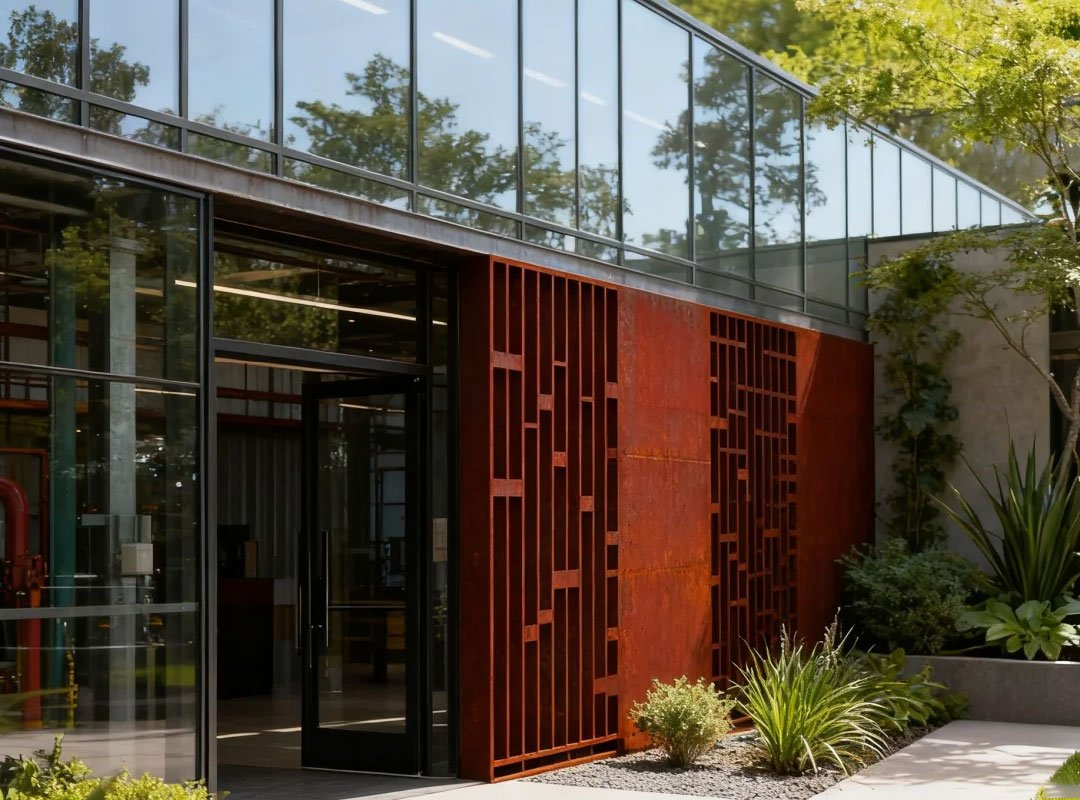
In high-end villas or public spaces, weathering steel fencing not only provides privacy, but its unique laser-cut openwork patterns, when illuminated at night, create a dreamlike and ethereal play of light and shadow.
Natural Rusting vs. Artificial Rust Induction
This is the area where disagreements most frequently arise during business discussions.
Option A: Natural Rusting (The Art of Waiting)
If the project is not time-sensitive, we recommend allowing the metal to age naturally outdoors. This method produces the thickest and most uniform rust layer.
- Disadvantages: Long cycle (6–12 months), and in the early stages, rust runoff may wash away with rainwater, contaminating the ground.
Option B: Artificial Rust Acceleration
Most engineering clients cannot wait that long. JYF METAL possesses mature chemical rust-acceleration technology.
- Process: Sanding and degreasing -> Multiple applications of specialized rust-accelerating agent -> Moist curing -> Drying and stabilization.
- Results: The steel plate can achieve a perfect reddish-brown color within 24–48 hours.
A Critical Detail—How to Handle “Rust Water Stains”?
This is a pitfall that many unprofessional factories avoid mentioning: In the early stages of rusting, rust water can stain the surrounding light-colored floor tiles or marble red.
Surface Sealing Treatment
To solve this problem, JYF METAL offers a “Spray Sealing Agent” service.
- Principle: Once the rust color meets the client’s requirements, a layer of transparent, matte sealing agent is sprayed onto the surface.
- Function: It acts like a raincoat for the sculpture, locking in the color while preventing rainwater from washing the rust stains onto the ground.
- Note: Weathering steel treated with this sealing agent will darken slightly, developing a lustrous texture.
Tips for Overseas Buyers on Product Selection and Avoiding Pitfalls
When exporting weathering steel products, we must remind our customers of the following points:
Avoid “Fake Weathering Steel”
There are many products on the market that use ordinary steel plates (Q235) coated with rust-colored paint to pass themselves off as weathering steel. Such products will completely deteriorate within two years. We insist on using standard SPA-H or Q355NH grades.
Drainage Design
Proper drainage must be ensured behind landscape retaining walls. Although weathering steel is corrosion-resistant, if it remains submerged in stagnant water for extended periods, the rust layer cannot dry, preventing the formation of the protective oxide film.
Welding Joint Treatment
Specialized weathering steel welding wire must be used. If ordinary welding wire is used, the color of the weld seam will become extremely dark or light due to electrochemical reactions, and the weld is prone to cracking prematurely.
Environmental Variations
For projects located within 500 meters of the coast, the formation of the weathering steel’s oxide layer accelerates, but the material is also more susceptible to salt spray corrosion. In such environments, the selected thickness must include an additional allowance of at least 2 mm.
Long-Term Maintenance—Is It Really “Zero Maintenance”?
Although it’s marketed as zero maintenance, as experts, we’d like to offer some more objective advice:
- Remove Debris: Leaves and dirt that accumulate at the base of the sculpture should be cleared away regularly. Debris left to sit in damp conditions over time can corrode the steel plate.
- Inspect the Sealing Coat: If the surface has been sealed, we recommend inspecting it every 2–3 years. If the color has faded significantly, reapply a coat of sealing oil to restore it to its original luster.
Conclusion
Weathering steel landscaping is not merely an engineering product. It is a work of art that embodies the passage of time. It undergoes subtle shifts in hue as the seasons change and humidity fluctuates.
At JYF METAL, we operate a complete production line encompassing laser cutting, high-precision welding, hand polishing, and professional rust-aging and color-sealing processes. Whether you need a small fire pit for a private garden or a massive weathering steel sculpture for a city plaza, we can provide the most scientifically sound structural detailing and surface treatment solutions.
Choosing weathering steel means embracing an aesthetic that coexists with nature and befriends time.
Popular Post: