Stainless Steel Feature Wall Cladding:A Complete Guide For Commercial Interior Projects
Table of Contents
For high-end commercial interior projects, feature wall cladding sets the tone for the whole space. Architects and project owners are constantly searching for durable, customized metal wall solutions that can deliver unique visual statements. Stainless steel feature wall cladding covers multiple decorative panel options, including hammered stainless steel sheets, antique copper stainless steel sheets, patina panels and water ripple sheets. This practical guide breaks down material selection, texture styles, project considerations and installation tips for stainless steel feature wall cladding for global commercial fit-outs.
Why Stainless Steel Feature Wall Cladding Is Widely Used
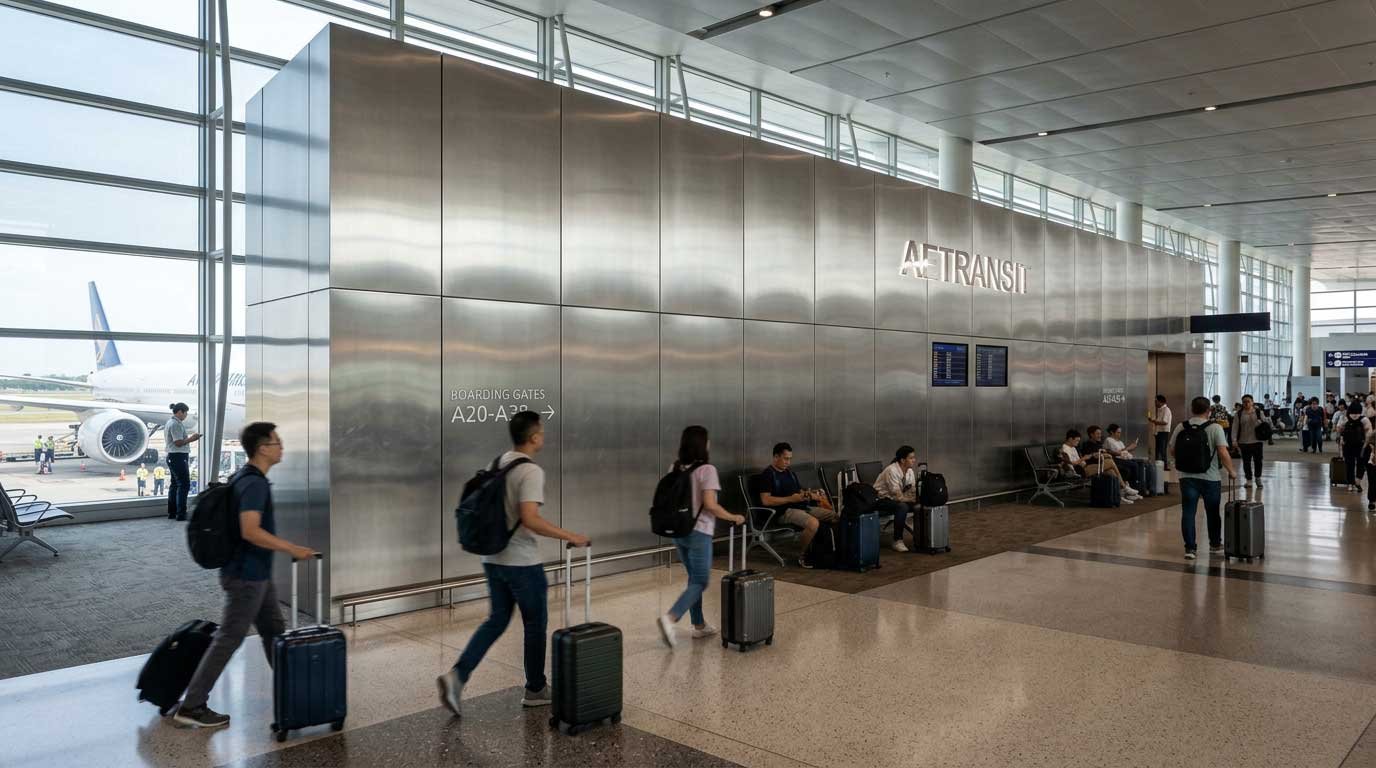
Commercial spaces including hotel lobbies, high-end restaurant receptions, office accent walls and flagship retail stores need wall cladding that looks great, lasts long and is easy to maintain.
Traditional stone, paint and wood finishes do not perform well in busy areas. Stainless steel feature wall panels fix most of these common issues.
Core Advantages For Commercial Project Background Wallsg
- Flexible design options: Stainless steel can be made into dozens of different textures and surface finishes.Designers may choose hand-hammered surfaces, antique copper patina, aged bronze look, laser-cut perforated patterns or 3D water ripple panels to match various design ideas.
- Long lifespan: Quality-grade stainless steel (304/316L) stands up to scratches, knocks and corrosion. For indoor walls, the decorative surface stays intact for decades and needs very little maintenance.
- Custom sizing:Panels can be cut, bent and sized to create large seamless feature walls. Making panels in separate sections makes overseas shipping and on-site installation much easier for large international projects.
- Fire safety compliance:Stainless steel will not burn. It satisfies strict fire safety standards for public commercial buildings, hotels and shopping malls.
Common Project Types Using Stainless Steel Feature Wall Cladding
This wall cladding system is widely specified for global commercial fit-out projects, especially:
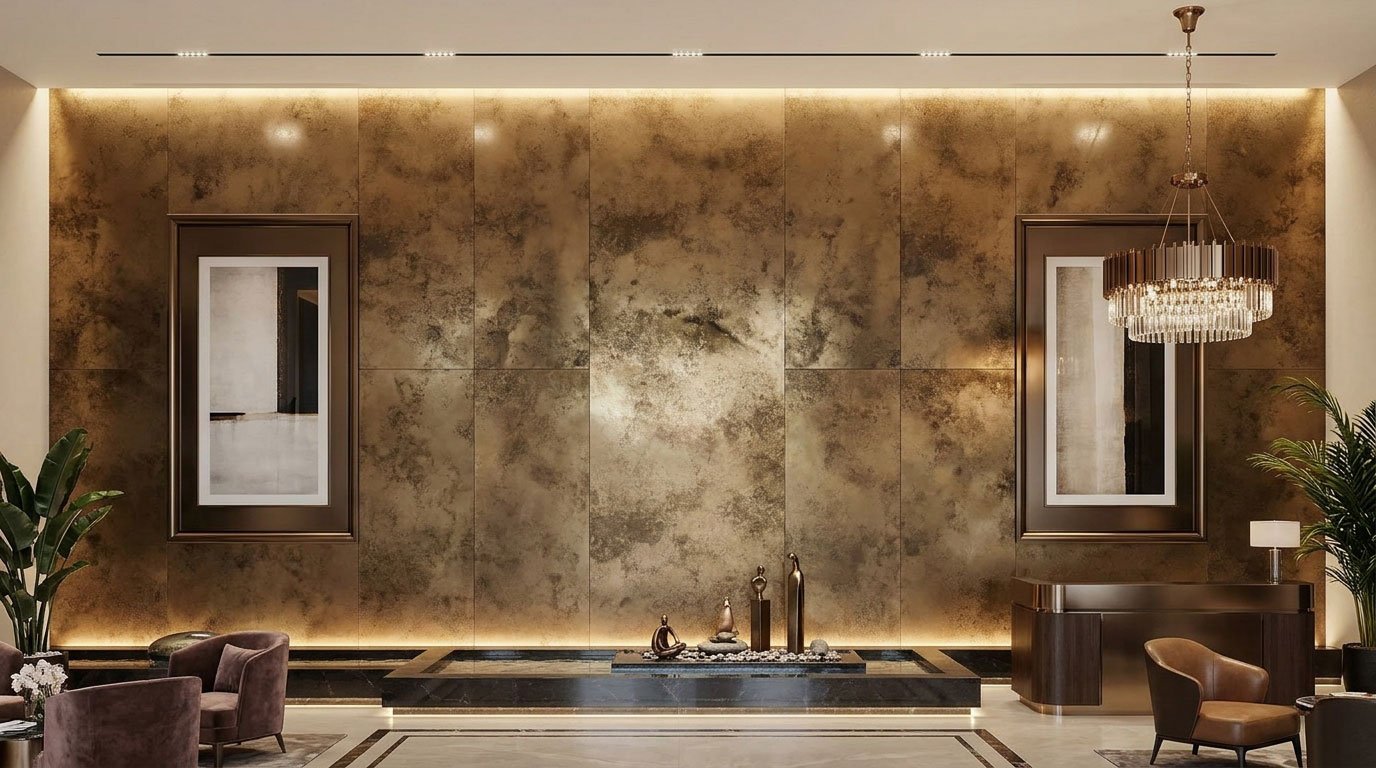
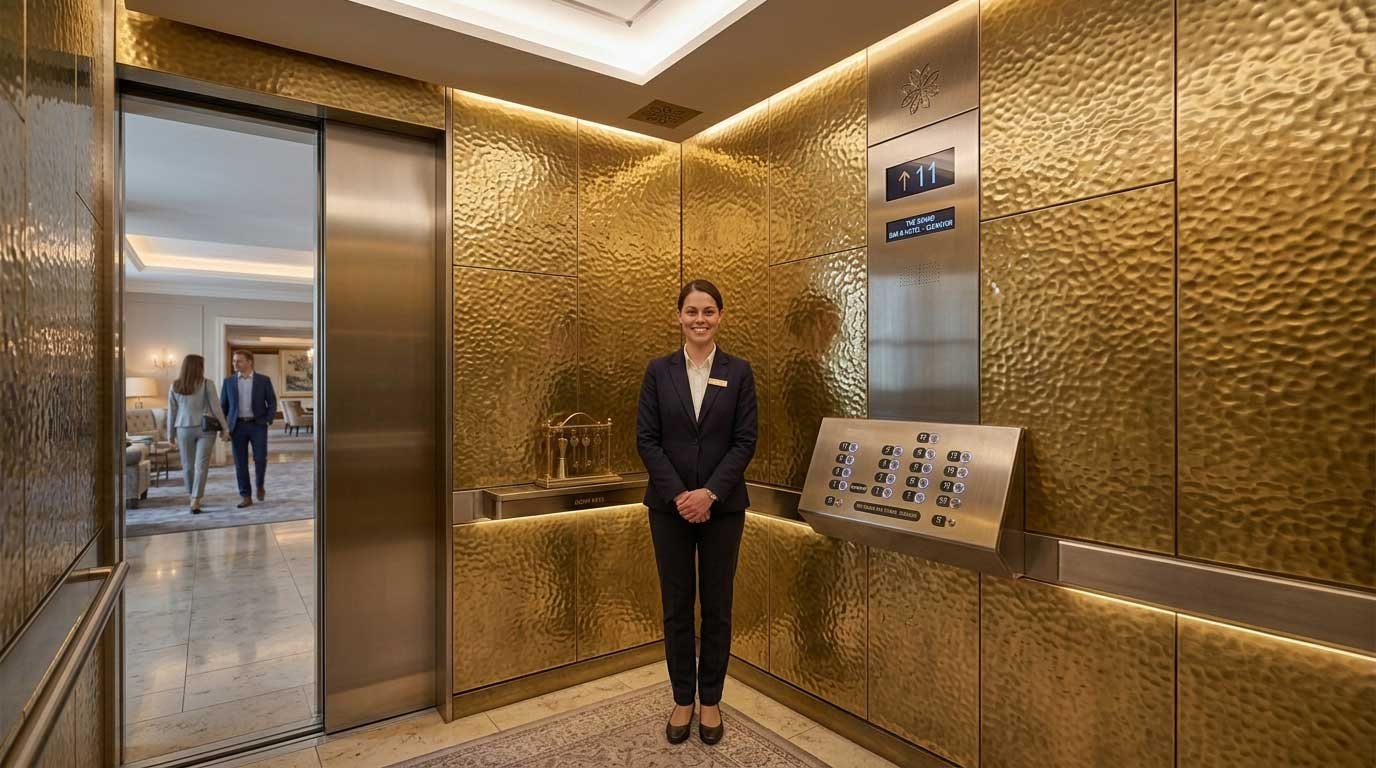
- Luxury hotel lobby main background walls and elevator lobby accent walls.
- High-end restaurant reception walls, private dining room feature walls.
- Corporate office reception background walls and conference room decorative walls.
- Retail flagship store front and interior brand feature walls.
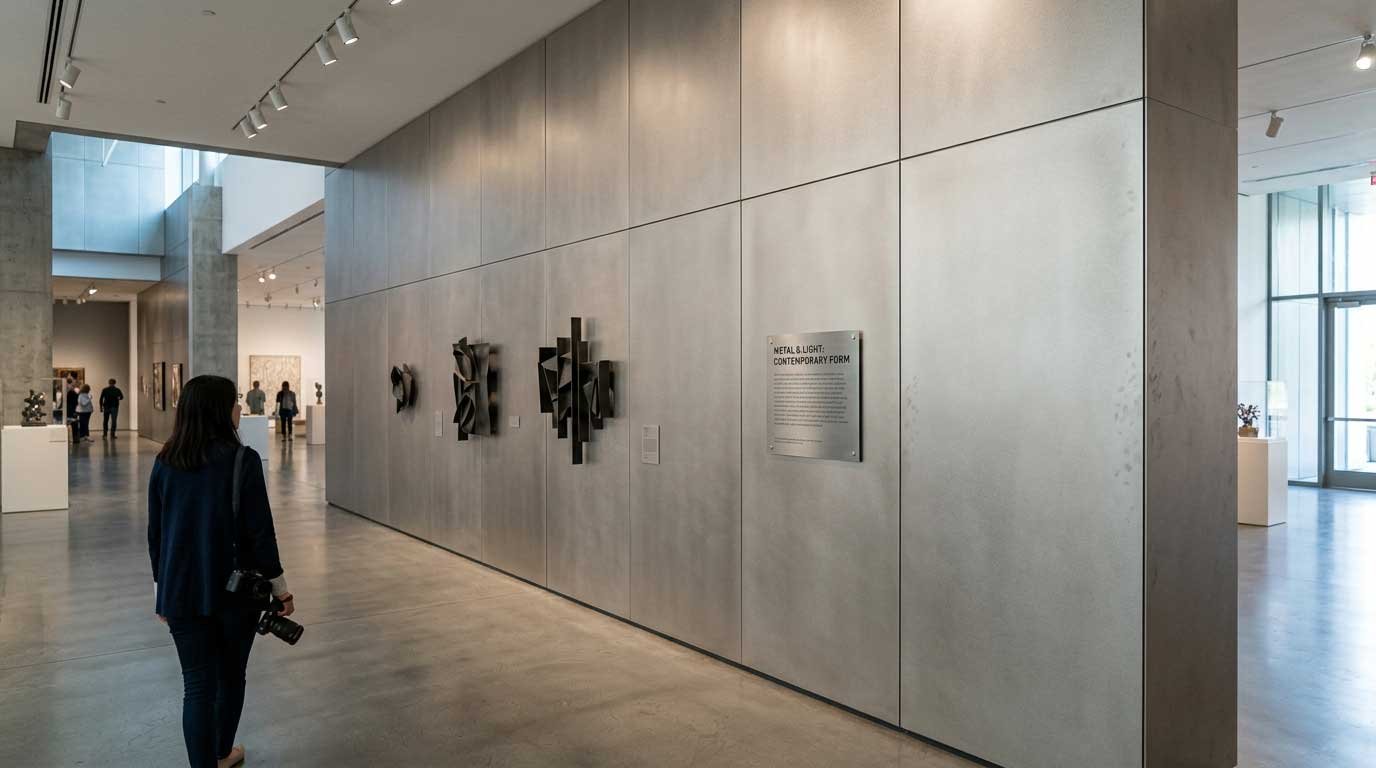
- Spa, club and museum interior decorative wall projects.
JYF METAL provides custom stainless steel feature wall cladding fabrication for international commercial interior projects, supporting multiple textures and finishes for large-scale background wall engineering.
Main Stainless Steel Panel Types For Feature Wall Cladding
Different design themes call for different metal panel styles. Below are the most popular stainless steel decorative sheets commonly used for commercial background wall projects.
Table 1 · Comparison of common stainless steel background wall decorative sheets
| Panel Type | Core Visual Character | Best For Commercial Feature Wall |
|---|---|---|
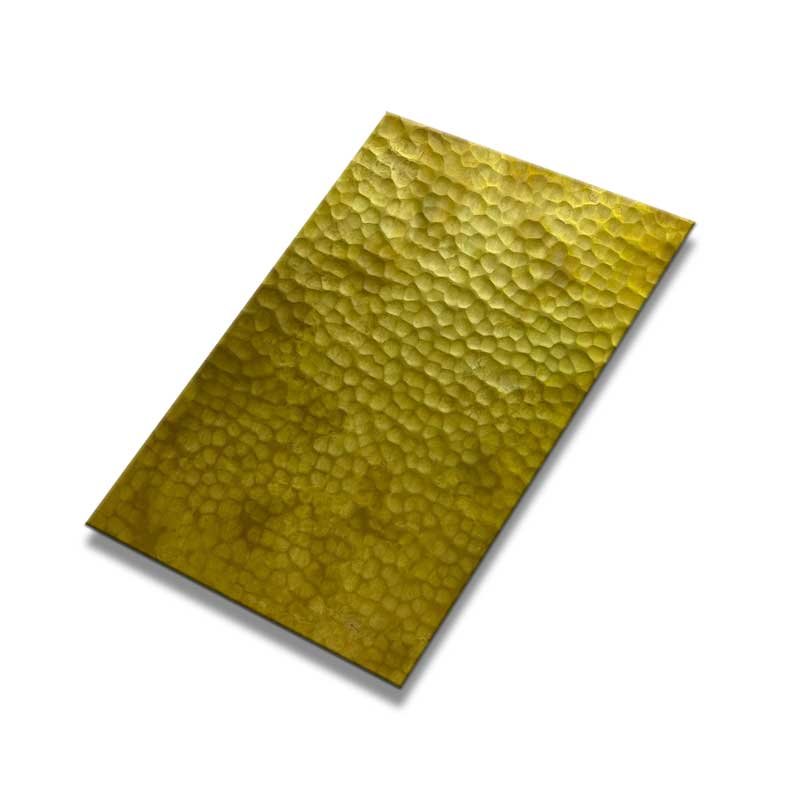
| Stainless steel hammered sheet | Organic handcrafted uneven texture, soft light reflection | Boutique hotel, resort, art-themed office background wall |
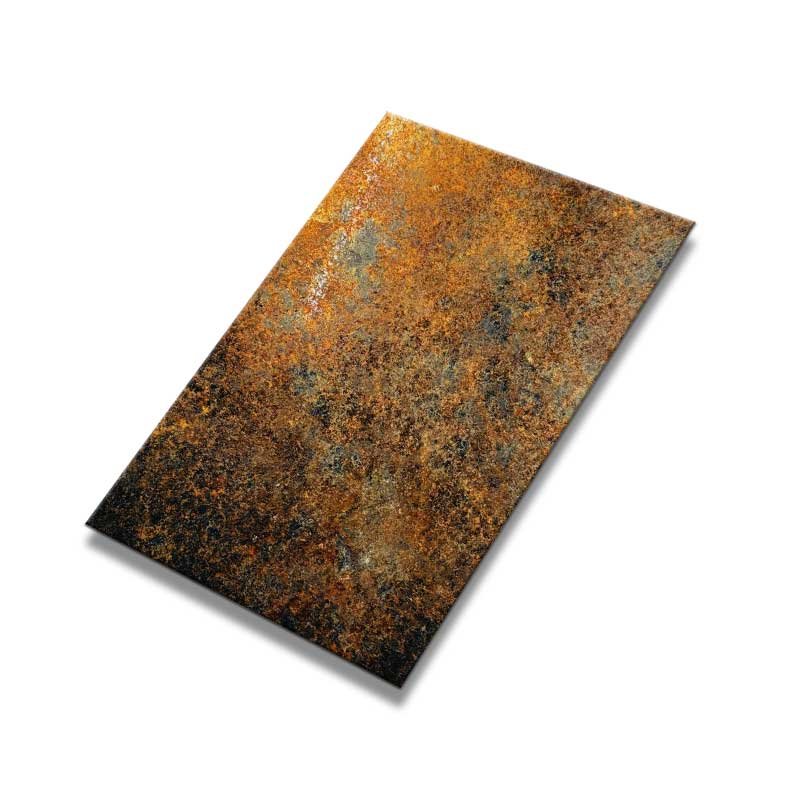
| Stainless steel antique sheet | Warm vintage copper metallic look, stable aged finish | Luxury reception, high-end restaurant main feature wall |
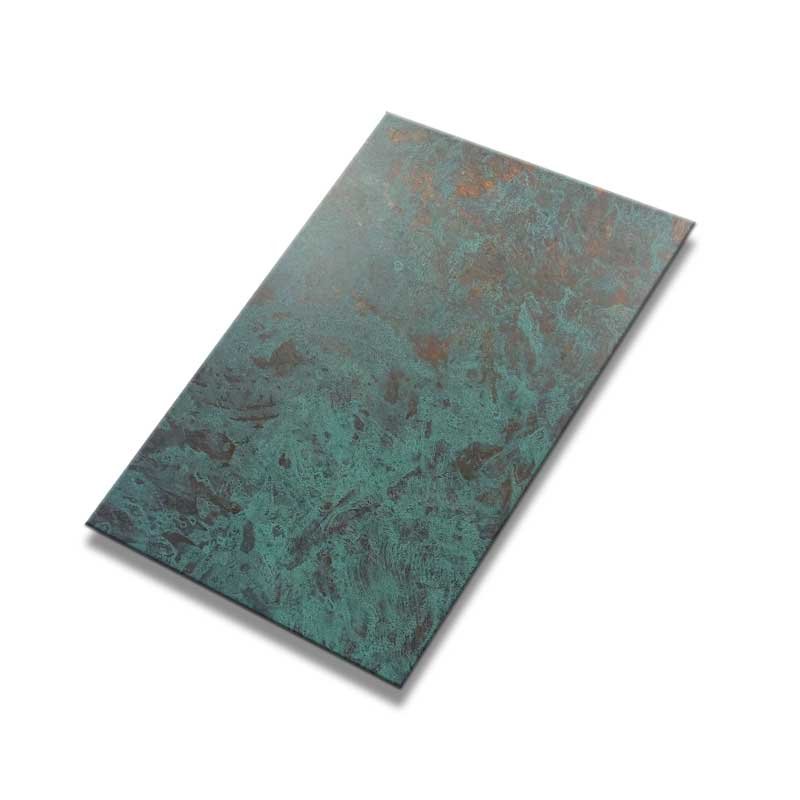
| Patina sheet | Aged verdigris antique bronze aesthetic | Museum, art gallery, vintage club interior wall |
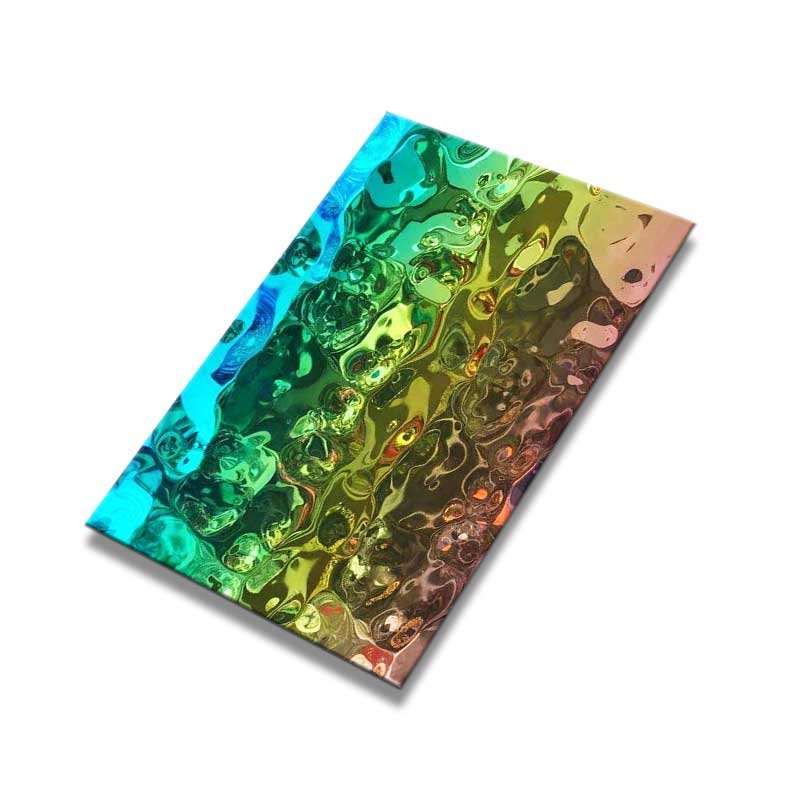
| Stainless steel water ripple sheet | Dynamic 3D wave light refraction | Modern hotel lobby, large continuous feature wall |
Material & Finished Selection For Stainless Steel Feature Wall Projects
Choosing the right substrate grade and surface treatment is critical to avoid project defects after installation. Many wall cladding failures happen because of incorrect grade selection or poorly specified surface coating.
Material Selection
- 304 Stainless Steel: Default selection for indoor commercial background walls. It delivers good corrosion resistance, stable colour performance and balanced cost. It works for most hotel, office and restaurant interior wall projects.
- 316L Stainless Steel: Specify this grade for projects in coastal cities, humid spa areas or spaces with high humidity. The extra molybdenum content provides stronger salt spray and moisture resistance, preventing rust spots on the wall panels.
- 201 Stainless Steel: Only suitable for temporary, low-budget indoor projects with dry environment. Not recommended for permanent luxury commercial background walls, as it may develop rust marks over time.
Key Surface Treatments For Feature Wall Panels
- PVD coating: Used for antique copper, verdigris, gold and black metallic finishes. PVD coating bonds firmly with stainless steel substrate, with good colour stability for indoor environments.
- Anti-fingerprint treatment: Highly recommended for high-traffic lobby walls. This coating reduces visible handprints and simplifies daily cleaning for facility maintenance teams.
- Aged finished: For antique copper and patina panels. The factory-controlled ageing process ensures consistent colour across all panels on the large background wall, avoiding uneven oxidation that happens with real copper.
Full surface treatment and colour testing should be carried out before mass production, to guarantee colour consistency across large wall panel batches.
Project Case: Corrosion & Colour Control In A Harsh Climate
A luxury hotel lobby project in the Middle East required a large water ripple stainless steel feature wall in a climate of sand, strong UV and high humidity. The owner and design team set two hard requirements: PVD-coated antique copper sheets that could resist airborne-salt and coastal corrosion, and a consistent colour across the whole wall with no visible seams.
JYF METAL supplied segmented 316L substrate panels with PVD antique copper coating and a full anti-fingerprint finish. Because the site climate combined heat, UV and occasional humidity spikes, the substrate grade was upgraded from 304 to 316L to prevent rust spots on the large background wall. Panels were pre-fabricated into manageable segments under one single production batch for colour matching, then shipped with protective film and wooden case.
Three lessons came out of this project: Always confirm the material grade for the local climate, lock a single master colour sample before mass production, and plan panel segmentation early to avoid visible joints on a large continuous wall.
Project Specification & Installation Planning
A beautiful stainless steel feature wall relies on careful planning from design stage through to site installation. Many designers focus only on render visuals and overlook practical fabrication and site constraints. Below are practical guidelines for architects, specifiers and contractors.
Pre-order Project Checklist
- Confirm indoor or humid environment to select 304 or 316L grade.
- Finalise panel layout and segmentation plan early. Large walls must be split into manageable panel sizes for transport and installation.
- Confirm lighting design together with metal panel selection. Hammered, water ripple and laser cut panels all interact strongly with lighting. The lighting scheme should be matched to the texture.
- Set colour tolerance standard before production. For antique copper and green bronze finishes, define acceptable colour variation range and sign off physical samples.
- Discuss wall substrate structure. Stainless steel cladding cannot be fixed directly onto weak plasterboard; a metal keel frame is usually required.
On-site Installation Guidelines
- Build a galvanized metal keel frame as the base support structure, level and fixed firmly onto the building wall.
- Use hidden fixing methods where possible, to avoid visible screw heads ruining the decorative wall surface.
- Keep protective film on panels during all construction work. Remove the film only after all surrounding decoration work is fully finished.
- Leave small expansion gaps between panels for thermal movement, especially for large continuous background walls.
- Avoid scratching or denting the decorative surface during installation. Hammered and water ripple textures are susceptible to permanent dents.
Quality Control & Sample Confirmation
For large commercial wall projects, pre-production physical samples are mandatory. You need to check texture depth, colour finish, flatness and coating quality on the sample before bulk production. During mass production, inspect each batch for consistent texture, surface scratches and colour matching. Pack panels carefully with protective film and soft separators, then load into wooden export cases for sea shipment.
JYF METAL provides custom wooden export packaging for stainless steel feature wall panels, to prevent surface damage during long-distance sea freight for overseas commercial projects.
Common Pitfalls & How To Avoid Them
Mirror titanium surfaces are highly reflective. When exposed to bright indoor lights or spotlights, they create harsh glare. They also show fingerprints and scratches very easily.
Brushed finishes work differently. They scatter light gently, delivering a soft, low-key gold tone. This texture pairs perfectly with classic restaurant materials like vintage brick, timber and leather, blending naturally with the overall space.
Inconsistent Colour Across Large Wall Panels
This is the most common complaint for antique copper and green bronze finishes. Poor manufacturers may produce panels in separate batches without unified colour control. The result is obvious colour difference on the finished wall.
Solution: Confirm one master sample, and require all panels to be produced in one single production batch. Ask the supplier to do batch colour inspection before shipment.
Ignoring Substrate Wall Structure
Some designers specify stainless steel cladding without checking the load capacity of the base wall. If the base wall is weak, the metal panels may warp or detach over time.
Solution: The structural engineer should confirm the wall substrate, and specify metal keel framing to support the weight of stainless steel cladding.
Mismatch Between Lighting And Metal Texture
Hand hammered, water ripple and laser cut panels look completely different under different lighting. A texture that looks great in the sample room may not perform well under the site’s actual lighting.
Solution: Test the sample with the same type of light fixture planned for the project site before finalising texture selection.
Damage During Transit & Installation
Decorative metal panels are easily scratched or dented during shipping and construction. Many projects receive panels with surface defects that cannot be repaired.
Solution: Use protective film, soft interlayer padding and wooden crates for export. Instruct installers to keep film protection until all site work is complete.
Conclusion
Stainless steel feature wall cladding remains a top choice for high-end commercial interior background wall projects. The wide range of available panel options — hand hammered forged panels, antique copper aged sheets, patina panels and water ripple sheets — gives architects great freedom to realise different design concepts.
When planning a stainless steel background wall project, material grade, surface finish, panel segmentation, lighting matching and installation structure all need to be carefully considered. Working with an experienced metal fabrication supplier helps reduce project risks, keep colour consistency and deliver a clean finished wall from sampling to site handover.
FAQs
Q1: Can stainless steel feature wall cladding be used for outdoor?
Yes, but material grade must be upgraded. For exterior feature walls, select 316L grade stainless steel with high-quality PVD or patina coating. 304 grade may develop rust spots in coastal or rainy outdoor environments.
Q2: Which design is best for a luxury hotel main lobby background wall?
Antique copper stainless steel panels are widely selected for classic luxury hotel lobbies. For modern minimalist hotel designs, water ripple sheets or hand hammered panels are popular. Laser cut panels work well if layered lighting effects are part of the design.
Q3: Is necessary for anti-fingerprint treatment in high-traffic lobbies?
It is strongly recommended. Anti-fingerprint coating reduces handprint marks and lowers the regular cleaning workload for building maintenance teams. It is especially useful for polished and metallic coloured stainless steel wall panels.
Q4: How to control colour difference on large background walls?
Lock one physical master sample before production. Request all panels to be manufactured within one single batch. Your supplier should inspect all panels side by side before packing to check colour consistency.
Q5: What is the general size of a single stainless steel feature wall panel?
Standard panel sizes are available up to 1220x2440mm/ 1220x3050mm and 1500x3000mm. For larger background walls, panels will be split into segmented pieces. Segmented fabrication is also recommended for easier sea freight and safe on-site installation.