What Processing Methods Are Used in Stainless Steel Planter Fabrication?
Table of Contents
Stainless steel planter fabrication for hotels, commercial spaces, and outdoor landscaping projects often involves custom designs based on customer drawings. Different shapes, dimensions, and surface finishes determine the forming, welding, polishing, and finishing processes required.
Successful stainless steel planter fabrication depends on coordinating the design, material specifications, fabrication sequence, and finishing requirements before production begins. These factors are particularly important for irregular shapes, large structures, and decorative surfaces.
Below, we explain the stainless steel planter fabrication process, covering the main production steps for custom stainless steel planters made to drawings.
Stainless Steel Planter Fabrication: Customized Form Processing
Custom planters usually start with the customer‘s blueprint. before production, it is necessary to confirm the shape dimensions, the way the panels are unfolded, the joint position and surface requirements, and then arrange the processing process according to the appearance.
Different Styling Methods
Square and rectangular planters are usually formed through board substrate, bending, and stitching. Round planters need to be rolled round according to diameter and curvature; conical, curved, and irregular shapes require a combination of unfolding diagrams and structural design to determine the processing method.
For custom shaped stainless steel planters, the sizes and connection locations of each component need to be confirmed before production. For forms composed of multiple plates, angles, seams, and overall proportions after assembly need to be considered.
Blueprints and Processing Sequence
Complex designs should not be processed in batch directly. First, check the key sizes and connection relationships in the blueprints to ensure that the components can be smoothly shaped and assembled.
For complex custom planters, the drawings should also clarify panel dimensions, joint locations, and assembly relationships. Reviewing these details before production helps identify potential fabrication difficulties and reduces the risk of dimensional errors during assembly.
Stainless Steel Planter Fabrication: Welding And Polishing
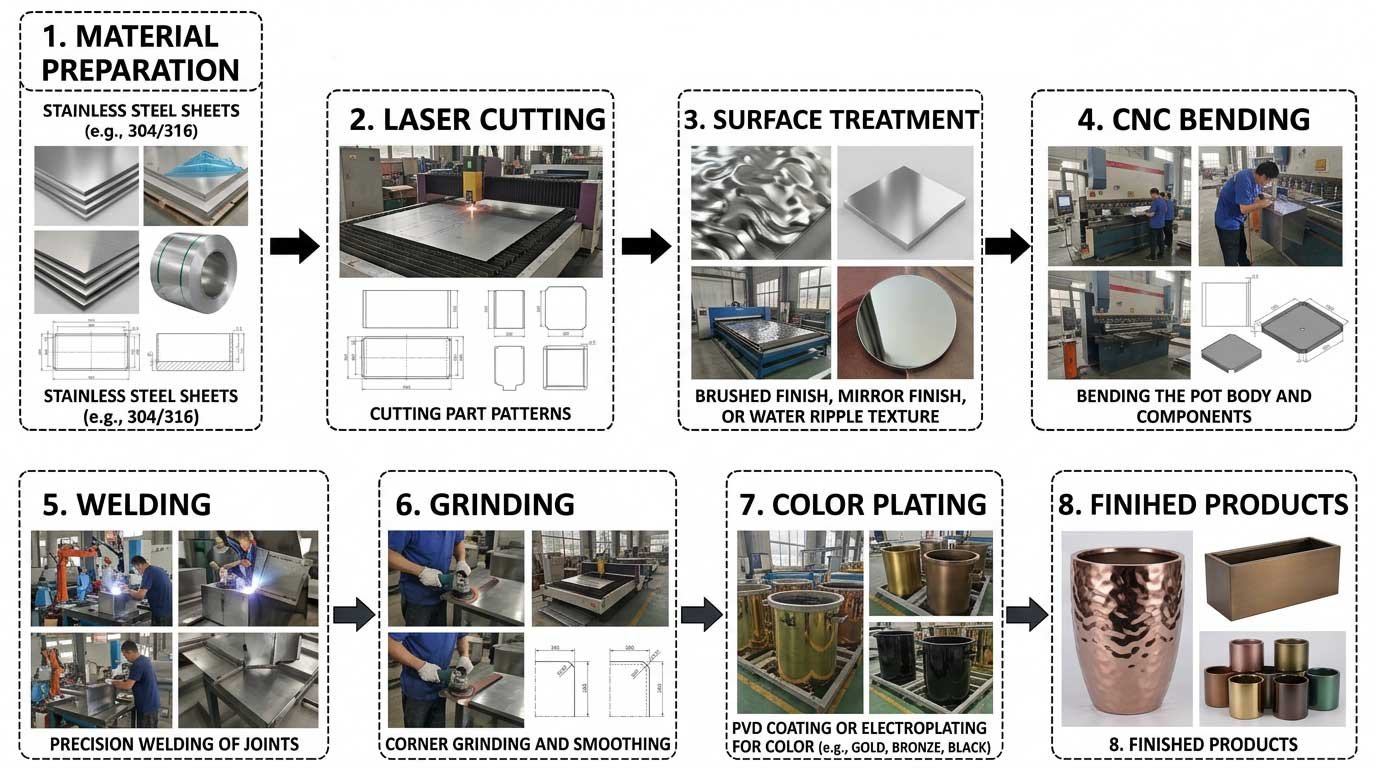
After the plate is formed, it is necessary to weld the various parts together. After the welding is complete, the surface is polished according to the desired surface effect, preparing for subsequent processing.
Welding And Seam Handling
The welding position of the planters affects the overall appearance. exposed seams need to be handled in conjunction with design requirements to keep corners and connection positions as neat as possible.
During the welding process, heat control and welding order are also needed to reduce plate deformation. For long-sided, multi-sided welding or irregular shapes, the angle and overall size of each face should be checked after welding is complete.
Polishing And Surface Joining
Stainless Steel Planter Welding and Polishing is an important element that affects the quality of the finished product.
Polishing cannot only focus on whether the weld seam is smooth, but also needs to consider subsequent surface effects. brushed surfaces need to pay attention to texture direction, mirror surfaces need to control the uniformity of reflective areas, and water-wave surfaces need to avoid damaging the original undulating texture as much as possible.
Therefore, the polishing method and treatment range should be determined according to the final surface process, rather than having the same treatment method applied to all planters.
Surface Treatment Of Stainless Steel Planters
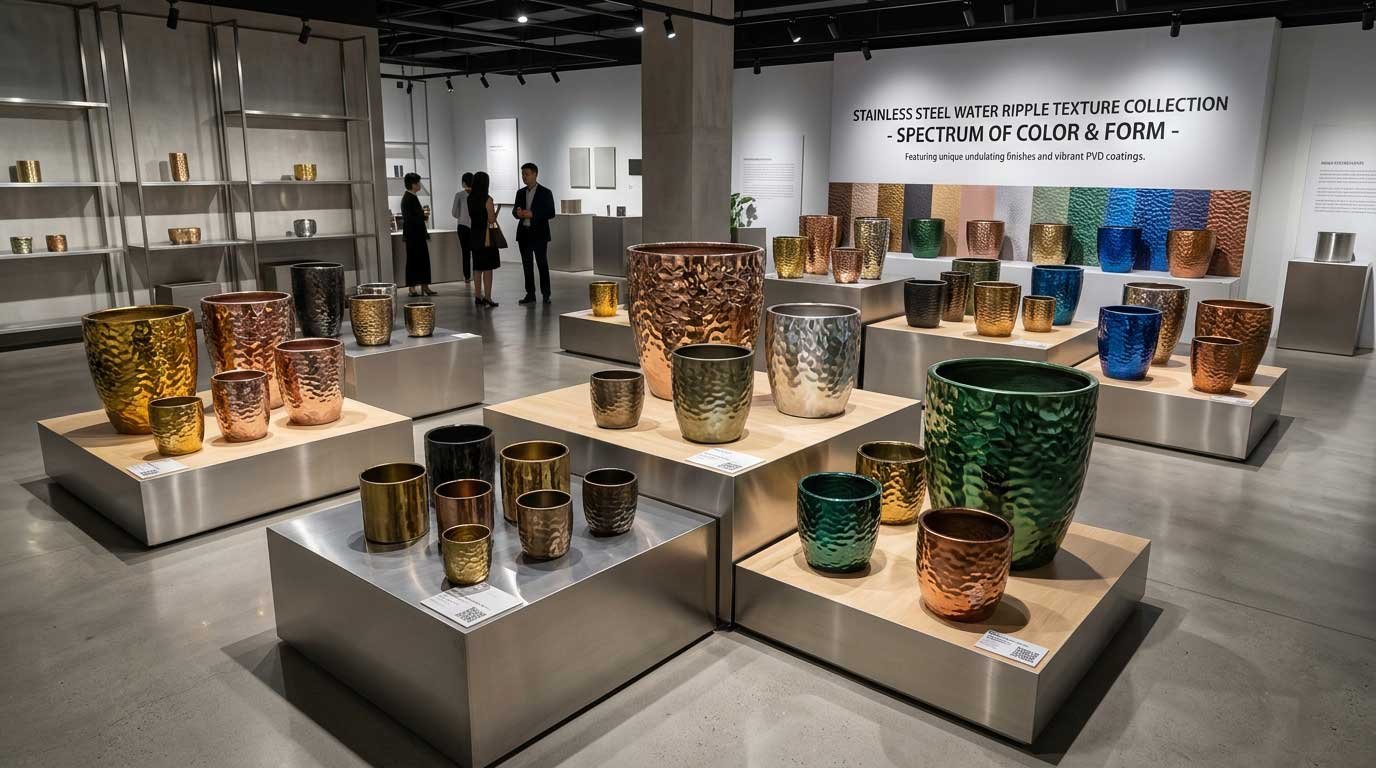
Available stainless steel planter surface finishing options include brushed, mirror, PVD coated, antique, bronze-look, and water-ripple effects. Each finish requires suitable surface preparation and processing to achieve the desired appearance. The main fabrication consideration varies by finish: brushed surfaces require consistent grain direction, mirror finishes require careful surface preparation, and PVD coating depends on the substrate condition and selected color. Antique, bronze-look, and water-ripple finishes require additional attention to texture consistency and the appearance of welded joints.
JYF METAL can evaluate appropriate processing methods based on customer-provided blueprints and surface references, and confirm relevant requirements before production.
Stainless Steel Planter Fabrication: A Special Process For Water Ripple
The water ripple stainless steel planter fabrication process requires careful coordination between the decorative texture and subsequent fabrication steps. Welding, polishing, and final PVD coating must be managed carefully to preserve the water-ripple pattern and maintain a consistent appearance across the finished planter.
Welding And Polishing Sequence
For water ripple stainless steel planters, the decorative texture is generally processed on the stainless steel sheets before the components are assembled and welded.
After welding, only the necessary joint areas should be polished, with care taken to preserve the surrounding water-ripple texture. Once fabrication and surface preparation are complete, the entire planter can undergo the specified PVD coating process.
Welded areas should be inspected before final coating to ensure that visible seams and surface defects have been properly addressed. Any corrective polishing should be limited to the necessary areas to avoid damaging the surrounding water-ripple texture.
Overall Coating And Appearance Inspection
After welding and polishing, the entire planter can receive PVD coating to create a consistent color across its different faces. The final appearance depends on the condition of the prepared surface, the quality of the welded joints, and the coating process.
After the coating is complete, it is necessary to check whether the color, gloss, and texture of each surface are in harmony, especially the corners, seams, and water ripple areas in different directions.
Quality Control for Large Stainless Steel Planters
Stainless steel planter quality control for large planters used at hotel entrances, commercial plazas, and outdoor landscaping projects involves more than checking the surface finish. It also covers dimensional accuracy, weld quality, structural stability, and compliance with approved drawings and installation requirements.
Size and Structure Checks
Mainly, check the finished product‘s shape size, key connection locations, angles of each surface, and overall condition after welding. For products with multiple combinations or multiple parts, check the size relationships between the various parts as well.
The specific structure of large stainless steel planters for outdoor spaces should be determined based on size, board specifications, and project usage conditions, and should not be judged based on appearance alone whether structural reinforcement is needed.
Surface And Finished Product Inspection
Surface inspection should follow the specified finish. Inspectors check for surface defects, seam quality and overall visual consistency across all faces and corners. JYF METAL performs finished product inspections based on confirmed blueprints and surface requirements, ensuring that the product meets the agreed-upon processing and appearance requirements before scheduling packaging and shipping.
FAQs
Q1: Can Stainless Steel Planters Be Customized?
Yes. The shape, size, assembly method and surface effect of stainless steel flower pots can be customized according to project drawings and specific requirements.
Q2: What Finishes Are Available for Stainless Steel Planters ?
Multiple surface finishes are available, and sample confirmation is recommended for special colors or textures prior to mass production.
Q3: What Materials Are Suitable For Custom Stainless Steel Planters?
304 stainless steel is usually used in indoor applications and many conventional projects.For flower pots installed in coastal areas or other environments with high salt exposure, 316 stainless steel may be a more suitable choice.The final material selection should be determined according to the actual installation environment and project requirements.
Q4: How Are Large Custom Stainless Steel Planters Prepared for Installation?
Installation requirements should be confirmed before production, including overall dimensions, access routes, placement conditions, and any required fixing or drainage provisions. For large planters, these details help determine the construction and delivery arrangements.
Q5: What Information Is Needed for Custom Planter Quotes?
To obtain a quote for custom stainless steel planters, please provide product drawings or reference images, overall dimensions, material specifications, surface finish preferences, order quantities, and installation requirements. These details help determine the fabrication process and estimate production costs.