

Metal Planters: Practical Guide for Commercial Landscape Projects
Table of Contents
Metal planters are far more than simple plant holding containers these days. In commercial properties, they work to separate spaces, direct foot traffic, and create a strong first impression at building entrances.
For hotel lobbies, shopping malls, company plazas and public parks, metal planter boxes need to stand up to years of outdoor weather, frequent moving around, plus regular watering and cleaning — all while keeping a neat, attractive look. Quality built metal planters are also easy to move, making them ideal for event venues and retail spaces where layouts get rearranged from season to season.
Most planters that don’t hold up on site run into the same common issues: picking the wrong metal alloy, surface treatments unsuitable for local weather conditions, missing drainage features, or metal walls too thin to keep their form after heavy rainfall.
This guide is written for architects, landscape designers and project owners, to help them pick suitable metal planters with more confidence. It covers material options, surface finishing, structural considerations, a practical purchasing checklist, as well as common issue cases seen in real world commercial projects.
Why Go With Metal Planter Boxes for Commercial Projects
Durability is absolutely critical for high traffic public and commercial areas. Stainless steel and Corten steel planter boxes deliver solid structural performance, good weather resistance, and plenty of custom styling options — benefits you cannot get from standard ceramic or plastic planters.
- Long service life: Pick the right grade of stainless steel or Corten steel, and these planters will last outdoors for decades, often outlasting nearby buildings.
- Low upkeep: You won’t need regular seasonal repainting or frequent replacement of broken units. This helps cut ongoing operating costs for large scale plaza and hotel landscape installations.
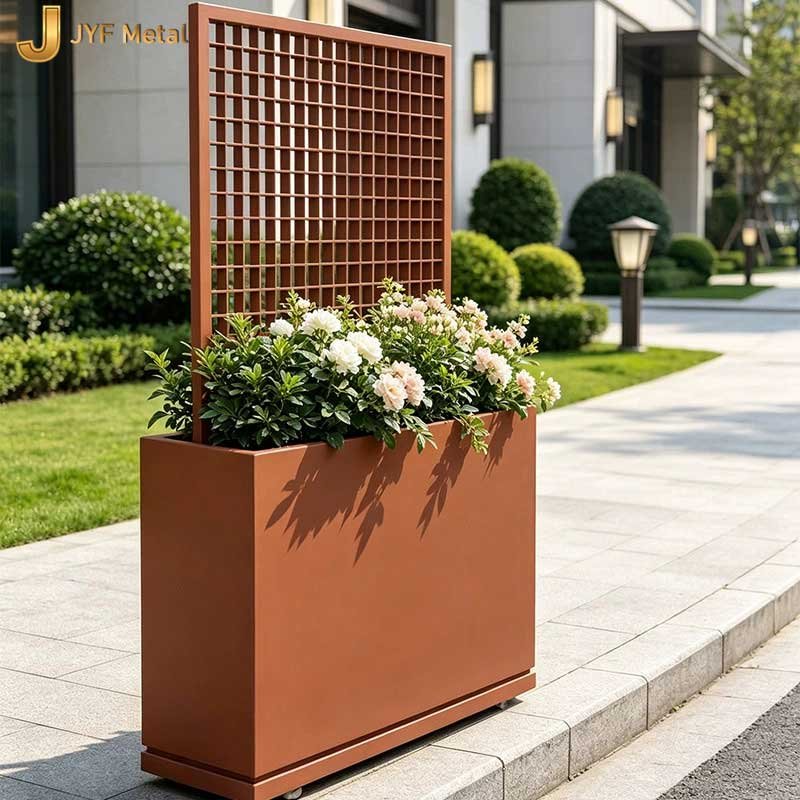
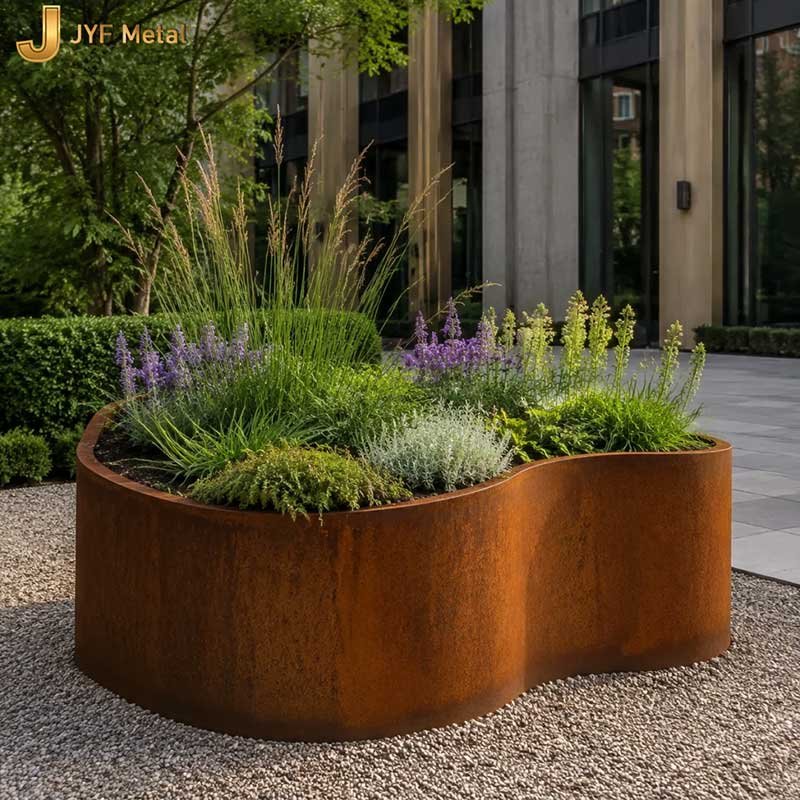
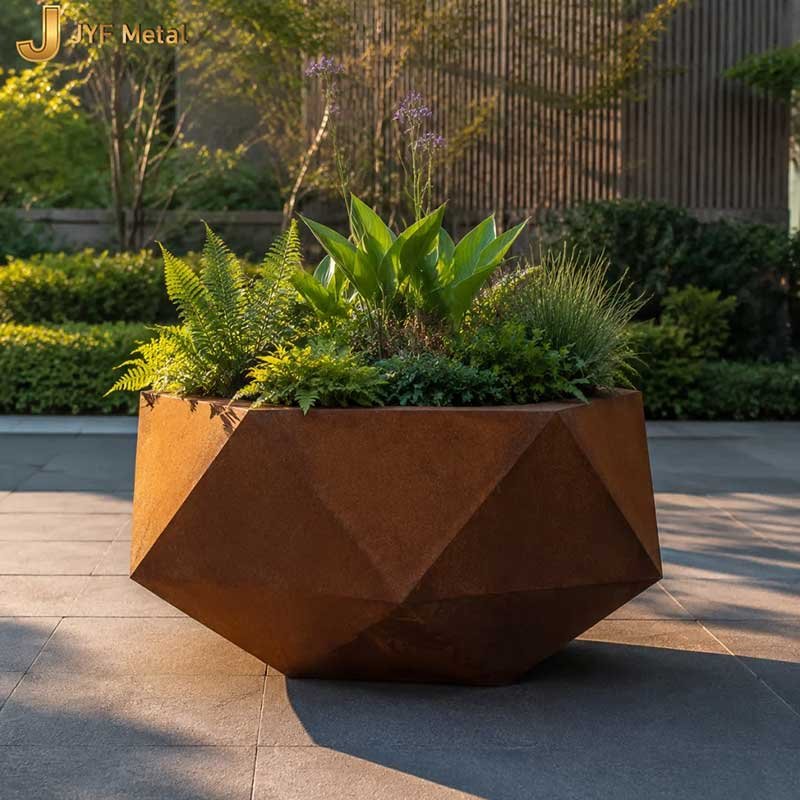
- Customization available: size, shape, finished and color can be custom made to match building facades, lobby interiors and your overall landscape design concept.
- Unique visual character: stainless steel delivers sharp, clean modern lines, while Corten steel features that one of kind weathered, rustic texture.
For the majority of commercial landscape developments, JYF METAL provides OEM & ODM custom metal planter boxes in stainless and Corten steel. We ship globally for hotel, shopping mall and public plaza projects.
Material Selection for Metal Planters
The right material can help you avoid most site related problems later on. For commercial projects, JYF METAL mainly offer three materials: 304 stainless steel, 316 stainless steel and Corten steel. Each works best for certain site conditions. Choosing the wrong material for your planter projects can end up costing you a great deal.
304 Stainless Steel
304 stainless steel is widely used in commercial projects. It can take nearly all kinds of finishes. It performs great for hotel lobbies, indoor setups, mall atriums and city plazas away from the sea. Keep in mind it is not a good fit for coastal sites. Long term exposure to salt laden sea spray will lead to rust spots, so do not use 304 for seaside projects.
316 Stainless Steel
316 stainless steel has molybdenum added to it, so it holds up way better against salt and humid conditions. It works really well for coastal hotels, waterfront walkways, and anywhere that gets a lot of sea wind or heavy de-icing salt. Its surface remains stable even in high salt environments.
Corten Steel (Weathering Steel)
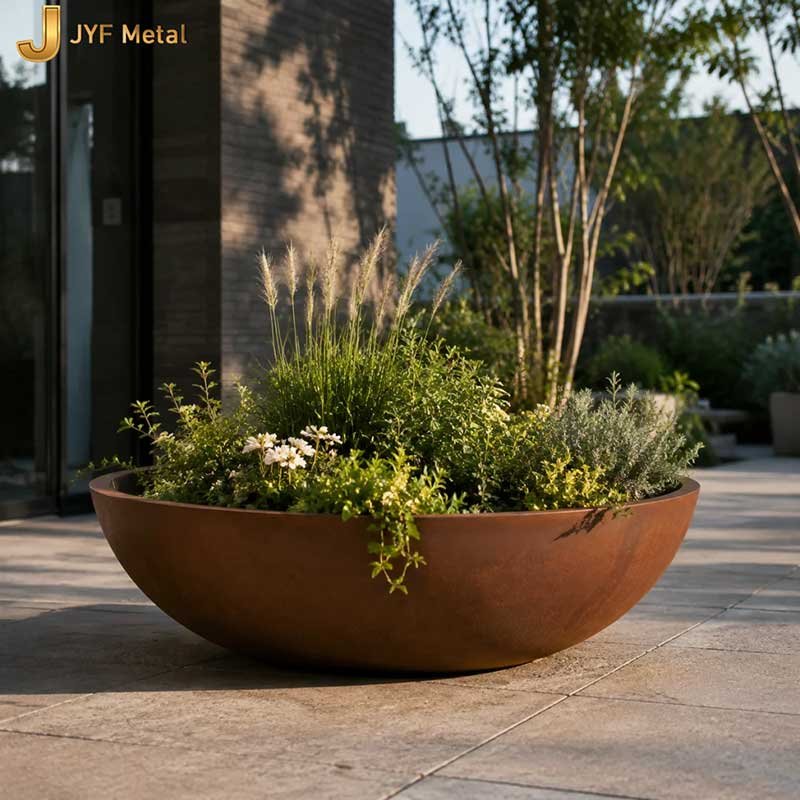
Corten steel forms a stable rusty layer on the surface, and that patina actually protects the metal underneath from corroding any further. You don’t need to paint it at all, which makes it a pretty budget-friendly choice for big outdoor projects like city parks, public plazas, and landscape installations.
Two key practical points you need to keep in mind. For one thing, full patina formation takes time. Early‑stage water run off may leave stains on nearby paving stones. Besides, Corten steel should not be used indoors, since loose rust dust can stain and mess up interior spaces.
Finishes and Color Options for Metal Planters
Finished determines both the look and service life of metal planters. Below are the common finished:
- Brushed finish: Widely used in commercial projects. It does a great job of hiding fingerprints and minor surface scratches.
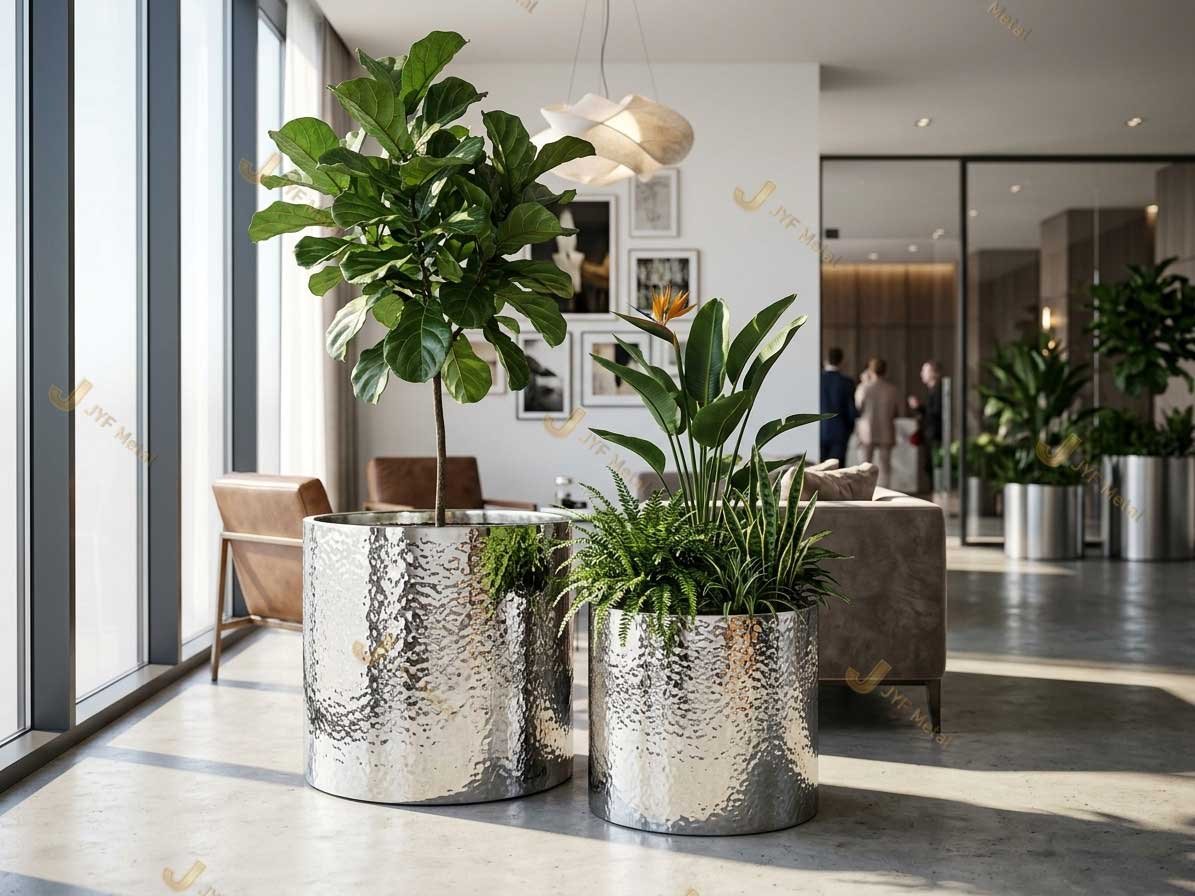
- Mirror finish: Gives you that super shiny, high-gloss look. It’s perfect for facades in high-end lobbies and retail stores. Just keep in mind that fingerprints and smudges show up really easily, so you’ll need to stay on top of cleaning and be careful with it.
- PVD coating: A thin-film treatment you put on the surface, and it can give you all sorts of metallic colors like champagne gold, bronze, black, and rose gold. Color performance stays stable for indoor applications.
- Powder coating: An industrial finish that covers the whole range of RAL colors. It gives you matte or textured surfaces, and it holds up really well outdoors, even in rough weather.
- Anti-fingerprint coating: A really good idea for busy public areas, since it helps cut down on cleaning costs.
- For weathering steel, the natural patina is basically its standard finish. Factories can do a pre-rusting treatment to speed up how fast the patina develops, and then seal it with a clear topcoat that locks in any loose rust dust. That way you keep the rust look you want, and it cuts down a lot on those water runoff stains you’d normally get in the first few months.
No matter which finish you go with, always ask your supplier for a real physical color sample. Check it and sign off on it before they go into mass production, so you know the whole batch will come out looking consistent.
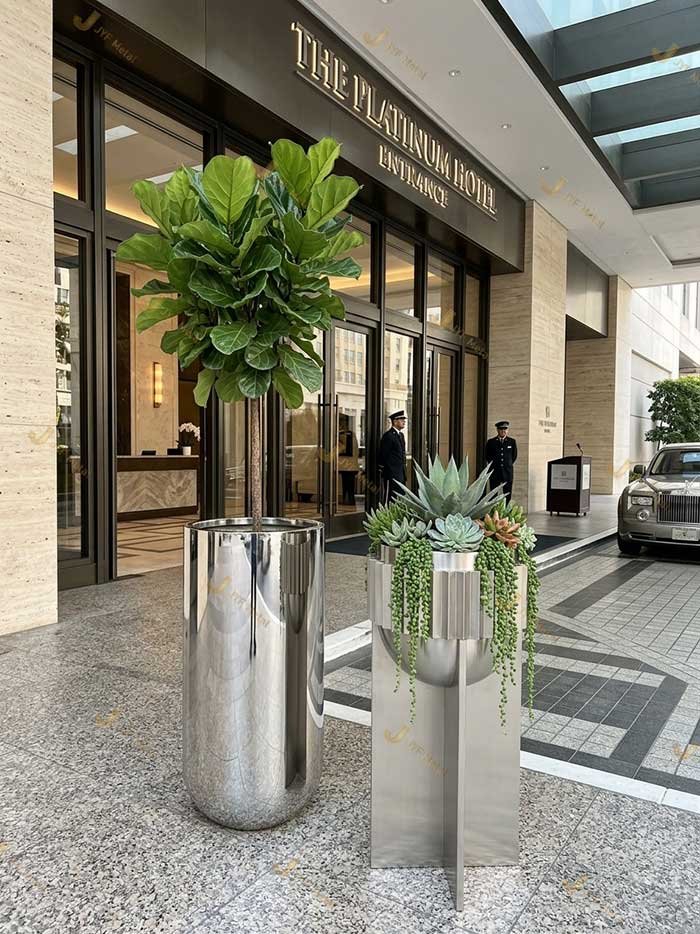
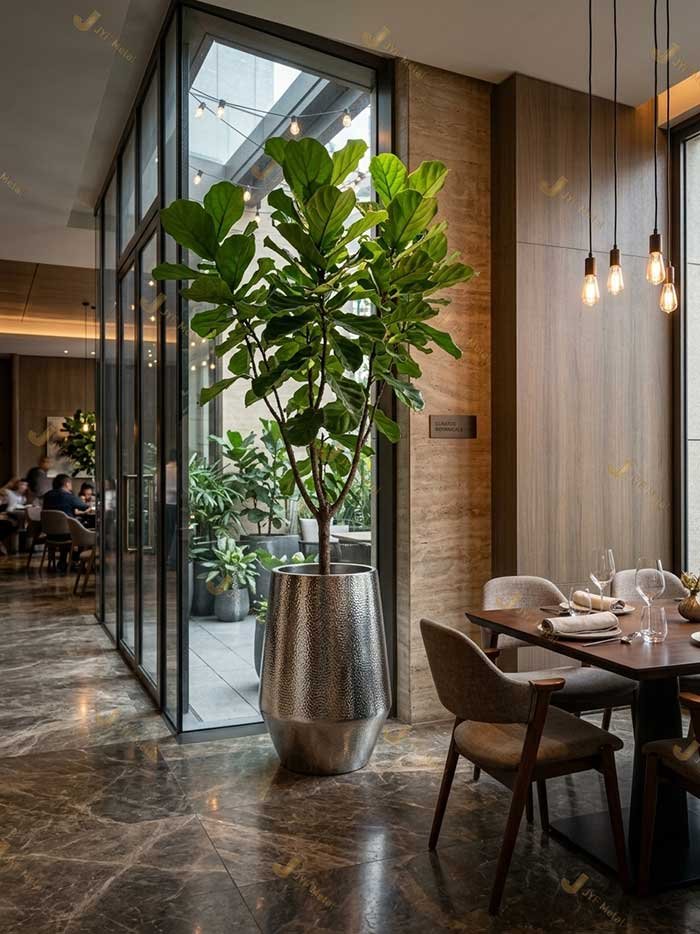
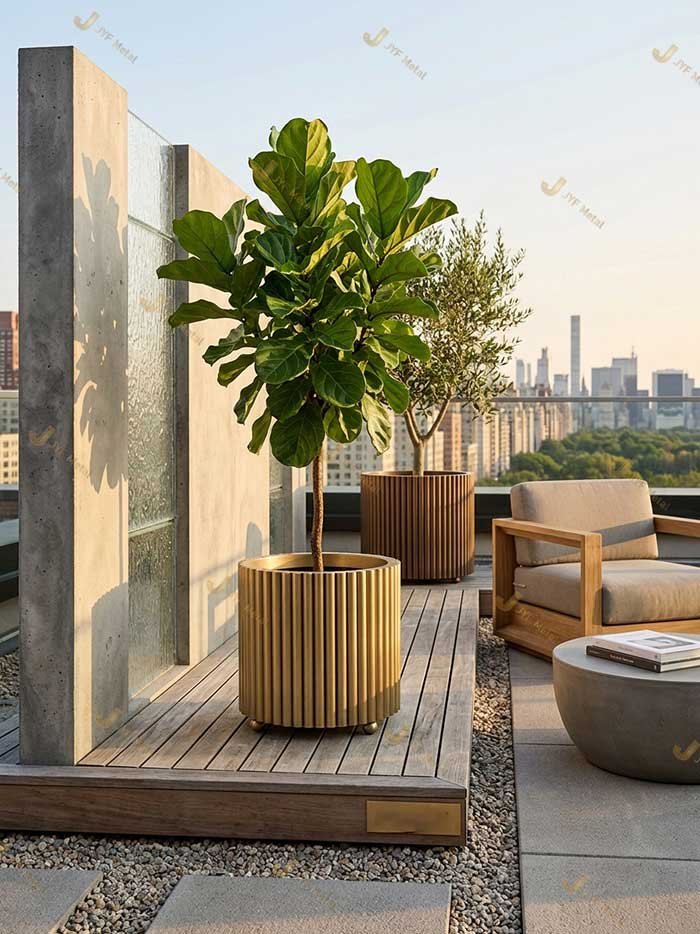
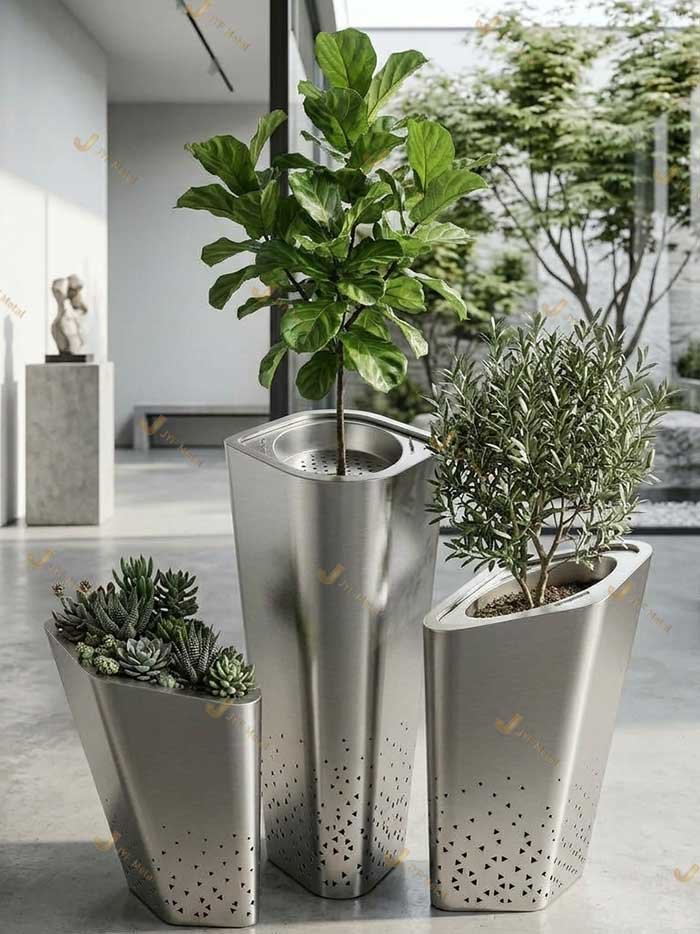
Key Technical Specifications to Confirm Before Placing Orders
Nearly all planter related issues pop up after delivery, and almost all stem from details that were not sorted out at an early stage. When working with your fabrication supplier, get these key parameters confirmed in writing:
- Thickness matters: Thin metal sheets can bend or deform under wind load and the weight of wet soil inside. For commercial use planters, wall thickness usually falls between 1.5-3.0 Exact values depend on the planter’s total height and overall size.Extra large or tall planter boxes require inner stiffener ribs for support.
- Drainage:To prevent rainwater from getting trapped in the flower pots, all outdoor planter must have drainage holes. Install sufficient drainage points according to the size of the planter, for long-shaped planter pots, multiple holes are required instead of a single one. For indoor flower pots, you can go with detachable drip trays instead.
- Adjustable support feet: these raised feet lift the planter up off the wet ground so air can flow underneath better. They also make it simple to level the unit, even on uneven ground.
- Internal structure:Large size planters should come with welded inner supports or perimeter reinforcement. This prevents long side panels from bowing and bulging outwards.
Structure, Weight and On-site Installation Basics
Structural design is just as critical as material selection. Once filled with wet soil, metal planters become very heavy. Confirm the load bearing capacity of balconies, rooftop areas and podium decks before you finalise your planter dimensions.
For large size planters, opt for segmented manufacturing. Split up panels are much simpler for container shipping and for moving inside buildings. Joint seams can either be concealed or welded once on site.
When carrying out installation, set planters up on their support feet or raised plinths. This keeps the base clear from standing water.
If you’re in a windy spot, add anchor brackets to fix tall planters to the floor or wall. And leave a little gap between the planter and any walls next to it, so the drainage holes don’t get blocked.
Leave the protective film intact until the planter is positioned and all surrounding site work is fully complete. Scratches picked up during installation can’t easily be polished away afterwards.
Practical Selection Checklist for Project Procurement
Before you put in your order, go through this list carefully:
- Where’s the project:Inland city area, coastal spot, or an outdoor park?
- What material: 304 stainless steel, 316 stainless steel or Corten steel.
- Note down precise dimensions andtotal order quantity.
- Confirmfinished and colour, and approve a physical sample for reference.
- Sort out requirements for drainage holes, support feet and internal reinforcement structures.
- Work out if segmented production is required for smooth container shipping.
- Confirm packing specifications for ocean export.
- Get formal written quotation and clear production leadtime before releasing deposit payment.
Common Pitfalls in Commercial Metal Planter Projects
The following are errors that frequently occur in the project. Most of these issues can be prevented with stage attention:
- If you use 304 stainless steel at a coastal site, salt fog will start causing rust spots within just a few months. So for anything near the sea, go with 316L instead.
- Ordering thin sheet to save cost. Thin material bows and dents during transport and installation, and the saving disappears in rework.
- Skipping drainage holes. Standing water kills plants and shortens planter life from the inside out.
- Puttingcorten steel Ongoing rust dust pollutes the interior and stains floors and furniture.
- Ignoring corten runoff in the early months. Arrange stone pads or isolation strips at the base so rust stains do not soak into the paving.
Conclusion
Stainless steel and Corten steel planters are long lasting, low upkeep and eye catching options for modern commercial landscape projects. Pick the right material according to local climate, and double check all technical details to steer clear of typical project mistakes. Your planters will then deliver stable performance for many years.
If you are searching for a trustworthy custom metal planter supplier, JYF METAL delivers full package OEM services for landscape projects worldwide.
FAQs
Q1: Are large custom stainless‑steel planters fit for hotel outdoor terraces?
Yes. 304 stainless steel works well for hotels that are not near the coast. For seaside terrace areas, go for 316 with anti fingerprint finish. JYF METAL has supplied custom large size planters for hotel terrace projects across multiple countries.
Q2: How much time does Corten steel need to get a stable patina?
If it sits outside exposed to regular sun and rain, it will form a stable patina in around 3 to 6 months. We can do pre-rust treatment at our factory to speed things up. The planter will come to you with a ready, stable rust surface.
Q3: Can stainless steel planter boxes be made in custom colors?
Yes. PVD and powder coating support the full RAL colour library. Options include black, grey, champagne gold, bronze and more, to match modern building facades and lobby interior styles.
Q4: Do metal planters need an internal lining?
It is not a must have. You may add a liner if you hope to keep soil away from metal panels. Even without lining, proper drainage should always be guaranteed. For big tree planting, consult our factory about HDPE root barrier liners.
Q5: What is the lead time for OEM metal planter orders?
Standard production takes 20-35 working days. Exact timing varies based on order quantity, shape difficulty and surface finishing work. Reach out to JYF METAL to get detailed quotation and production timeline.

