Architectural Engineering: Custom Stainless Steel Decorative Screens – Selection & Installation Guide
Table of Contents
In the interior and exterior space design of large commercial complexes, luxury hotel lobbies and upscale clubs, architects and main contractors constantly face one practical challenge: balancing open spatial feel, striking visual character and long-term real-world durability.
As an experienced manufacturer of custom architectural metalwork, JYF METAL has put together this practical guide. It focuses entirely on custom stainless steel decorative screens, walking through material grades, surface finishes, structural detailing, on-site installation and acceptance checks. It delivers actionable reference material for real engineering project specification.
The Material Standards and Structural Manufacturing of Custom Stainless Steel Decorative Screens
High-grade metal dividers for building projects need solid structural performance paired with fine decorative finishes. At JYF METAL, we understand that for main contractors, knowing raw material specs well and applying accurate fabrication methods is key to getting long lasting products, clean corner connections and strict compliance with project tolerance requirements.
Material Selection: Aisi 304 and 316l Stainless Steel Comparison
For high-end engineering projects, selecting the proper material is the primary prerequisite to guarantee decorative metal partitions deliver long-term corrosion resistance and stable finish colour.
For most dry indoor environments (such as hotel lobbies and VIP lounge partitions), AISI 304 is the preferred choice due to its excellent processing performance and mechanical strength. However, in coastal projects, outdoor building facade partitions, or indoor high-humidity and constant-temperature swimming pools, AISI 316L must be specified, as its 2%–3% molybdenum content provides complete resistance to chloride and salt spray corrosion.
Precision Laser Cutting & V-Grooving Mechanics
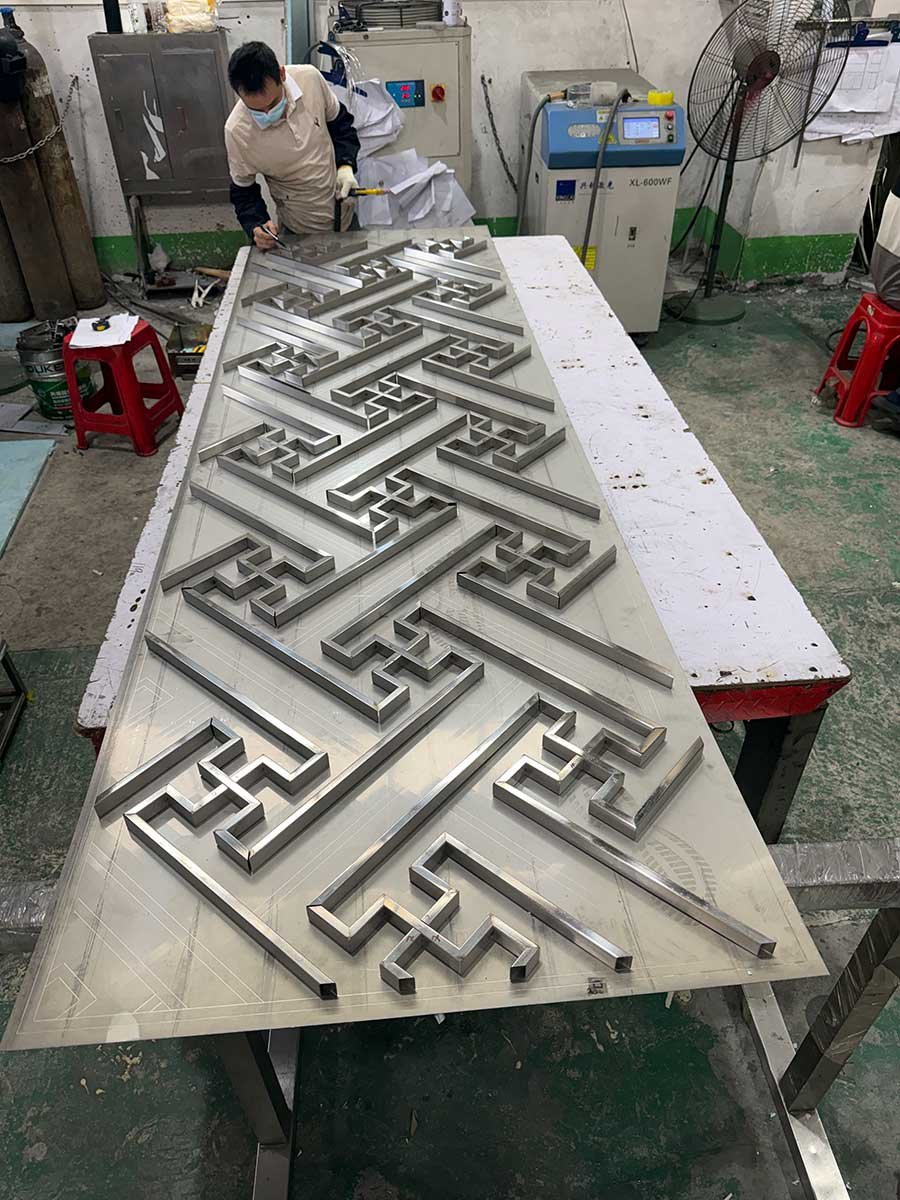
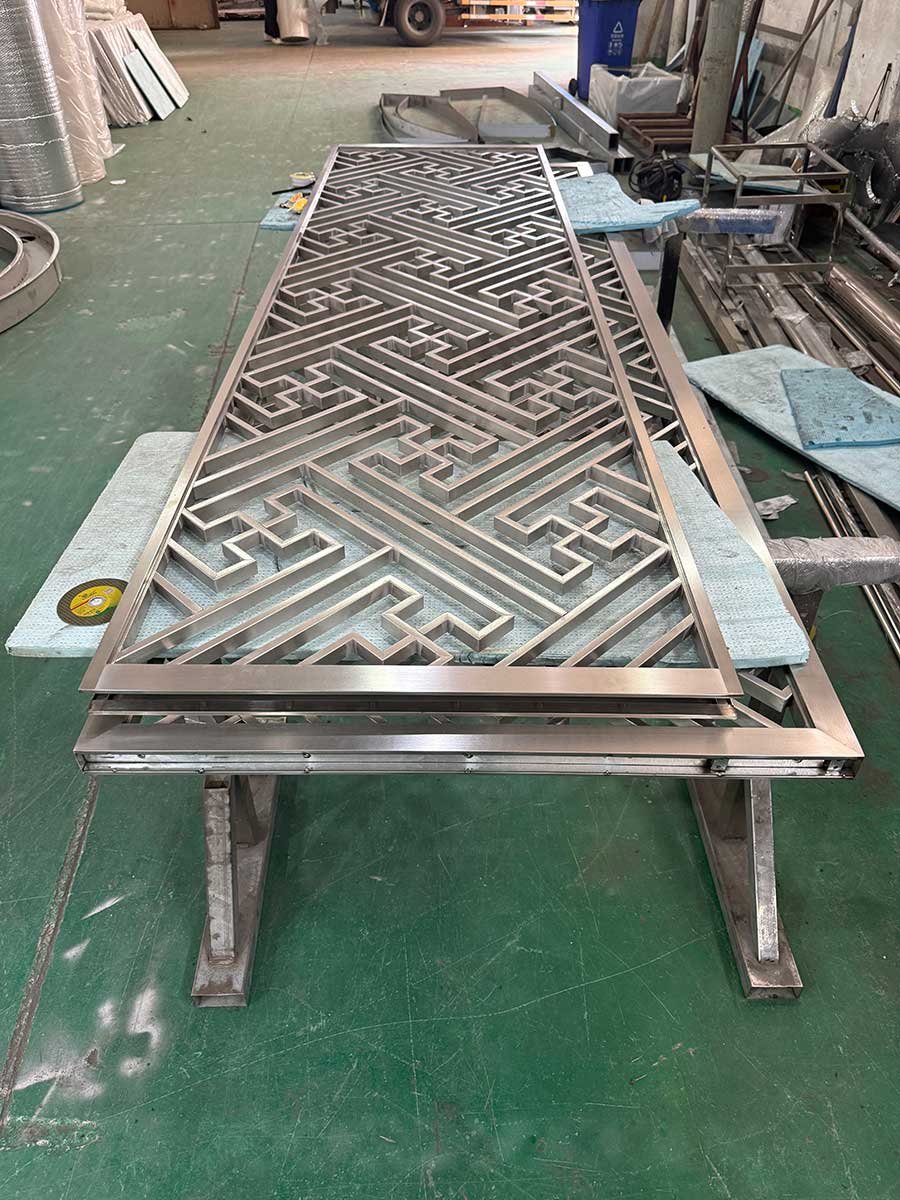
Modern engineering demands extremely high precision in the patterns of stainless steel screens. JYF METAL employs high-power industrial-grade fiber laser cutting equipment, enabling precise control of the processing tolerances for complex geometric cutouts within ±0.1 mm. For thick plate frames and column joints, CNC deep V-grooving is performed before bending to ensure extremely precise 90° acute angles at the bending edges, resulting in clean lines without the bulky rounded corners.
Welding Options: Spot Welding vs. Full Tig Welding
Spot welding / Segment welding:
Fixed point-like along the seam at regular intervals. This process has less thermal deformation, shorter processing cycle and lower cost, but there will be a small physical gap (with a seam) at the joint. It is suitable for engineering areas with limited budgets, high installation heights or long visual distances.
Full Seamless TIG Welding:
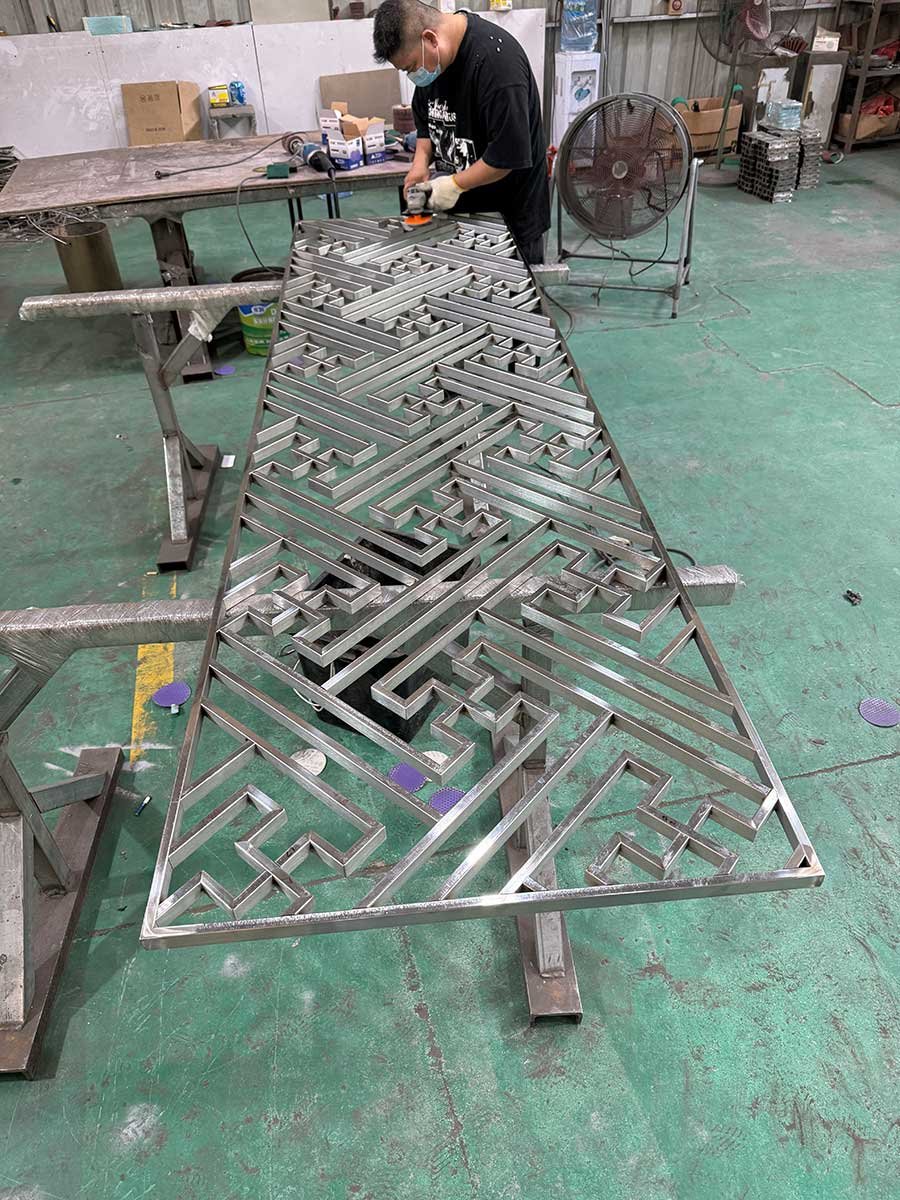
This process involves using continuous micro-pulse argon arc welding to fully penetrate the seams, followed by five rounds of manual grinding and polishing by experienced polishing technicians to remove weld slag and trace of gaps, resulting in a seamless and unified texture for the custom stainless steel decorative screens. This technique is applicable to high-end hotel lobbies, VIP banquet halls and other public areas that require close proximity, as well as strict attention to details and quality.
Finishes, Pvd Coating & Color Matching
The visual impact of the decorative screen largely depends on the consistency of surface texture and color. With skilled manual polishing and PVD vacuum electroplating, custom stainless steel screens can achieve a rich range of metallic colors and excellent anti-fingerprint performance, perfectly matching the high-traffic commercial public areas.
Mechanical Texture Processing
Hairline: The brushed and polished textures of decorative screens determine the refraction of light in the room.
Satin: Fine satin textures have an elegant silk sheen and are not easily visible even with minor scratches.
Mirror: 8K mirror polishing provides extremely high reflectivity, expanding the visual transparency of the space.
Vibration: Random vibration finished create soft unique texture, making them very suitable for commercial projects with a Neo-Chinese or luxurious retro style.
Pvd Coating - Color Adhesion Technology
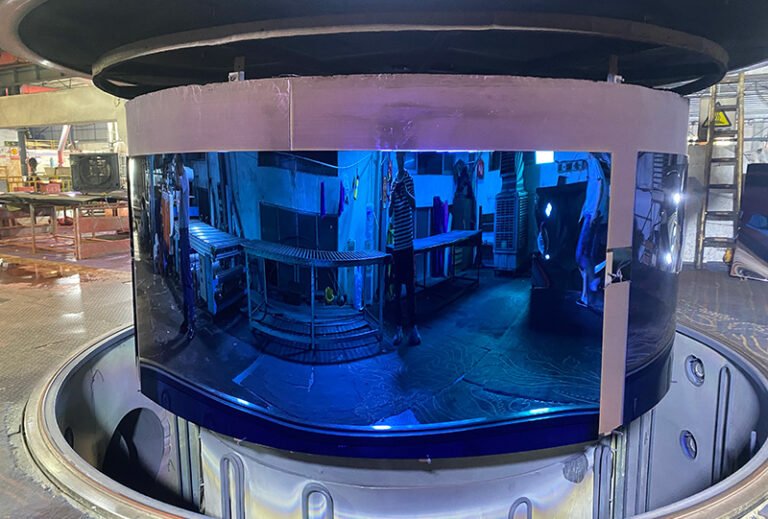
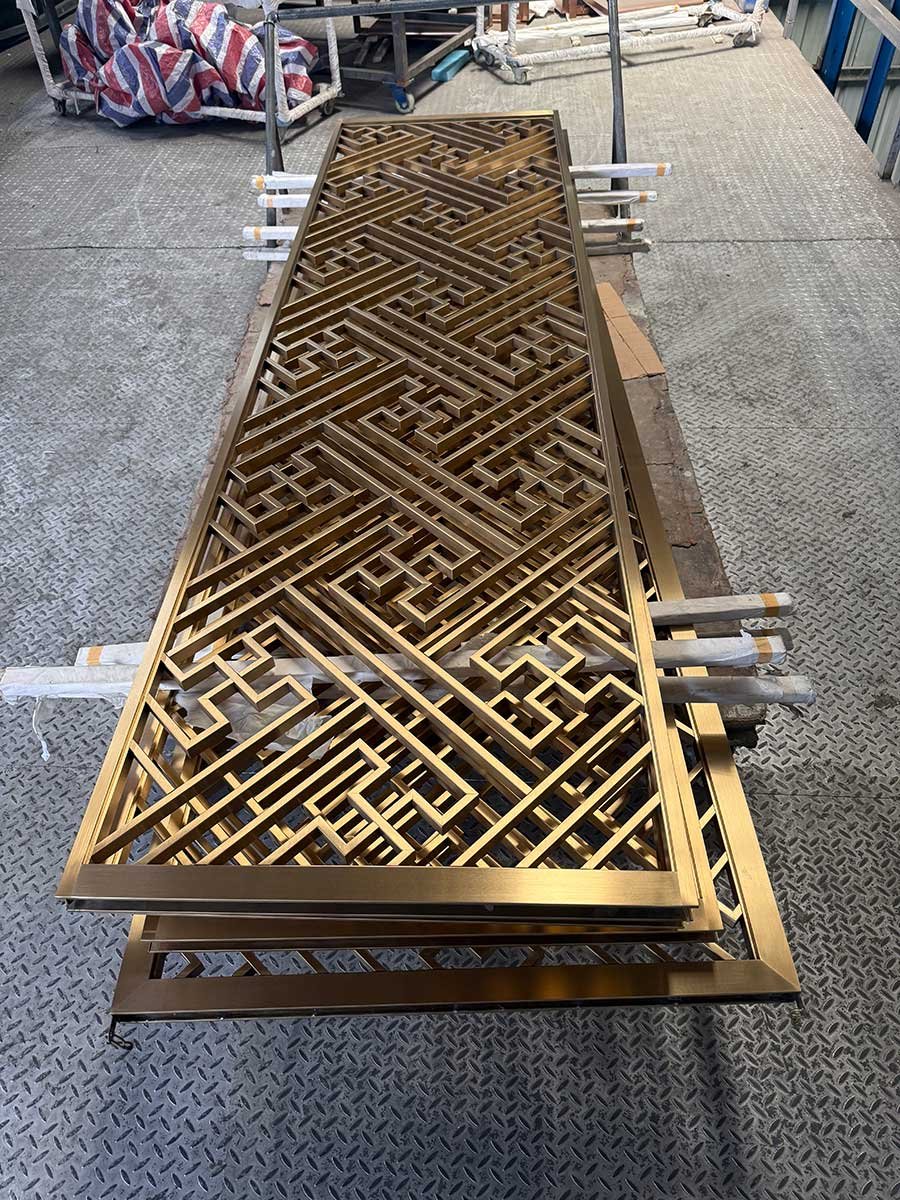
To achieve rich metallic textures, decorative screens are often finished with PVD plating. Physical Vapor Deposition (PVD) technology combines titanium molecules with ionized gas inside a high-temperature vacuum furnace, forming an ultra-hard film roughly 0.3-0.5 microns thick on the metal surface. Gold, rose gold, champagne gold, copper and black are popular finishes for high-end projects. These coatings offer great wear resistance and long-lasting colour stability.
Nano Anti-Fingerprint (Afp) Process
Stainless steel screen dividers in commercial public areas and hotels, which are frequently touched, are prone to fingerprints and grease buildup, affecting their aesthetics. After PVD electroplating applying a process of nano anti-fingerprint can not only significantly reduces daily cleaning and maintenance costs but also further enhances the stainless steel surface’s resistance to oxidation in humid air.
Engineering Specification Matrix for Stainless Steel Screens:
| Application | Recommended materials | Structure & Plate Thickness | Finished & Coating | Installation |
|---|---|---|---|---|
| Hotel lobby screen partition | AISI 304 | 3.0–5.0 mm laser plate& tubular + frame | PVD champagne gold + matte brushed finished + AFP | Upper and lower embedded parts bolt fixing |
| High-end restaurant private room partition panel | AISI 304 | 2.0–3.0 mm perforated panel + tubular frame | PVD rose gold / copper + mirror finish | Side column expansion bolt anchoring |
| Coastal building facade screen | AISI 316L | 5.0 - 8.0 mm of structural plates | Silver brushed finished / PVD black gold | Welding of heavy-duty pre-installed steel plates for curtain walls |
Anchoring, Structural Joints And Installation Safety Specifications
Sound structural engineering calculations and secure anchoring form the foundation for ensuring the screen’s long-term stability and compliance with local safety regulations. This chapter covers ceiling load-bearing calculations, concealed floor connection details, and the integrated design of hidden ambient lighting channels.
Ceiling Embedded Parts And Load-Bearing Keel Structure Design
The large floor-standing or suspended custom stainless steel decorative screen has a considerable self-weight. Before installation, it is necessary to conduct a thorough verification of the roof structure and ground structure to ensure stability. Inside the roof, the heavy-duty steel keel and steel pre-buried plates with a thickness of no less than 8.0 mm should be pre-welded and installed in advance to ensure the seismic resistance and overall structural stability of the screen after installation.
Concealed Floor-Base Fixing With Vibration Isolator Pads
The bottom fixing nodes are usually designed to be concealed. Before the surface is laid, the construction workers anchor the base steel backing plate to the concrete floor slab with high-strength chemical expansion bolts. Once the screen partition is installed, secure it with screws. Finally, seal the joints using PVD strips in a matching color to achieve a seamless appearance with no exposed bolts.
Concealed LED Light Grooves Integrated With Floodlighting
The combination of screens and lighting can exponentially enhance the quality of a space at night. CNC machined grooves are pre-drilled on the sides or bottom of the stainless steel frame to conceal low-voltage flexible LED light strips. The light brushes against the edges of the hollowed-out pattern at a shallow angle, perfectly highlighting the contours and 3D of the metal.
Factory Quality Control, Packaging & Shipping
To ensure the flawless delivery of the product from the workshop to the construction site, meticulous quality assurance and protective packaging are necessary. Learn how factory sample comparison, strict color difference measurement, and wooden case packaging for long-distance shipping can safeguard your architectural engineering.
Deepen the Comparison Between the Drawing And The Detailed Model
After placing a formal order for production, the factory’s technical team will create complete CAD detailed construction drawings and 3D node diagrams, and verify the reserved gaps and splicing logic.
Color Tolerances
During the PVD electroplating stage, a color testing device is used to test the color difference of each batch of screens. This ensures that there is no visible electroplating color difference after the entire set of partition screens is installed.
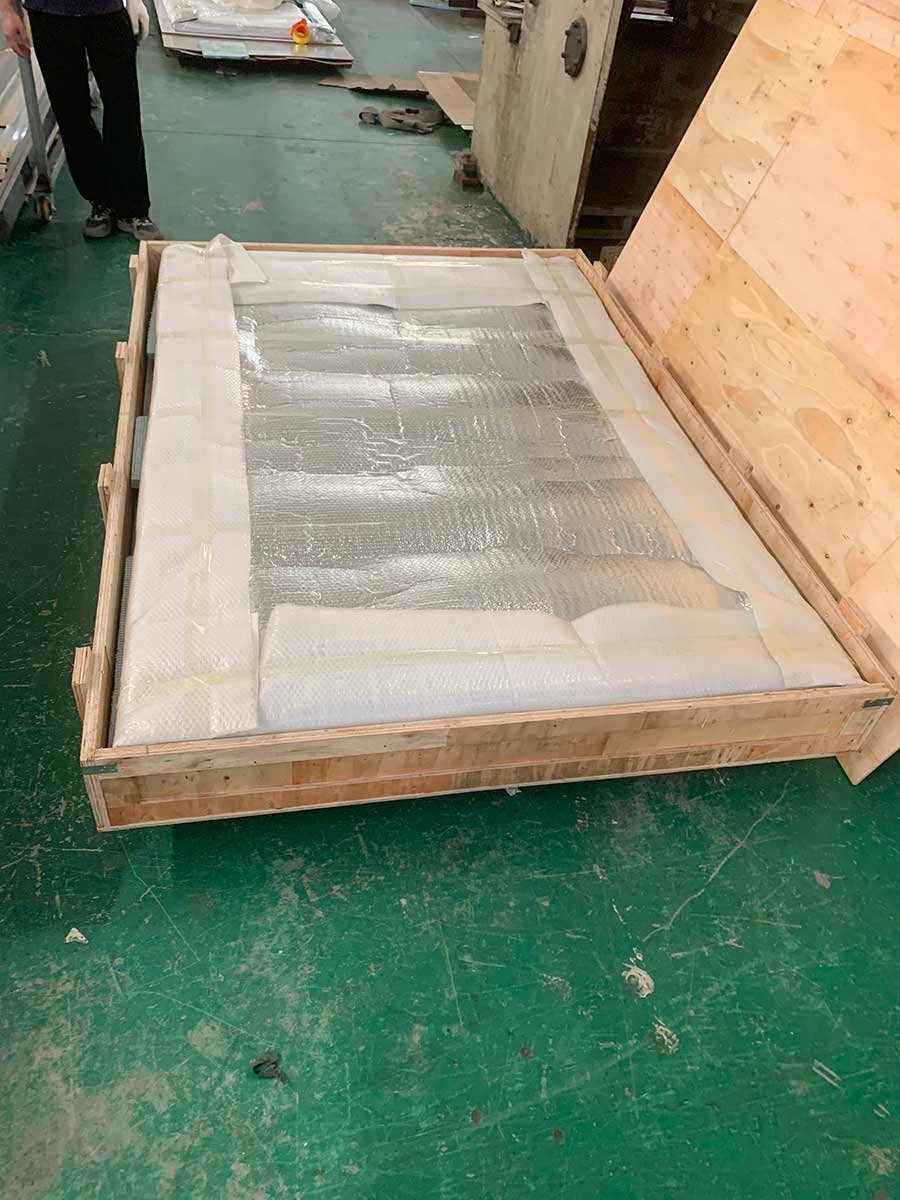
Wooden Case Packaging & Protection During Long-Distance Sea Transportation
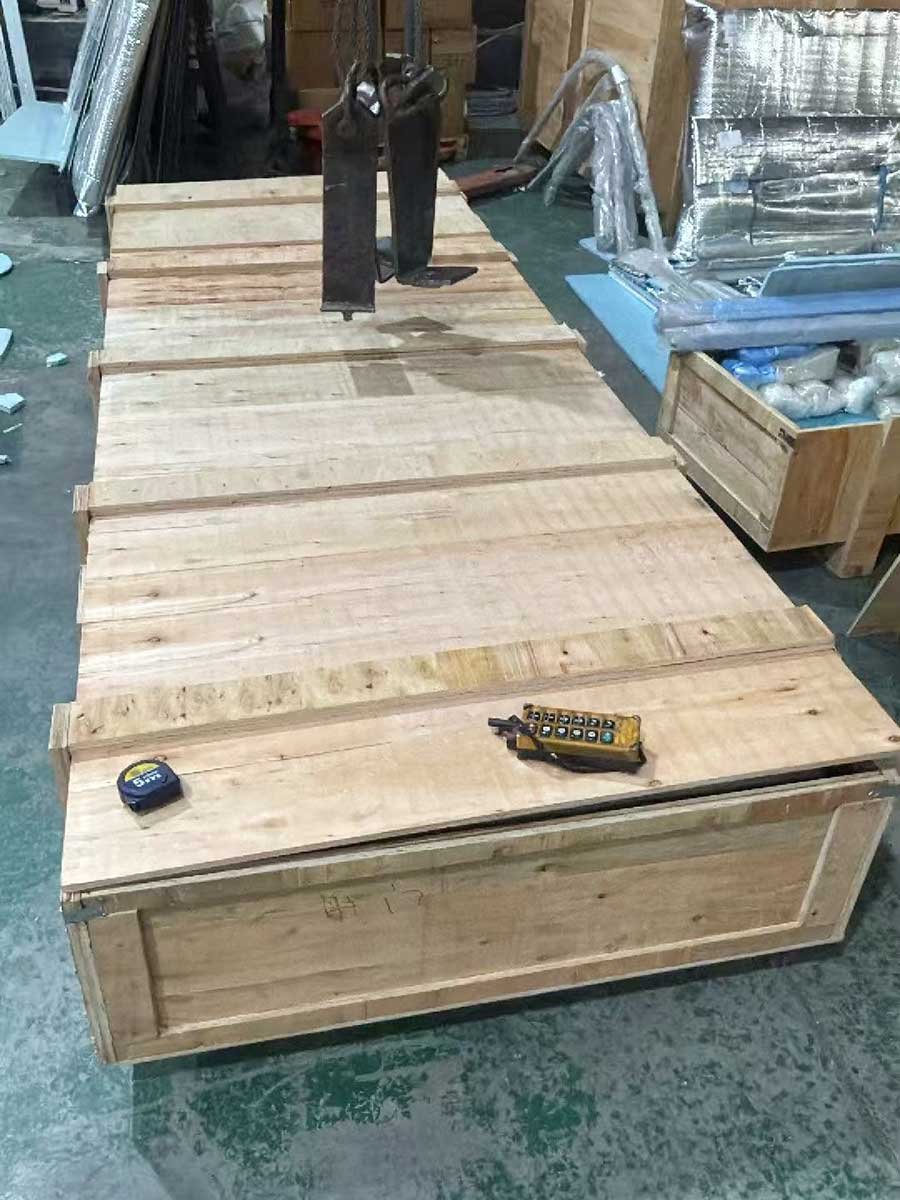
The corners are additionally protected with foamed EPE guards and wrapped with high-density pearl cotton. Finally, it is placed in a fully enclosed, non-fumigation plywood wooden case for export.
Conclusion
Selecting high-quality customized stainless steel decorative screens can significantly enhance the spatial quality and architectural flexibility of the project. By precisely matching the gold medal numbers, controlling the PVD electroplating process, and deepening the on-site installation nodes, the project team can achieve the design concept with extremely high efficiency.
FAQs
Q1: What is the key advantage of choosing a custom stainless steel decorative screens over an aluminum or wooden partition?
Stainless steel outperforms aluminium and wood in many real-world project conditions. It features high tensile strength and good fire-proof performance, keeps colour consistent over time, and resists cracking and deformation. Paired with PVD vacuum plating and laser cutting, this material allows production of ultra-narrow frames as well as detailed, complex patterns. That makes it well-suited for busy commercial areas requiring premium look and strict fire-safety requirements.
Q2: How can one ensure that there is no color difference in the electroplating finish when multiple screens are joined together in a large area?
During the production process, the factory will assemble the screen frame accessories required for the same project into the same batch and place them in a large-capacity PVD vacuum electroplating furnace for electroplating. A spectrophotometer is also adopted for rigorous colour checking, to avoid batch-to-batch colour variations right from the start of production.
Q3: What’s the recommended thickness for the laser-cut stainless steel panels?
3.0 mm to 5.0 mm panels are suggested for regular indoor screens fitted with support frames. For frameless hanging screens or large-span facade dividers, solid thick sheets from 5.0 mm up to 8.0 mm are needed to guarantee adequate flexural strength.
Q4: How should the screen surface of the PVD electroplated oil-sealed product be cleaned and maintained on a daily basis?
Surfaces finished with nano anti-fingerprint (AFP) coating are simple to keep clean in day-to-day use. For routine upkeep, just wipe gently using a clean microfiber cloth slightly dampened with water or neutral-pH cleaner. Avoid strong-acid, strong-alkali chemical agents and abrasive steel wool, since these can scratch and harm the surface protective film.
Q5: Factory assist with CAD shop drawings and installation guidance for overseas projects?
Yes. After receiving your design concept drawings (PDF/CAD), our engineering team will provide detailed CAD construction detail drawings, node calculations and embedded component details for your confirmation. Although the on-site installation is usually handled by local contractors, we offer comprehensive remote installation guidance – including 3D assembly drawings, installation manuals and online video technical support – to ensure smooth on-site construction.