From Drawing to Finished Product: The Complete Lifecycle of a Custom Stainless Steel Engineering Project
Table of Contents
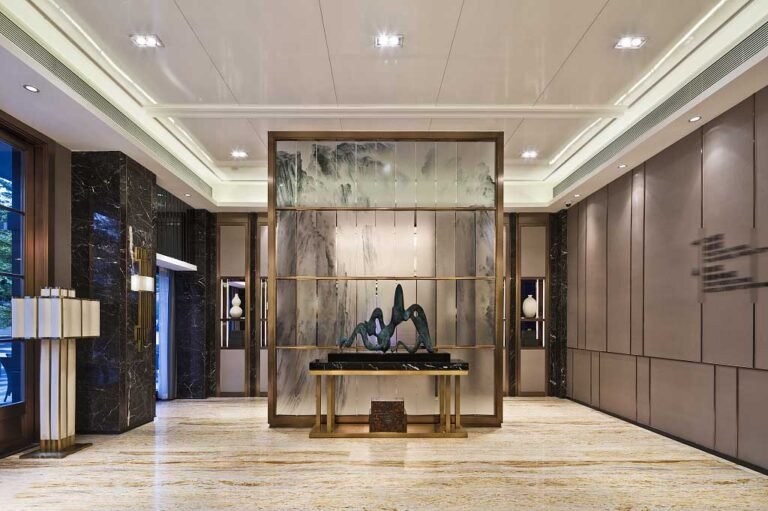
In modern-architecture, industrial manufacturing and high-end decoration sectors, stainless steel stands as the material of choice for custom-engineered projects, thanks to its outstanding corrosion resistance, mechanical strength and unparalleled aesthetic texture. Nevertheless, high-standard non-standard stainless-steel projects are far more than mere cutting and welding. Instead, they represent systematic engineering integrating precision design, material science, manufacturing craftsmanship and project management. From the initial conceptual drawing to the final product flawlessly installed on-site, the process involves rigorous project feasibility assessments, CNC precision machining, surface treatment, and strict quality control. This article will provide an in-depth analysis of the full life cycle of a custom stainless steel engineering project, comprehensively revealing the rigorous and efficient manufacturing process behind high-quality projects.
Project Planning and Engineering Design Phase
Requirements Communication and Feasibility Assessment
The project begins with an in-depth analysis of the client’s requirements (RFQ). In the early stages of any Stainless Steel Engineering project, the engineering team must communicate with the client regarding the structure‘s intended use, load-bearing requirements, environmental conditions (such as high-salt-fog environments near the coast or chemical environments involving acids and alkalis), and aesthetic delivery standards. During this stage, technical experts assess design for manufacturability (DFM), identify machining dead zones and deformation risks, and provide reasonable recommendations for structural optimization.
Material Selection and Specification Determination
The optimal stainless steel grade is determined based on the operating environment:
304 Stainless Steel: Suitable for the vast majority of indoor and standard outdoor applications, offering excellent value for money.
316 / 316L Stainless Steel: Enriched with molybdenum, it offers excellent resistance to chloride corrosion and is suitable for marine engineering and high-end chemical processing equipment.
Additionally, sheet thickness, pipe wall thickness, and profile specifications must be determined based on load-bearing and forming requirements.
3D Modeling and Construction Drawing Preparation
We build high precision 3D models using professional design software like SolidWorks and AutoCAD. At this stage, engineers break down drawings for every single component. They clearly mark machining tolerances, bend deduction values, weld locations and welding symbols. This ensures our drawings can work directly with CNC machines on the production floor without extra adjustments.
Raw Material Sourcing & Metal Cutting
Rigorous Incoming Quality Control (IQC)
Raw materials must undergo rigorous quality screening before being accepted into inventory. In addition to verifying the original manufacturer’s material test certificates (MTC/3.1 certificates), random samples are tested for chemical composition using a spectrometer (PMI), and surface quality and tolerances are measured using a surface roughness meter and thickness gauge to prevent non-conforming materials from entering the production process.
High-Precision Laser Cutting
We mainly use high power fiber laser cutters to process stainless steel sheets. High purity nitrogen is fed in as assist gas during cutting. This stops cut edges from turning black due to oxidation, keeps the natural metallic shine, and skips extra work to remove oxide layers later. Our machining tolerance stays steady within ±0.1 mm.
Grooving and CNC Bending
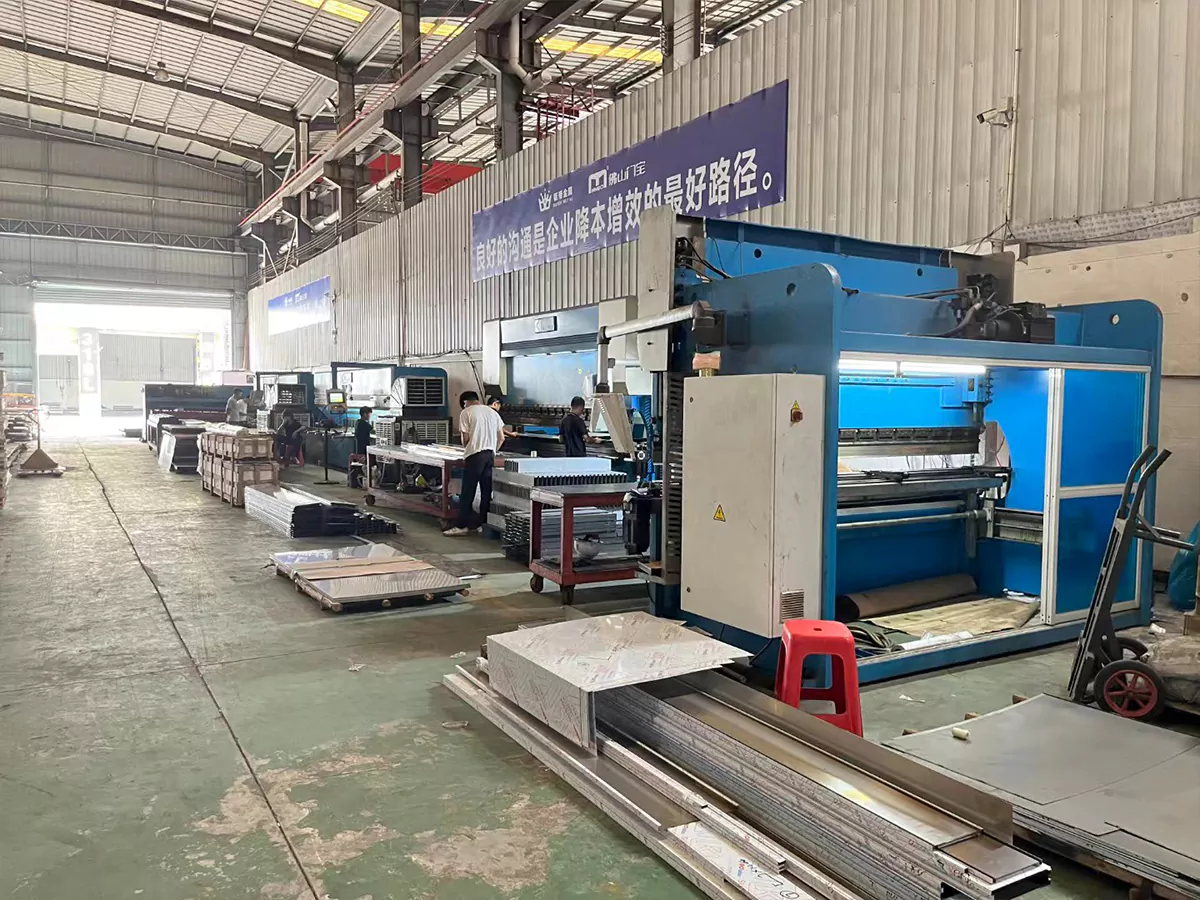
For decorative components requiring extremely sharp right angles (with minimal radius), V-grooving is performed after cutting. Subsequently, multi-pass forming is carried out using a CNC bending machine. With the aid of a multi-axis compensation system, springback can be precisely controlled to ensure that bending angles and dimensions meet design specifications.
Precision Assembly and Welding (Precision Assembly & Welding Execution)
Assembly Alignment and Fixture Positioning
Prior to welding, components must undergo pre-assembly on a high-precision, three-dimensional flexible welding platform. Alignment and fixation are achieved using specialized locating pins, quick-release clamps, and square rules, effectively suppressing metal stretching and structural distortion caused by uneven heat input during the welding process.
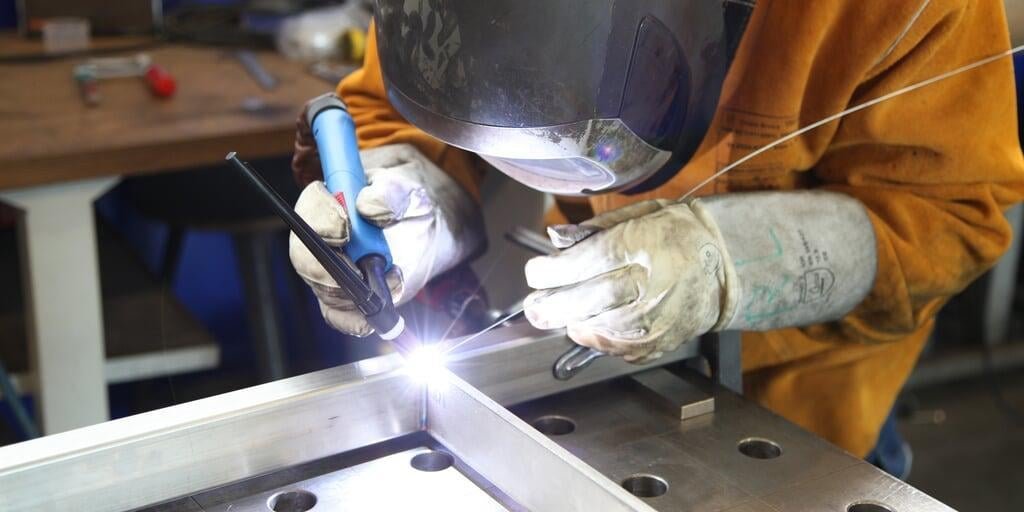
Welding Process Options (TIG / MIG / Laser Welding)
We pick the right welding method based on the structure and look of stainless steel parts:
TIG Welding: Creates clean, well controlled weld seams. Great for thin sheets and parts with strict appearance requirements.
MIG Welding: Delivers fast, high efficiency metal deposition. Suitable for structural work on medium thick plates.
Laser Welding: Causes very little heat impact and barely any distortion. Perfect for automated welding of small, precise components.
Non Destructive Testing (NDT) for Weld Quality
For load-bearing parts or pressure-vessel components, we run non-destructive tests after welding. Common tests include Ultrasonic Testing (UT), Radiographic Testing (RT) and Penetrant Testing (PT). These checks make sure welds have no hidden flaws such as incomplete fusion, gas pores or cracks inside.
Surface Finishing and Treatment
Weld Grinding and Brushing / Mirror Polishing
The weld bead must undergo multiple steps of coarse grinding, fine grinding, and precision grinding. According to customer requirements, a brushing machine is used to create uniform straight or snowflake-like brush marks; alternatively, a multi-leaf wheel or cloth wheel with polishing compound is used for step-by-step polishing to achieve an 8K mirror finish, ensuring the weld seamlessly blends with the base material.
Pickling and Passivation
Welding and high-temperature processing leave scale on stainless-steel surfaces and create local areas low in chromium. Pickling and passivation removes surface dirt and heat-formed oxide layers. It forms a tight, unbroken passive film of chromium oxide on the metal, bringing back its full corrosion-resistance performance.
Titanium Coating (PVD) / Spray Painting for Color Application
To achieve custom looks for architectural decoration, stainless steel components often get surface colour treatments:
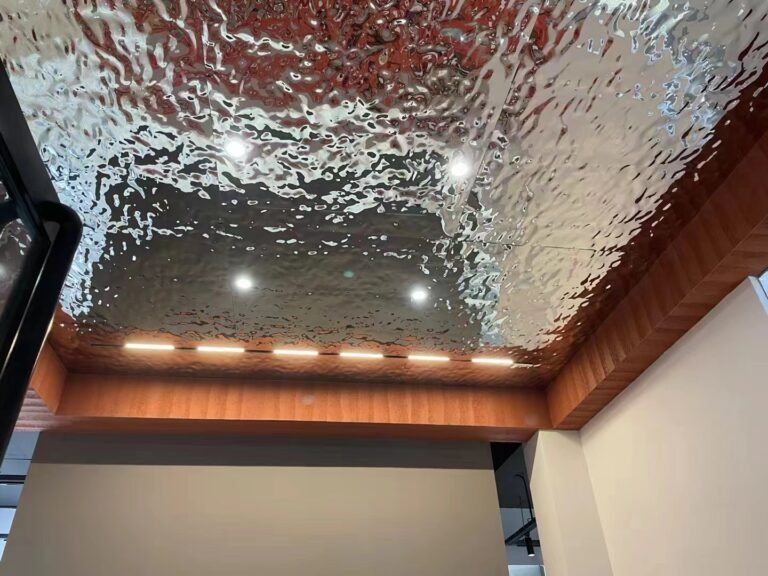
PVD vacuum titanium coating: Stainless steel can be given a premium look by applying PVD vacuum titanium coating indifferent metallic colors like rose gold, champagne gold, black titanium and antique bronze. The original natural metal surface is maintained and only a premium feel is added.
Electrostatic powder coating / fluorocarbon spraying: Available in different custom colors. These finishes feature outstanding weather resistance, making them perfectly suited for long-term outdoor applications.
Quality Checks, Packaging and Online Installation
Comprehensive Final Product Quality Inspection (FQC)
Upon project completion, the quality-control team will conduct a comprehensive acceptance inspection against design drawings and industry standards. Inspection items include: overall geometric dimensional tolerances, surface roughness (Ra value), coating thickness, color consistency etc.
Customized Protective and Secure Shipping Packaging
We apply special scratch-resistant protective film over finished products to avoid scratches and bumps during transport.
For large parts or items that bend easily, we wrap them with EPE foam. They are then secured inside custom wooden crates or steel frames. We also add proper moisture-proof and shock-absorbing layers for extra safety.
Online Installation Guidance and Final Acceptance
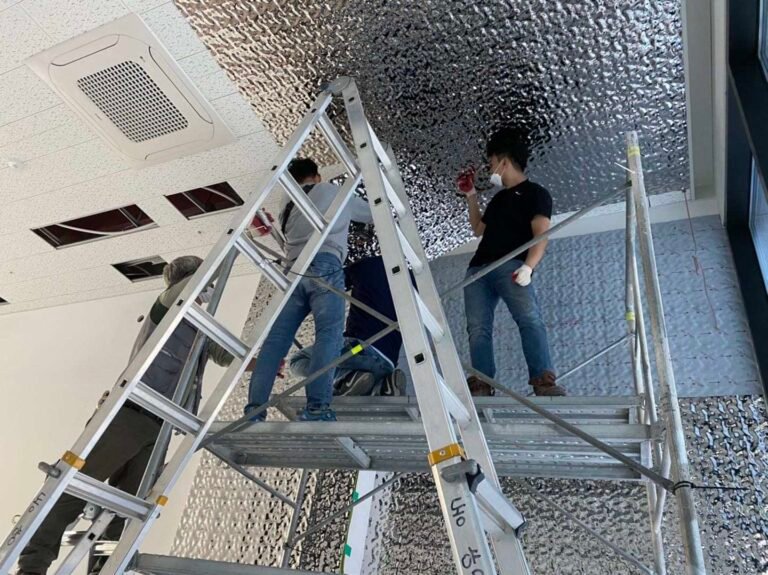
Upon arrival of goods at the site, our team will provide online installation guidance. You may assemble and install all components in accordance with the construction drawings. Precision alignment can be carried out using a laser level, and components shall be fixed with expansion bolts or pre-embedded anchors. Once installation work is finished, clean up the site and peel off protective films. The project will then be submitted to the client for final acceptance, together with the product maintenance manual.

Conclusion
The customization process for non-standard stainless steel engineering projects is a creative endeavor that combines rigorous engineering thinking with exquisite traditional craftsmanship. From the very first sketch on design drawings, through welding work on the shop floor, all the way to smooth on site installation — every step calls for solid process control and real attention to fine craftsmanship.
Working with a full-service stainless-steel fabricator that handles both in-house R&D and production cuts down your project lead time considerably. Even more critical, you get reliable quality, and your finished pieces keep their great look year after year.
FAQs
Q1: How do you choose 304 or 316 stainless steel for custom projects?
Generally, for application within dry indoor spaces or other normal outdoor uses, 304 stainless steel is frequently the best choice and will provide excellent service. If your project is near the coast, beside swimming pools, in heavy salty areas, or exposed to strong acids and alkalis, go for molybdenum containing 316 or 316L. These grades help avoid pitting and crevice corrosion.
Q2: Why does stainless steel warp easily after welding? How do factories keep deformation under control?
Stainless steel conducts heat poorly yet expands a lot under heat. Local heating during welding creates uneven thermal stress, which causes warping. Factories use these practical solutions: arrange weld seams well at the design stage; lock workpieces firmly with 3D flexible welding tables and clamps before welding; apply low-heat input, back-step or skip welding methods; or use laser welding which creates minimal heat-affected zones.
Q3: How long does a typical custom stainless steel project take to finish?
Lead time varies based on project complexity, size and surface-finish requirements. Normally: detailed design and material confirmation take 3-5 days; material sourcing and cutting take 3-5 days; welding and assembly take 5-10 days; surface treatment such as polishing and PVD titanium coating takes 3-7 days. A standard small-to-medium custom job usually takes 15-25 days. We can adjust workflows to speed up urgent orders.
Q4: What is stainless steel pickling and passivation? Is this step mandatory?
Pickling and passivation uses acid solution to remove surface scale and iron contaminants. This process encourages a tight protective chromium-oxide film to form on the metal surface. It is highly recommended for parts that have been heat-treated, welded, or will serve in highly corrosive surroundings. It restores and improves the steel’s natural corrosion resistance.
Q5: Will PVD coating stainless steel fade? How well does it hold up outdoors?
PVD titanium coating is applied in a temperature vacuum, where titanium vapor sticks firmly onto the stainless steel surface. It bonds well to the base metal and won’t peel or chip, with regular use. This tough coating stands up to wear and corrosion. When done properly high grade PVD finishes can stay looking good for 10 to 15 years with no noticeable fading.
Q6: What information do customers need to provide to obtain an accurate quote for custom stainless steel products?
An accurate quote requires clear engineering specifications. Customers are advised to provide:
- Complete 2D/3D design drawings (including dimensions);
- Specific material grades and thickness requirements;
- Specified surface treatment processes (e.g., brushed finish, 8K mirror finish, sandblasting, titanium coating colors, etc.);
- Estimated quantity required;
- Delivery location and whether on-site installation services are required.
Q7: How do you prevent surface scratches on non-standard stainless steel components during transportation?
We employ multiple layers of protective measures: First, we apply a specialized protective film 70–100 micrometers thick to the stainless steel surface (especially mirror-polished and brushed surfaces); we install impact-resistant corner guards on critical edges and corners; we use pearl cotton or bubble wrap to separate the components from one another; and finally, we secure them in custom-made wooden crates or steel racks to prevent shaking and friction during transport.