Custom Stainless Steel Decorative Screens: The Art and Precision of Welded Tube Patterns
Table of Contents
In modern architecture and high-end interior design, custom stainless steel decorative screens have transcended the traditional, singular function of merely blocking the view, evolving instead into a core element of spatial visual composition. Unlike the flat, cutout aesthetic typical of laser-cut sheet metal, screens crafted through the assembly and welding of stainless steel tubing—whether round, square, or rectangular—impart exceptional structural depth, a dynamic interplay of light and shadow, and a sense of substantial, solid presence.
As a global service provider specializing in custom metal finishes and structural fabrication, JYF METAL has long focused on deeply integrating complex tube welding techniques with modern spatial aesthetics. This technical and design guide provides an in-depth analysis of the design logic, welding challenges, structural detailing, and quality control involved in the realization of welded stainless steel tube screens.
Why Choose Tube Welding Patterns? (Tube vs. sheet laser cutting)
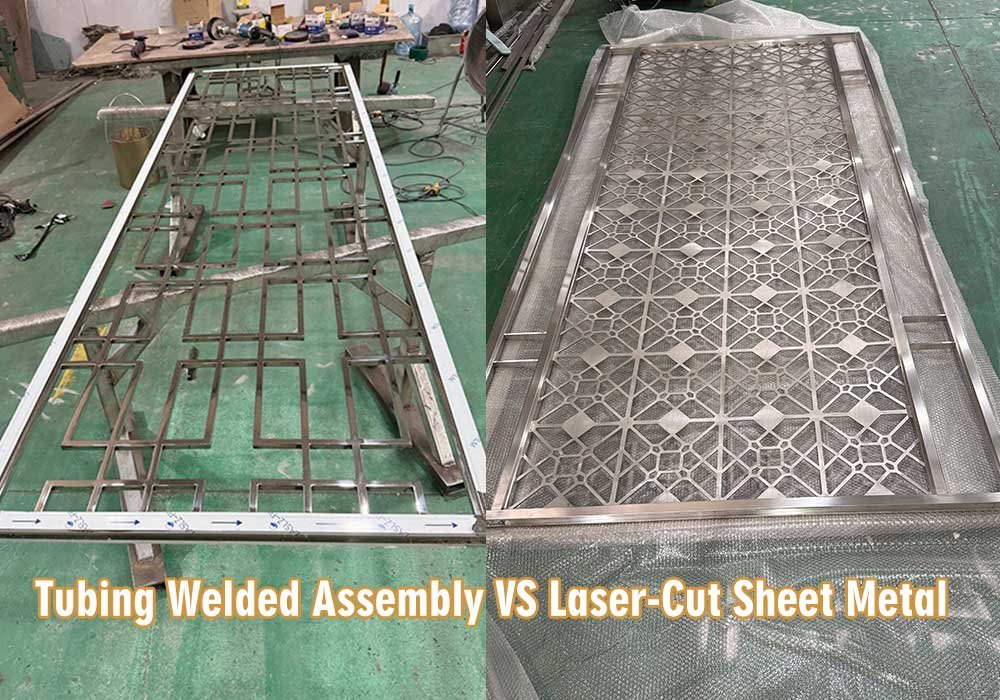
When commissioning custom stainless steel screens, designers typically weigh the options of “tubing welded assembly” versus “laser-cut sheet metal.” Understanding the differences between these two approaches is essential to achieving the desired design outcome:
| Tubular Metal Welded Pattern Screen | Laser-cut sheet metal screen |
|---|---|
|
|
A strong sense of three-dimensional spatial volume
The tubing itself features a fixed cross-sectional profile (such as 15×15mm, 20×40mm, or 19mm round pipe). Patterns assembled from these tubes appear substantial and weighty when viewed from the side, yet present clean, crisp lines from the front, creating a geometric array with striking visual impact in soaring lobbies or corridors.
Structural self-weight and resistance to bending
In the design of large-scale screens (e.g., exceeding 3.5 meters in height), perforated panels are prone to warping or distortion caused by their own weight or thermal stress; however, JYF METAL utilizes a framework of specially shaped tubing combined with an internal grid—assembled via mortise-and-tenon joints or welding—to ensure high light transmittance while providing exceptional structural rigidity against deformation.
4 Classic Design Languages for Internal Pipe Welding Patterns
Joining pipes requires extremely high precision regarding angles, cross-sectional alignment, and geometric alignment. The following are the four most prevalent pipe welding pattern systems currently used in high-end hotels, commercial clubs, and luxury residences:
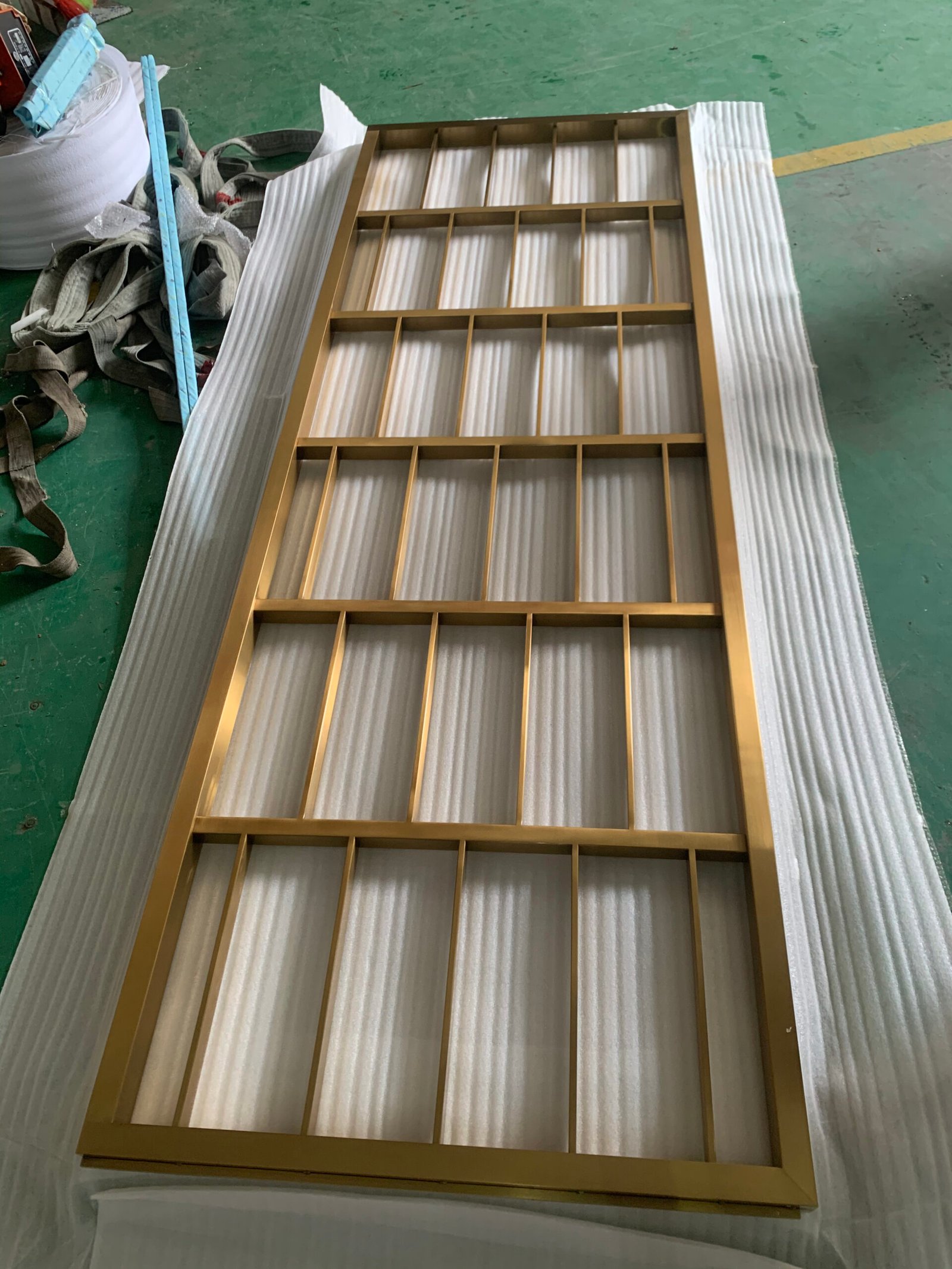
Classic grids and orthogonal geometry
- Fabrication Characteristics: Utilizes rectangular or square tubing, joined via butt-welding at 90-degree angles.
- Visual Aesthetic: Minimalist and precise, evoking a modern Bauhaus style or the charm of “window lattice” motifs found in New Chinese design.
- Fabrication Challenges: Involves a high density of intersecting weld points; if grinding is uneven, distinct “bumps and depressions” at the weld sites will become visible after the finish/plating is applied.
45-degree diagonal intersection and polygonal honeycomb pattern
- Fabrication Characteristics: The tubing undergoes precision CNC sawing—cut at 45-degree or other specific angles—and is assembled into diamond, hexagonal, or triangular structures.
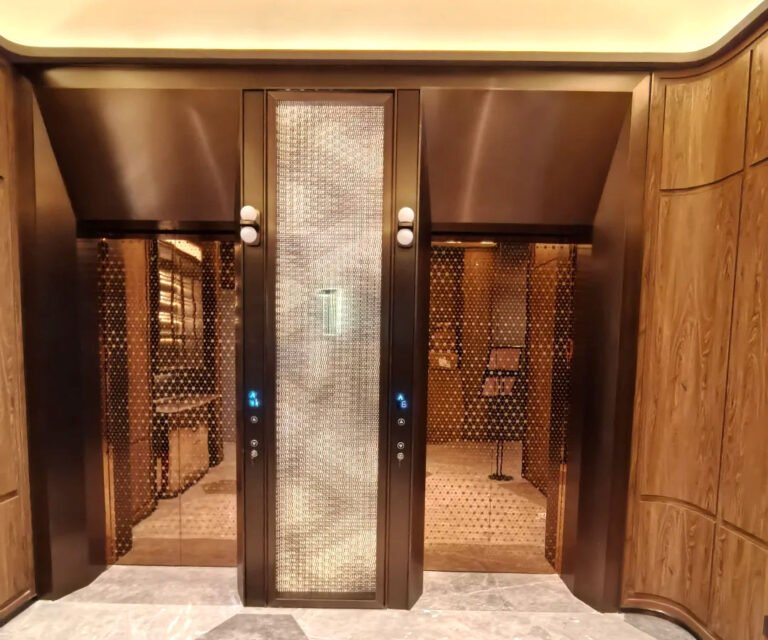
- Visual Effect: Creates a strong sense of dynamic visual direction; frequently used for feature walls in elevator lobbies or partitions in executive lounges.
Overlapping & layered tubes
- Process characteristics: The pipes do not lie in the same plane but are welded in a staggered, layered, and interlaced arrangement.
- Visual effects: It presents a three-dimensional, layered effect reminiscent of traditional bamboo weaving or metal mesh, creating a rich interplay of light and shadow.
- JYF METAL solution:Use 3D CAD modeling for notching (or coping) at intersection points to ensure a perfect fit between intersecting tubes and prevent excessively large weld gaps.
Curved & bent tube Compositions
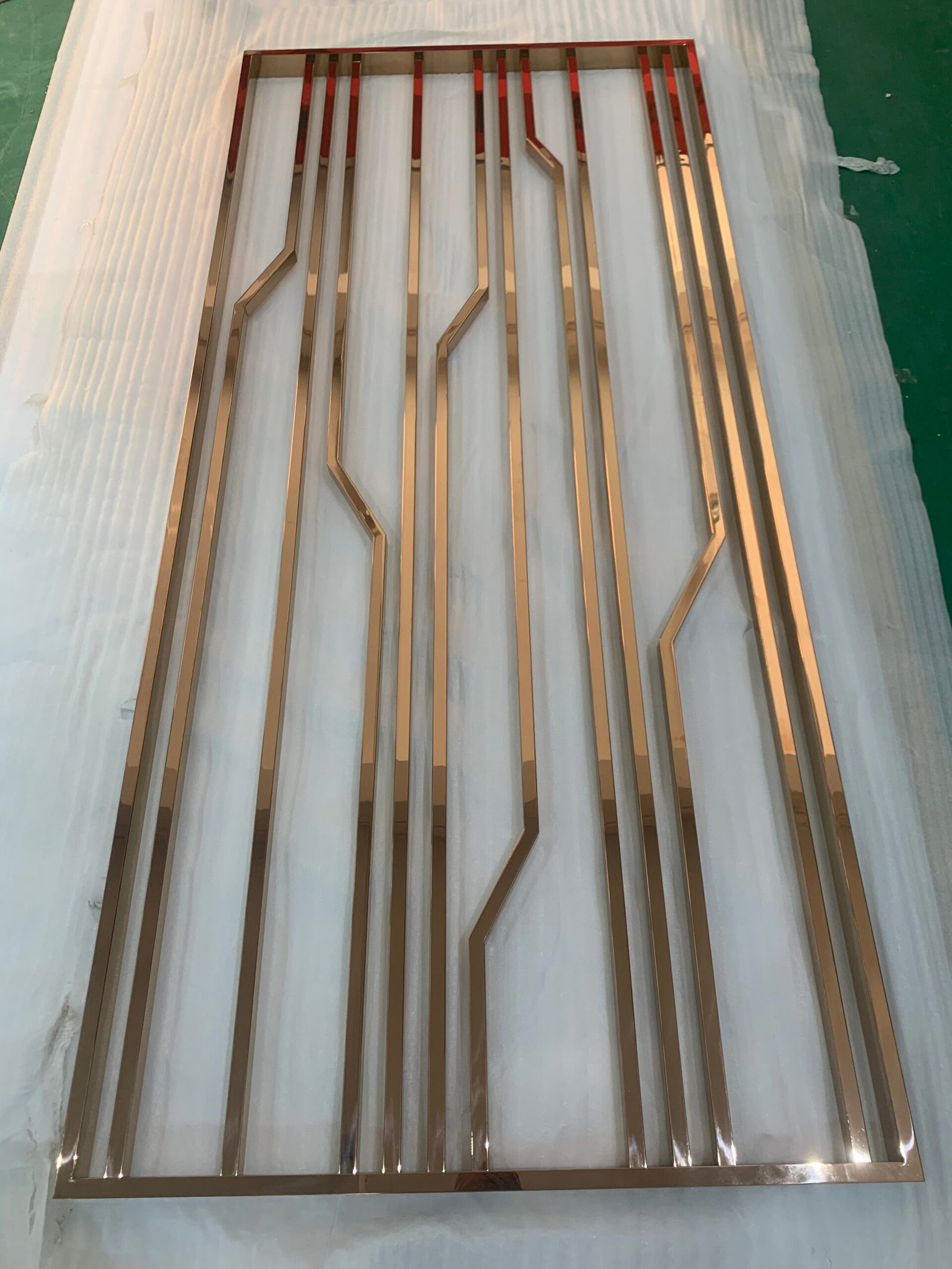
- Process characteristics: Using a CNC tube bending machine, stainless steel round or flat tubes are bent into fluid or plant-like contours, and the curved sections are then welded to a straight-edged outer frame.
- Visual effects: It softens the stark, metallic feel, infusing the space with an air of fluid elegance.
Breakdown of Core Manufacturing Processes: JYF METAL High-Standard Implementation Strategy
Creating a high-quality stainless steel screen featuring a welded-tube pattern is not merely a matter of “cutting and welding”; rather, it is a systematic undertaking that combines mechanical engineering with skilled craftsmanship:
Step 1: Drawing refinement and 3D modeling
Before production begins, the JYF METAL engineering team uses professional software to generate 1:1 detailed drawings for each pipe—specifying length, cutting angles, and the locations of interlocking slots—based on actual on-site measurements, while precisely calculating weld shrinkage.
Step 2: CNC or laser precision cutting and grooving
- Utilizes a high-precision fiber laser tube cutting machine to control angular cut errors to within ≤ 0.1 mm.
- Achieves seamless fitment for complex joints—such as where a round tube meets a square tube—by employing the laser cutter’s intersecting line cutting technology.
Step 3: Fit-up and fixture positioning
To prevent thermal deformation during welding, custom fixtures must be set up on a dedicated cast-iron platform. All pipe units must be precisely positioned and clamped in accordance with the drawing numbers.
Step 4: Selection of welding method
- Argon arc welding: Suitable for structural connections, this method offers deep penetration and high joint strength. JYF METAL senior welding foremen strictly control heat input and employ a standardized procedure: tack welding for positioning, diagonal pass sequencing, and final full welding.
- Handheld laser welding: Suitable for micro-tubing or highly visible, exposed, minute weld joints, it offers the advantages of a minimal heat-affected zone, a smooth weld seam, and negligible deformation.
Step 5: Weld grinding and seamless polishing
This is the most critical step in determining the texture of the screen:
- Rough grinding: Use an angle grinder equipped with a flap disc to remove weld spatter and excess weld reinforcement.
- Precision Polishing: Use a pneumatic reciprocating polisher and a nylon wheel to restore the surface roughness of the weld area to match that of the base material.
- Seamless and Trace-free Standards: Following JYF METAL specialized processing, welded joints become completely indistinguishable to the naked eye after plating, presenting the seamless, unified texture of a single-piece casting.
Surface Treatment and PVD Coloring: Breathing Soul into Metal
Once the pipe welding is complete, the screen proceeds to the surface treatment and coloring stages. While stainless steel possesses an inherently cool aesthetic, the combination of surface texture and color allows it to meet the requirements of any luxury space.
Base surface texture
- Hairline / Satin:Uniform, fine texturing runs along the length of the pipe, offering a refined, understated finish that resists minor scratches.
- 8k Mirror:The welded screen requires comprehensive manual polishing to achieve a mirror-like finish, significantly enhancing the sense of spatial openness and transparency.
- Vibration / Antique Hairline:The non-directional, vintage-style texture is often paired with an antiqued finish to evoke a sense of luxury steeped in the passage of time.
PVD vacuum titanium coating
JYF METAL utilizes large-scale PVD vacuum coating furnaces to ionize metals such as titanium and zirconium under vacuum conditions and deposit them onto the surfaces of stainless steel decorative screens.
- Popular color palettes: Champagne Gold, Rose Gold, Black Titanium, Bronze, Ti-Gold
- Technical Advantages: The coating thickness is merely in the micron range, ensuring the fine texture of the welded and polished pipe surface remains fully visible; it offers exceptional hardness, corrosion resistance, and wear resistance, while being non-toxic and environmentally friendly.
Anti-fingerprint sealing treatment
For high-touch areas such as hotel lobbies and restaurants, JYF METAL applies a transparent, anti-fingerprint coating over the PVD finish.
- Prevents corrosion caused by oils and sweat from hands.
- Significantly reduces future cleaning and maintenance costs; a simple wipe with a damp cloth restores the finish.
Practical Implementation: Installation, Node Concealment, and Security Considerations
Excellent design is not limited to the factory; it is fully realized through on-site installation:
Concealed fixing connection point
High-end projects aim for a “seamless look where screws remain unseen.” When designing screen frames, JYF METAL incorporates concealed steel structures or embedded components within the ceiling and floor; the top and bottom of the screen feature either a sleeve-insert design or a concealed lateral bolting mechanism, ensuring the purity and visual cleanliness of the overall facade.
Thermal expansion/ contraction and anti-wobble measures
For extra-high partitions, an expansion gap of 2–3 mm must be reserved within the connectors, incorporating high-performance polyurethane or silicone gaskets; this setup absorbs minor structural vibrations and prevents noise caused by friction between metal components.
Integrated combination with glass and lighting
The tubular screen structure allows for integrated lighting channels to house concealed 24V flexible LED strips; alternatively, materials such as laminated glass or fluted glass can be secured within the tubular frame, creating a multi-layered interplay of solidity and transparency through the combination of metal, light and shadow, and translucent media.
Why Choose JYF METAL for High-End Custom Screens?
Given the complex geometric tube welding patterns and rigorous hotel-grade acceptance standards, selecting a manufacturer with end-to-end engineering control capabilities is crucial.
Analysis of Engineering-Grade Drawings
JYF METAL We possess an experienced team specializing in detailed metal design, capable of transforming architects’ abstract concepts into construction drawings that meet production and installation standards.
A blend of exquisite craftsmanship and CNC technology
Equipped with advanced laser tube-cutting machinery and staffed by welders and polishing artisans with over a decade of experience in high-end custom metalwork, we ensure that every pipe joint is seamless and smooth.
Quality control across the entire industry chain
From the procurement of premium 304/316 base materials, precision cutting, and assembly/welding/grinding, to in-house controlled surface treatment and PVD coloring, a comprehensive closed-loop quality process ensures a flawless finish with consistent color.
Global project delivery experience
The product complies with international construction standards; it is fully protected and sealed in wooden crates for shipment, and we support global transport as well as on-site installation guidance.
Conclusion
Custom stainless steel decorative screens, fabricated through precision tube welding, represent a fusion of structural engineering and exquisite craftsmanship. With their artfully arranged lines, rich geometric depth, and metallic-toned finishes, they infuse timeless architectural aesthetics into countless top-tier hotels, luxury residences, and commercial spaces worldwide.
If you are planning a high-end metal decoration project and require professional design development, mock-ups, or project quotations, please contact the expert consulting team at JYF METAL. We are dedicated to transforming your design concepts into stunning, tangible artistic spaces through superior technical expertise and rigorous quality standards.