Building Facade Trends: 7 Design Directions Shaping Modern Architecture
Table of Contents
The role of building facades has changed from mere protective exterior structures into more complex designs which can help express the identity of a building, improve its environmental performance, and create unique commercial spaces. Building facade trends have started incorporating materials such as stainless steel, perforated metal, and other custom designs. The changes in building facade designs can be useful for those who want to create unique exterior designs.
Building Facade Trends Are Moving Toward Expressive Metal Design
The increasing popularity of architectural metals is a sign of moving towards façade designs where aesthetics and functionality go hand in hand. JYF Metal uses stainless steel, aluminum, copper, steel and alloys along with different finishing processes and custom fabrication techniques. This makes metal an appropriate choice for any project where both aesthetics and performance matter.
Perforated Panels Create Layered Exterior Architecture
Today, the increasing value of perforated metal panels in contemporary commercial architectures can be attributed to the fact that perforated metal panels generate depth without adding weight to the façade. Strategically designed perforations bring to life patterns, shadows, ventilation properties and semi-transparent layering on the façade surface. JYF Metal offers perforated metal curtain wall systems, which makes it an ideal solution for commercial projects.
Stainless Steel Brings a Refined Contemporary Appearance
Stainless steel is still relevant in high-end exterior architecture due to its strength and versatility in appearance. It is possible to produce mirror, brushed, sandblasted, vibration, embossed, etched, and antique finishes with the same material and achieve various appearances. This versatility gives an opportunity for the designer to integrate the elements of the facade with doors, columns, ceiling, and other interior components, creating unity of architectural language in the whole project.
Curved Metal Forms Add Architectural Movement
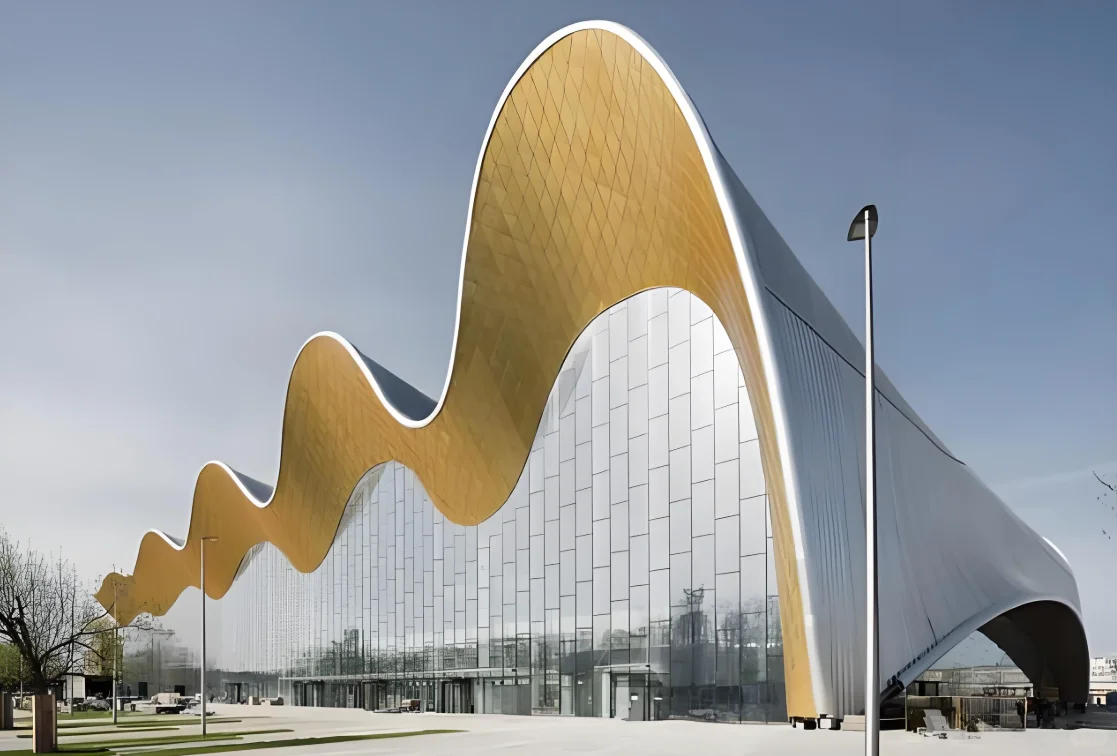
The straight-line facades become more common with the introduction of curved, wavy, or three-dimensional metal structures. Modern technological advances make it possible to bend sheets of the material according to the drawings of architects. The custom-made geometry turns an ordinary building facade into the architectural landmark. In case of commercial and hospitality projects, metal curves allow creating sculptural elements with minimal usage of decorative materials.
Custom Patterns Turn Building Exteriors Into Visual Identity
Customization of patterns is also an increasingly important trend in contemporary exterior design. Instead of picking out standardized panels, architects can create geometric patterns, graphic branding schemes, and artistic textures, which strengthen building identity. Customized patterns can be created by JYF Metal for metal sheets and architectural panels used for construction of hotels, commercial, retail, and landmark projects where façade aesthetics play an important role in branding.
Architectural Facade Trends Are Increasingly Focused on Material and Finish
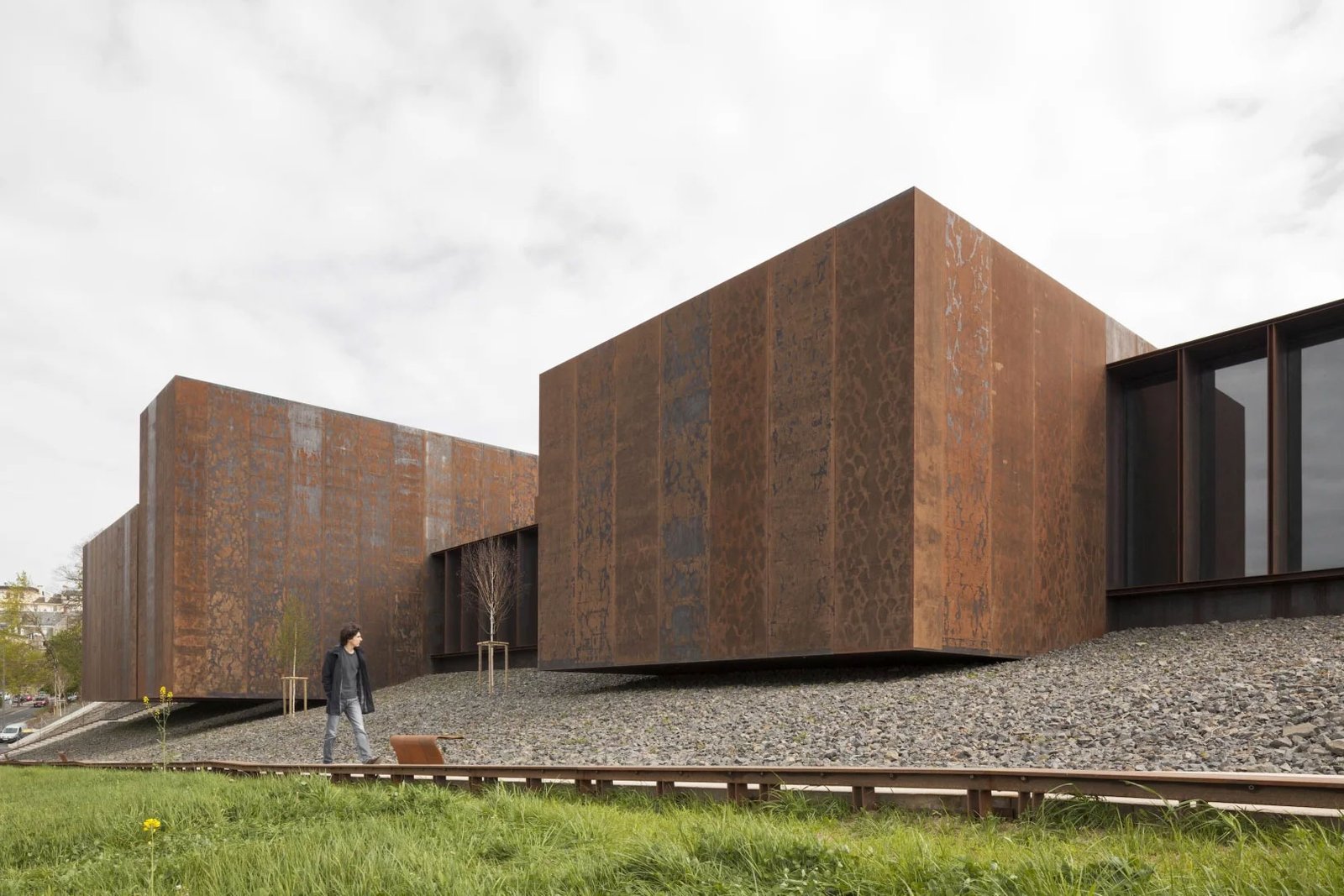
Choosing materials is not only about selecting metal, glass, stone, or composite façade solutions anymore. Appearance of the surface, its texture, durability, and manufacturing process are equally important. A good façade needs to retain its original appearance while ensuring all technical parameters. Therefore, architects are more concerned about materials, their combination, and customized components at an early stage of the project development.
Mixed Metal Materials Create Richer Building Envelopes
When stainless steel is combined with aluminum, copper, steel, or alloy metals, then contrast can be achieved without resulting in disarray. Metals have varying colors, weights, textures, strengths, and resistance to corrosion, thereby giving architects room to use appropriate metals for different façade uses. The portfolio of JYF Metal architectural metals includes a variety of materials that help designers combine several finishes or characteristics in a single exterior design.
Textured Surfaces Are Replacing Uniform Exterior Finishes
While uniform metallic facades may look minimalistic, there are textural effects that give the facades variation in their visual appeal. Brushed, vibration, embossed, etched, sandblasted, and water ripple effects affect how light falls on a building at different times of the day. These effects come in handy when designing sophisticated buildings without complex structural forms.
Color-Treated Metals Expand Architectural Possibilities
Metal façade cladding is no longer restricted to the classic silver or gray finishes. Different surface finishes and color choices make it possible to achieve warmer, darker, brighter, or more luxurious façade compositions. The JYF Metal company notes the capacity to produce many colors depending on material features and project demands. It allows architects to gain more flexibility while coordinating façade panels with signs, illumination, landscaping, entrances, etc.
Decorative Profiles Are Becoming Important Detail Elements
The small architectural elements can greatly influence the impression from a façade composition. The decorative metal profiles, trim pieces, edge details, transitions can accentuate large panels and make transitions between materials smoother. Such elements will also allow the emphasis on the entrances, windows, corners, or horizontal divisions. With the growing detail approach of contemporary architecture, the metal profiles become an important design element, not just an additional finish product.
Modern Building Envelope Design Is Becoming More Performance-Oriented
For a facade to look good, it must also be reliable during its entire service life. The factors affecting performance include the strength of the material, its resistance to corrosion, the accuracy of manufacture, the design of connections, and the quality of installation. JYF Metal puts stress not only on the design and fabrication but also on the engineering aspect, which illustrates the trend in the metal industry towards providing architectural solutions as opposed to just products.
Corrosion Resistance Matters in Exterior Applications
The exterior elements will be exposed to rain, moisture, temperature variations, pollution, etc. Thus, the choice of material should take into account the geographical location of the project and its degree of exposure. Stainless steel may become a good choice in architectural applications, depending on the right choice of grade and finish.
Lightweight Systems Can Support Efficient Construction
Reducing the weight of the façade will make its handling, transporting, structural compatibility, and installation easy. Metal panels allow architects to be flexible in their designs without having to depend completely on heavyweight façade construction materials. Honeycomb metal panels are an example of how façade constructions can use light-weighted structures and rigid exteriors. Honeycomb and perforated metal panels are listed by JYF Metal as part of their curtain wall systems.
Precision Fabrication Supports Complex Architectural Geometry
Building façade sustainability is becoming more concerned with durability, maintenance, flexibility, and material utilization over appearance. Architects and building owners look for exterior solutions which stay contemporary and avoid unnecessary replacement. Appropriate materials, finishes, and construction will result in a durable building envelope if all other environmental and structural considerations are appropriately met.
Sustainable Architectural Facade Trends Favor Long-Term Material Value
Sustainability of metal exterior cladding increasingly relates to durability, maintenance, flexibility, and efficiency of materials more than aesthetics alone. It is important for designers and developers of buildings to ensure that façades continue to be aesthetically appealing but require less replacement. Durability can be ensured by using long-lasting metal, finishes, and fabrication where appropriate.
Durable Materials Can Reduce Replacement Requirements
The use of a façade that will last for many years without requiring repeated refurbishment is desirable. One of the most important characteristics in choosing a suitable material for construction is its durability and resilience to corrosion. Stainless steel is known for these properties and can be used in many commercial buildings. However, performance of any façade depends on many factors other than cost.
Reusable Design Concepts Support Long-Term Adaptability
Buildings often go through renovations, rebranding, or changes in external functionality. Using modular panels, changeable decorative panels, and smartly designed joints can make such changes possible. Metal fabrication, tailored to meet the needs of the projects, can be used for this purpose. Architects can design unique-looking facades now and at the same time ensure that they have the capacity to change in the future.
Lifecycle Thinking Is Becoming More Important for Buyers
Nowadays, buyers pay more attention to the lifecycle of façade panels rather than only looking at the cost of purchasing them. Material longevity, finishes quality, fabrication precision, installation assistance, and the possibility of replacing some parts of the system may be very important in terms of adding value to the project. An experienced architectural metal supplier must do more than just supply completed panels.
Conclusion
Modern building facade trends emphasize customized designs, durable materials, precise fabrication, and long-term performance. From perforated panels and honeycomb systems to stainless steel finishes and curved forms, metal façades give architects greater creative flexibility. Choose JYF METAL for customized façade solutions that bring your architectural vision to life.
FAQs
Q1: What Metal Is Best for a Modern Building Façade?
There cannot be a best metal, as the metal used in the construction depends on the geographical location, exposure, design, structural needs, budget, and aesthetics. For high-quality architectural purposes, stainless steel looks like the most desirable metal due to its durability and surface finishes, although other metals might fit in other situations. It should be analyzed in consideration of the surface finishing, fabrication, installation, and lifespan.
Q2: Are Perforated Metal Panels Suitable for Commercial Buildings?
Yes. Perforated panels can provide the effect of depth, surface patterns, screening, and façade layers with different looks depending on the perforation patterns, sizes of panels, finishes, and installation schemes. These panels are good for commercial and hospitality structures that need both functional and aesthetic screening effect. JYF Metal provides perforated metal curtain walls among its architectural metal systems.
Q3: What Should Buyers Check Before Ordering Custom Façade Panels?
Some of the items to consider while purchasing would include: the quality of the material, size, thickness, surface finish, color, design, tolerances, joining method, packaging, and requirements for installation as well as the process of quality control. It will also be important to establish whether the supplier can assist in developing design drawings prior to fabrication.