
Today, custom metal display cabinets for luxury retail stores are an obligatory element of interior design in luxury retail. For the luxury retailer, the jewelry store, the watch gallery and the designer store, the display case is not just a storage space any more – this is the place where these products will be displayed. The display case can be considered as an architectural element by the interior architect, while for the fit-out contractor this is a risk schedule item.
Quick Answer
Custom metal display cases are ideal for luxury retail stores because they combine premium aesthetics, structural durability, product security, and flexible design. Buyers should consider the displayed products, store layout, material specifications, and fabrication requirements before selecting a manufacturer.
- Buyers should select suitable materials, such as 304 or 316 stainless steel, based on the store environment and expected usage.
- Finish samples, lighting effects, glazing, dimensions, and structural details should be confirmed before production begins.
- Approved shop drawings, coordination with fit-out contractors, and strict quality control help prevent installation issues and project delays.
Why Custom Made Metal Display Units Are the Standard of Luxury Retail
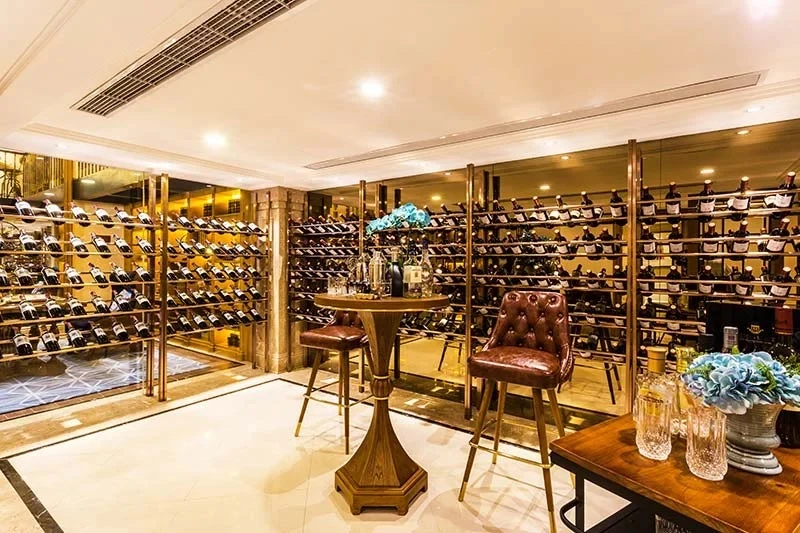
While the selection of the material may depend only on the aesthetic preferences of the retailer, one must not forget that aesthetics is only one of three criteria of luxury retail when evaluating display units. Custom metal display cabinets have to be the embodiment of the authority of the brand and be able to withstand constant use along with the expensive products they hold. This is the reason why stainless steel has become so popular among luxury retailers and why it replaces wooden and chipboard display units.
More Than Aesthetics and Reflection of Wooden Units
Wooden material creates a warm atmosphere, but it also offers a grain texture, limited color palette, and a feeling of furniture-like display unit. Stainless steel provides a smooth surface that will reflect light of the shop back to its customers. Mirror surface guarantees maximum reflection of any display, brushed finish will soften the reflections and still preserve clarity, and a two-millimeter frame is clearly noticeable from the distance of twelve meters.
Durable in Continuous Use for Commercial Purposes
The piece of furniture will be continuously opened, knocked, washed, and photographed many times daily, and the areas where there is wear and tear are the places which cannot be seen: the hinges, shelves, and joinery of plinth. The materials used can stand knocks, water, and washing chemicals; the carcass has been welded in such a manner that it will not warp due to the weight of shelves which will contain watches and handbags. The thickness of materials will depend on the span and load of materials and varies between 0.8 mm thin materials and 3.0 mm thick materials. In ten years, the difference will be a smooth door and silent drawer.
Security and Protection of High-Value Items
To protect luxury goods from theft in a luxury retail store, one needs to deter the robber long enough for him to think twice about taking the risk. This is possible due to lockable doors, laminated glass, hidden hinges, and metal sliders. Moreover, a metal structure will resist when trying to open it, while a wooden structure will not. Metal being non-porous will not release any odor inside the enclosures, which is very important when protecting leather and silk goods. The structure will be easy to clean without solvents, which could spoil the trim of the enclosures. Humidifiers will be installed in enclosures with watches to be displayed in the same way all year round in the mall.
Designing Metal Cabinets Based on the Goods and the Concept of the Store
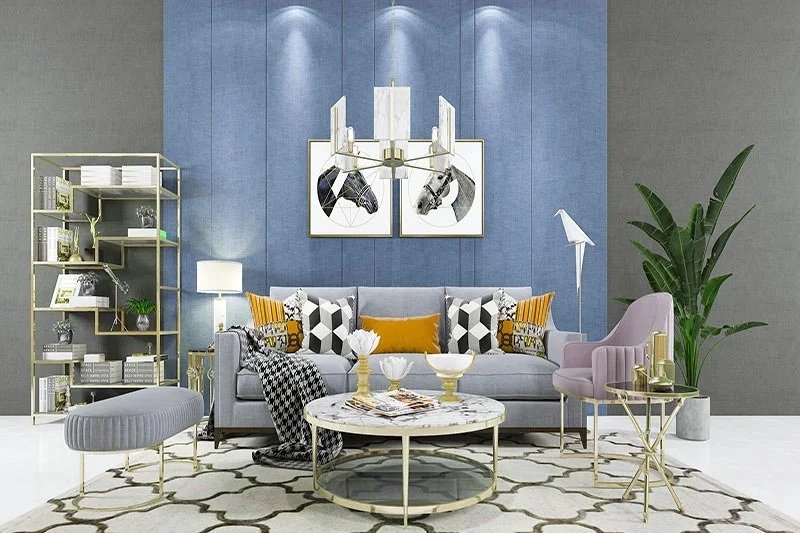
The design process has to start with the goods and the concept of the store, and not with the stainless steel display stand. Thus, for the jewelry boutique, watches gallery, and bags floor there will be different depths, sightlines, glazing and lighting.
Ratio, Depth and Sightlines
The depth depends on the product and on the selling technique. The depth for rings should be 300 mm, so that the client could go close without being backed off by the case; for handbags – 450-500 mm in height, together with mirrors and stool. The area from 900 to 1500 mm is the most expensive one; volumetric products are kept on lower shelves while the upper ones are for the story of the brand. Changing the ratio on paper costs nothing; finding the real one would mean redesigning.
Lighting, Glazing and Thermal Loads
The lighting of metal cases may be considered as an engineering task instead of an aesthetic one. The LEDs installed at the front edge of shelves and top rail in the range of 3000-3500 K with high color rendering would give the right illumination to show the gems and metal products and could be changed according to evenings trading. Low iron glazing would protect from the greenish color of white diamonds; laminated glass would give additional safety in places where clients come closer. Metal is a good heat conductor; drivers should be separated from the products.
Modular Fixtures
The interior of the store will change every three to five years; but, custom metal display showcases will not last that long. Therefore, design modular fixtures where the connections and datum heights will all be standard. In case the identity changes, it will only change the surface, top, and glazing but leave the carcass alone. The concept behind modular fixtures is to install them in sections overnight, so the floor can close after sunset on Sunday and reopen before sunrise on Tuesday.
Custom Metal Display Case – Unique Material and Finish
It is possible to have two similar drawings with varying costs due to material and finish selection.
304 or 316 Stainless Steel?
The material choice is down to the specifier’s call; however, 304 stainless steel will be sufficient for most interior and retail projects, which have excellent corrosion resistance and good surface finish, while 316 contains molybdenum and is better suited to coastal, humid interior and locations where cleaning agents build-up. The choice of thickness also relies on the same rationale: even if the skin is thin, the frame, shelf and plinth have to have sufficient thickness to resist deflection caused by the weight of glass and merchandising.
PVD Coating and Polishing
Finish is the feature giving metal luxurious appearance and preventing fingerprint marks, whereas polished finish demands a perfect substrate and careful handling; hairline brushed finish serves this purpose, while the bead blast finish diffuses light and matches the matte branding. PVD coatings like gold, champagne, bronze, black titanium and rose gold can be applied using physical vapor deposition (PVD) technique, and because of the hardness of the coating, it will withstand frequent cleaning. An anti-fingerprint top coat is recommended if customers will touch the cabinet.
Curves, Welding Precision and Flatness
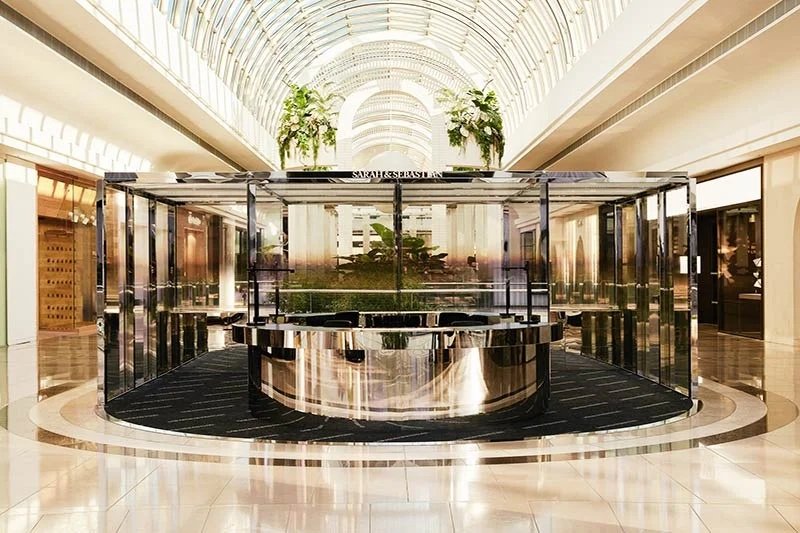
The main difficulty that you can meet in metal fabrication is related to curves. Once you need to build a curved glass cabinet, curved countertop or wave plinth, you'll require bending, precision laser-cutting of blanks and welding without showing any filler at all. The larger the sheet used will be, the fewer joints will be needed along the line, ensuring continuous reflection. Color and grain orientation are no less important in fabrication process as any difference in color or grain will ruin the whole wall elevation.
Production of Custom Metal Display Cabinets On-Time and in the Most Cost-Efficient Manner
Approval of Shop Drawings and Samples
If the structure cannot be built as drawn, the problem is in the drawings, not the shop. Your shop drawings will be your vision translated into measurements, connections, fixing points, glass sizes, light location, access panels etc., and must be checked against your architectural drawings before issuing. Samples can only be approved from a physical finish sample on the actual substrate, because colour chips cannot show a two-metre elevation under retail lighting. Approving both of them together will eliminate two major causes of delay.
Coordination of Designer and Fit-out Contractor
If we speak about retail projects, then cabinet installation will take place after flooring, ceiling and lighting finishes installation; this can only be achieved when all three parties – metal supplier, designer and fit-out contractor – share the same drawings and revision log. The interface issues need to be sorted beforehand: plinth height according to the finished floor, back panels according to the brand wall, LED drivers and glass access.
Quality Control, Packing, Assistance in Installation
The quality control of steel also manifests itself in welding penetration, precise fit of the joints and flawless surface that does not warp at the hinges. It is necessary to make sure that quality check is carried out prior to packing and not after the delivery, besides, it is essential to photograph the product in line with the drawings. As part of the international transportation process, edge protection, glass packaging and moisture protection are needed since the scratches on the mirror glass can’t be fixed on site.
Conclusion
Well-designed bespoke metal display cases do more than showcase products; they help define the character of a luxury retail space. The right combination of materials, finishes, proportions, and detailing ensures that each piece complements the store's overall design while meeting its functional needs.
At JYF METAL, customized metal fabrication brings these design ideas into reality. From drawing confirmation and sample approval to precision manufacturing, every stage is carefully considered to deliver display solutions that reflect the quality and identity of each retail project.
FAQs
How long will it take to construct a custom made metal display cabinet?
Normally it takes about 3-5 days for designing and approval of the design and about 20-25 days for manufacturing and delivery if the delivery location is international. This would be possible provided that the finishes are pre-approved before beginning the program.
Is it possible to design a cabinet finish matching the finish of the store?
Yes, normally this is possible. Finishes are matched with respect to grade, gloss and color and physically checked by comparing with the existing finishes in store lights. In case it is not possible to match, it is better to match the surface than the photograph.
Are metal display cabinets suitable for watches and precious jewellery?
Yes, they are highly suitable in both cases as long as they are enclosed, fitted with LED lights that recreate the colours, and the glazed sections are lockable. Humidity control and the soft closing drawers ensure the safety of the mechanism and gems housed in the metal structure.
What type of information is necessary in order to quote properly?
The following is sufficient for providing an accurate quote: drawings with dimensions and elevation drawings of all cabinets and exhibits.


