
Architectural Facade Panels: Corten Steel
Table of Contents
For modern landmark buildings and high-end urban commercial projects, picking facade materials is about more than just covering the building structure. Cladding panels need to create a unique look and architectural depth, keep solid structural performance even after decades of outdoor exposure, and help control long-term maintenance costs.
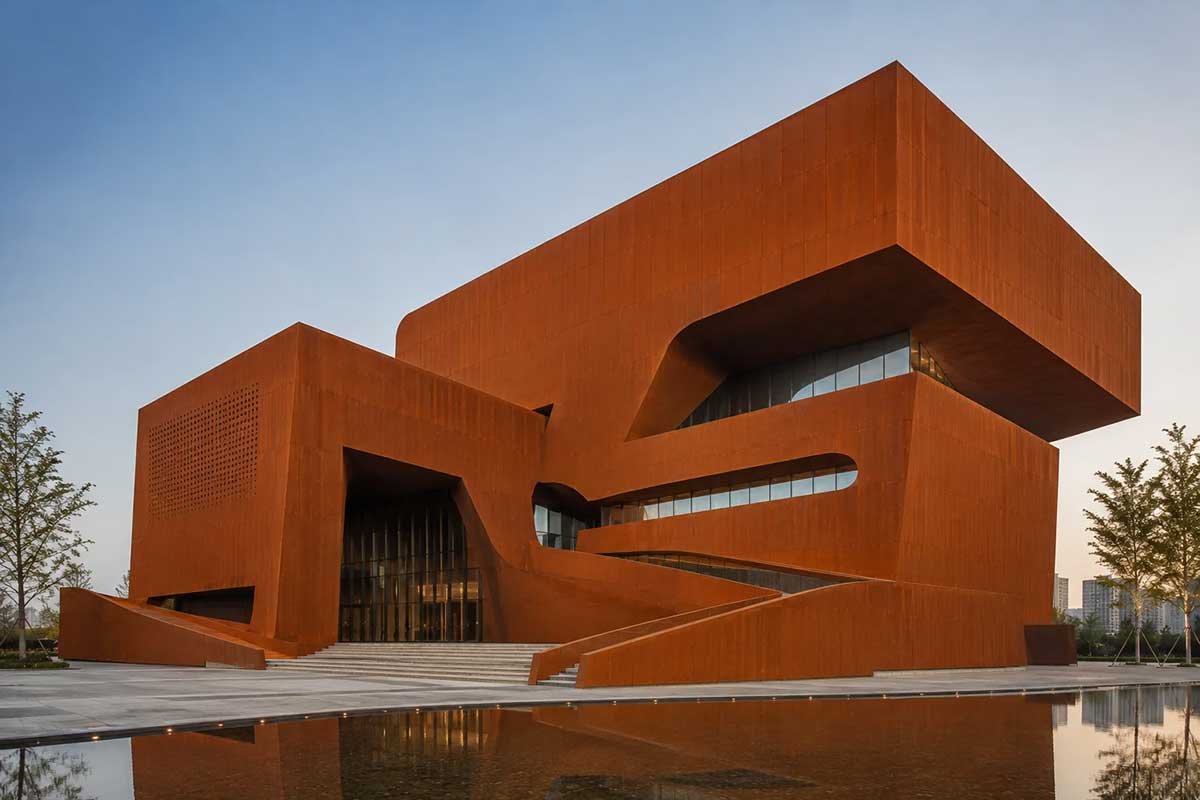
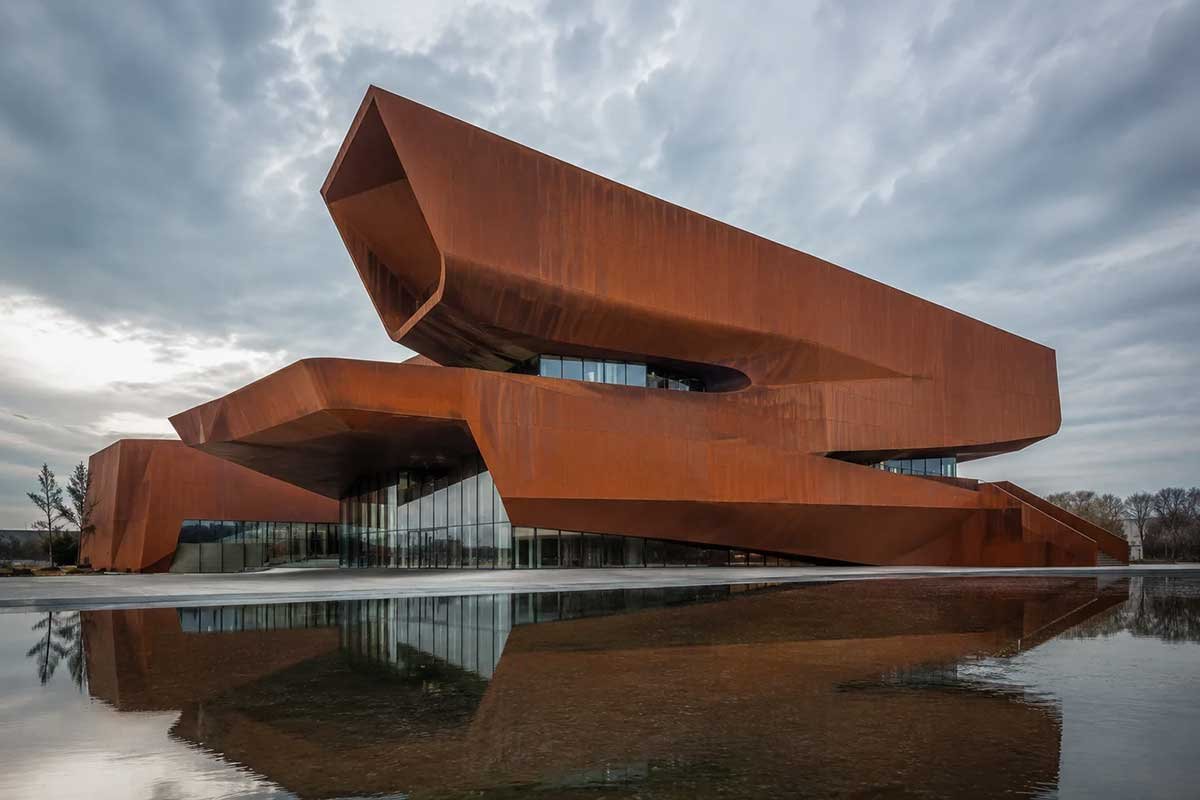
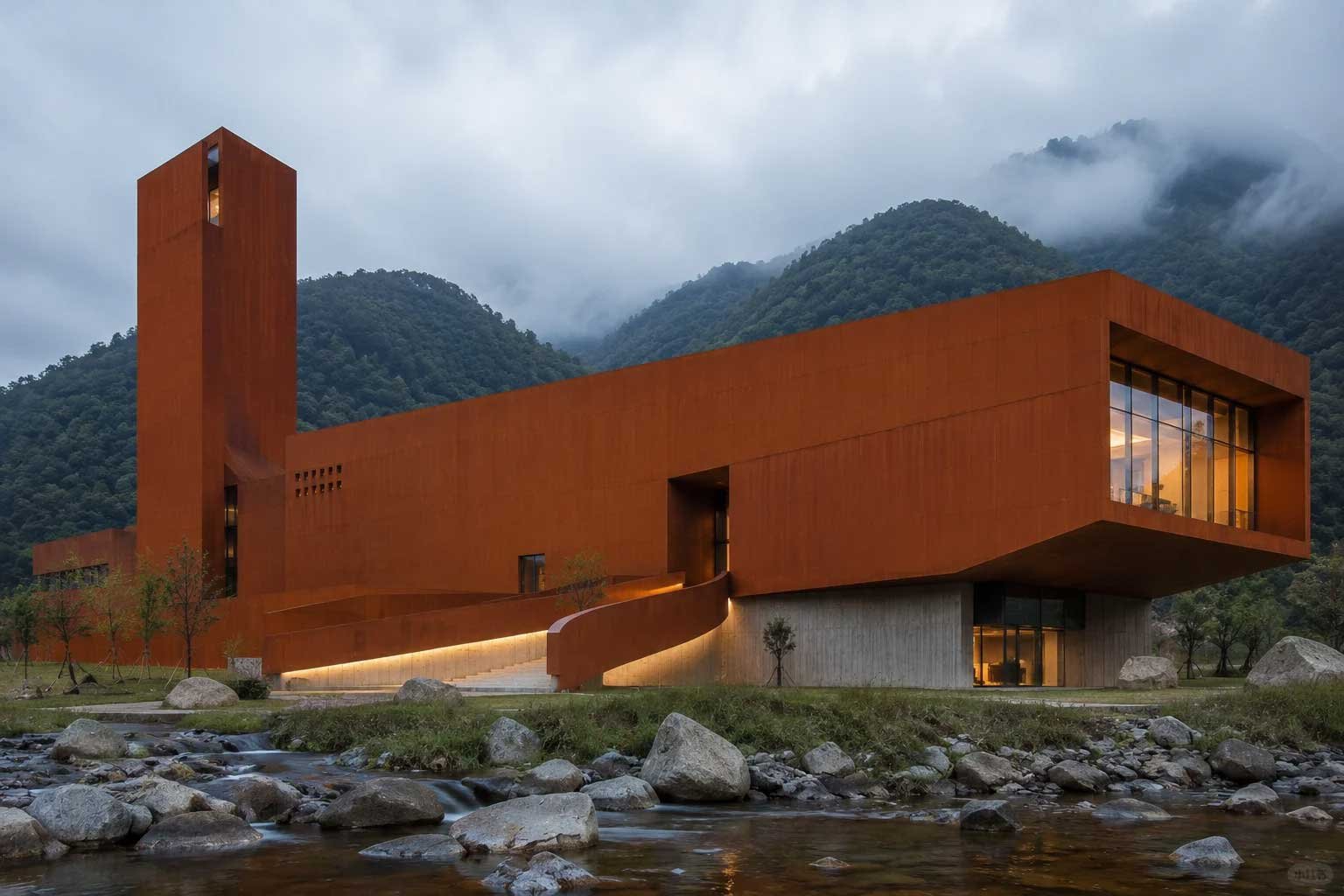
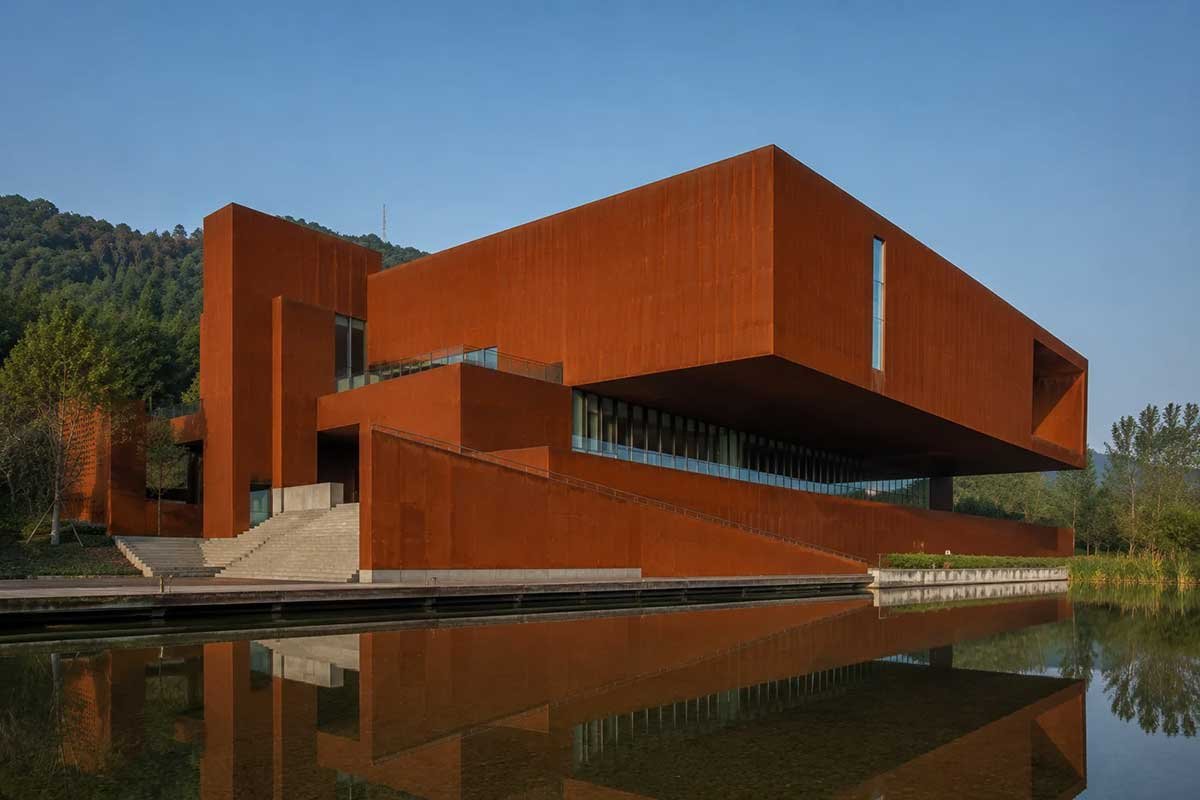
Corten steel is widely used for facades on modern commercial complexes, cultural centres and luxury hotel projects.
Weathering steel has a warm, earthy amber colour, with a natural patina forming on its surface. It combines rugged industrial robustness with the organic softness of architectural design. Instead of blocking the elements using synthetic paint or short-life coatings, weathering steel relies on natural wet and dry cycles in the atmosphere to build up a dense iron oxide protective layer. This innate metallurgical property makes corten steel a more sustainable, better-performing choice compared with regular carbon steel, stone and standard aluminium cladding solutions.
Key Benefits of Corten Steel Facades
Compared with traditional painted metals and natural stone cladding, choosing Corten steel panel as the building facade has obvious advantages in terms of cost, structural performance and visual appeal.
WEATHERING STEEL CORE ADVANTAGES
|
Self-healing patina
Dense α-FeOOH Layer
Protects Steel Core |
Low paint maintenance cost
Eliminates Coating Costs
Lower Lifetime OPEX |
High strength-to-weight
High Yield (SPA-H/A588)
Supports Large Spans |
Self-Repairing & Corrosion-Resistant, Extending Service Life
High quality weathering steel alloys perform well because of their specially adjusted chemical makeup. Trace alloy elements including copper, chromium, nickel and phosphorus react with moisture in the air, forming a thick and strong oxide layer (α-FeOOH).
If small scratches or dents happen during site installation, the bare steel underneath will re-form the oxide layer naturally. This protective rust layer can repair itself, so there is no requirement for paint or chemical treatment. That makes weathering steel last for a very long time in normal outdoor conditions.
Low Maintenance Cost
Traditional carbon steel or anodized aluminum facades require periodic repainting, sealant replacement, and frequent chemical cleaning to prevent fading, whitening, and coating deterioration. Over a building’s 20-year service life, the maintenance costs for the paint coating system often exceed the initial purchase cost of the materials. Corten steel removes the need for recurring painting work. Once its patina stabilises, rain naturally washes the surface, cutting down the building’s operating costs.
High Yield Strength and Thin-Gauge Efficiency
Weathering steel has a higher yield strength (≥345 MPa) than architectural aluminum alloys (around 110–180 MPa). Thanks to its strong structural stiffness, curtain wall engineers can choose thinner panels, such as 2.0 mm or 3.0 mm Corten sheets.
Even with thinner plates, it can reach equal or better wind load resistance for large spans. This reduces the weight of support steel frames and saves cost on building foundations.
Global Architectural Market Trends for Corten Steel
Global demand for weathering steel sandwich panels is growing rapidly across North America, Europe, the Middle East, and the Asia-Pacific region. The major market forces pushing architects to specify this material include:
- Industrial heritage renewal and adaptive reuse
- Sustainable and carbon-neutral building standards
- Contrast in design: Warm amber-hued weathering materials paired with glass and concrete
Industrial Heritage Revival & Adaptive Reuse Projects
Urban renewal planning, factory renovation, and cultural district development all tend to utilize materials with strong historical character. Corten steel’s weathered, tactile texture blends perfectly with exposed brick, concrete and timber. It has become architects’ top material pick when converting former industrial premises into contemporary art centres, tech hubs and commercial complexes.
High-Contrast Biophilic Aesthetics
Modern architects often use material contrasts to design unique architecture facades. By combining warm, textured amber weathering steel with cool, reflective 8K mirror glass curtain walls or smooth light-colored stone, they create a striking visual rhythm, enhancing the urban street landscape and retail storefronts.
High-Value Commercial Application Scenarios
Engineered corten steel panel systems can be tailored to diverse architectural elements, offering specialized solutions for high-impact commercial areas.
High-impact corten steel application areas
- Scenario A: Retail storefronts & grand entrance portals
- Scenario B: Perforated sunshade screens & light-filtering facades
- Scenario C: High-rise rainscreen facades & spandrel cladding
- Scenario D: Landscape retaining walls & sculpture structures
Luxury Retail Storefronts and Entrance Portals
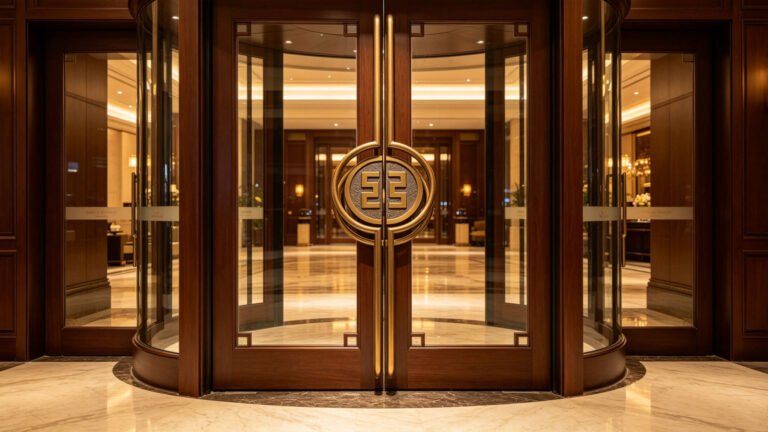
First impressions dictate commercial property value. Using pre-patinated, UV-sealed Corten steel panels for entrance portals and retail canopies provides an exclusive, high-end artistic aesthetic. Factory chemical stabilization prevents loose rust powder from rub-off, protecting luxury store signage and pedestrian clothing.
Perforated Sunshade Screens and Architectural Louvers
High-power CNC fiber laser cutting can transform thick (3.0 mm to 5.0 mm) corrosion-resistant steel panels into intricate geometric screens. Installed in front of glass curtain walls, these perforated screens provide shading, reduce solar heat gain, and cast complex patterns of light and shadow onto interior floors, enhancing the atmosphere of the indoor space.
High-Rise Rainscreen Facades and Column Covers
When laminated onto aluminum honeycomb cores, corten steel panels achieve total visual flatness across vast vertical facade elevations. Integrated into ventilated rainscreen subframe systems, the panels manage wind pressure, thermal expansion, and rain runoff, creating a durable building envelope for corporate headquarters and towers.
Factory Quality Control, Colorimetry & Ocean Export Packaging
Delivering flawless pre-patinated Corten steel panels across international ocean routes requires advanced factory technology and export packaging.
Quantitative Color Control via Industrial Colorimeter
Because chemical acid patination generates organic surface tone variations, quantitative quality control is necessary to prevent severe color discrepancies across large wall installations. QC inspectors utilize an industrial colorimeter to measure L*a*b* color coordinates across every pre-patinated panel. Batches are held strictly within an approved target tolerance (ΔE < 1.0) against the golden master sample, ensuring uniform amber tones across the entire facade.
Heavy-Duty Export wood Case
Pre-patinated and UV-sealed panels are protected using a rigorous multi-tier packaging standard:
- Laser protective film: The protective film is applied to the surface of each sheet of paper. CNC technology is used for cutting and folding, followed by on-site installation to ensure proper adhesion.
- Foam protection: High-density expanded polyethylene protective panels cover corners and folds to prevent impact damage.
- Non-fumigation wood case: The product is sealed within a wooden frame box and is fixed with heavy-duty steel straps.
Conclusion
Opting for custom-made weathering steel panels offers modern commercial developments an unparalleled combination of qualities: the timeless warmth of metal, structural durability, low maintenance costs, and excellent green building performance. By employing advanced factory pre-coating, clear sealants at fixings, aluminum honeycomb reinforcement, and quantitative color quality control, developers can overcome challenges related to rusting and panel deformation. Working with professional original manufacturers, ensure CAD workshop drawings details, custom manufacturing, and remote installation guidance.
FAQs
Q1: Why pick Corten steel instead of aluminum composite panels or painted steel?
Corten steel has a natural, genuine metal texture. It will not fade, peel or chalk when exposed to UV light. Aluminum composite panels use flammable plastic cores, and painted steel needs repainting every 10 years. In contrast, weathering steel reaches A1 non-combustible fire grade. It lasts a long time and needs very little maintenance work.
Q2: How does factory pre-coating prevent rust runoff from weathering steel from staining sidewalks and stonework?
We use a two-step method to control rust bleeding. First, panels go through accelerated chemical weathering at the factory. Then we apply a clear UV-resistant coating. It locks loose rust particles in place and keeps the amber colour stable. Second, hidden stainless steel drip trays are fitted behind panel seams. They catch rainwater and guide the runoff away from porous stone surfaces.
Q3: What are the primary structural advantages of laminating weathering steel onto an aluminum honeycomb core?
Lamination increases panel flexural strength by over 400%, eliminating “oil-canning” surface waviness across large panel spans. It also dampens rain impact noise and significantly reduces total dead weight on the building frame compared to thick solid steel plates.
Q4: How do you maintain color consistency for pre-patinated Corten steel across large commercial orders?
We enforce quantitative quality control using a calibrated industrial colorimeter to measure L*a*b* color coordinates across every panel. Production batches are held strictly within a ΔE tolerance (ΔE < 1.0) against the approved master sample prior to packaging.
Q5: Can the source factory assist with CAD shop drawings and installation guidance for overseas projects?
Yes. Our engineering team routinely translates architectural concept PDF into detailed CAD shop drawings, panel layout plans, and connection node details for consultant approval. Additionally, we provide comprehensive remote installation guidance—including 3D assembly diagrams, installation manuals, and online video technical support—to guide local installation contractors on-site.