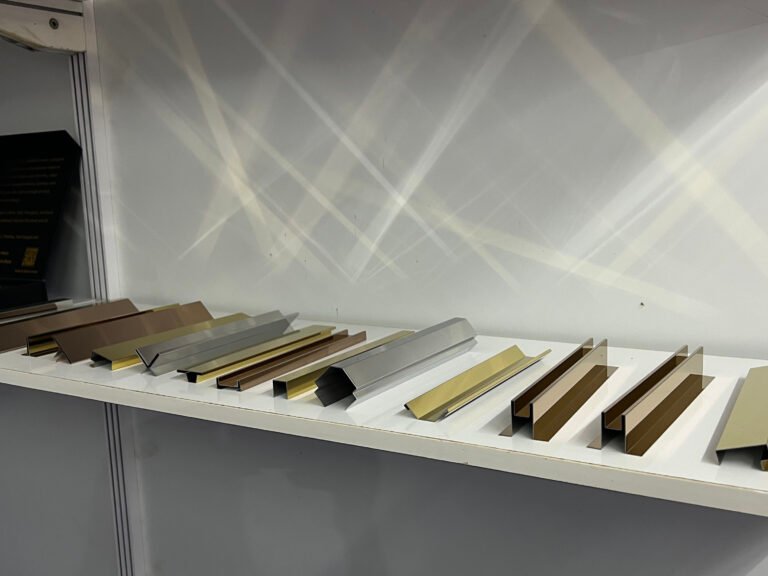

How to Select Sapphire Blue Mirror Stainless Steel Sheets for Luxury Interior Projects
Table of Contents
Top commercial projects — from global flagship luxury stores to high-rise company headquarters — no longer pick interior finishes just to cover bare wall substrates. These decorative materials work as functional architectural features that play with light. They help create depth, set the feel of a space, and boost your brand’s premium image. When it comes to custom metal decorative panels, sapphire blue mirror stainless steel sheets are a top pick for interior designers, facade engineers and main contractors. They deliver bold visual appeal while being tough enough for commercial building use.
JYF METAL use high-vacuum PVD physical vapor deposition to put an ultra-thin titanium film onto 8K mirror stainless steel base material. This finish delivers a rich, semi‑transparent cobalt blue colour. Unlike standard paint or true lacquer, PVD coating is directly bonded to the base material. It creates an extremely hard surface with great scratch and wear resistance. The coating is also chemically stable, so it has a long service life.
To take your original CAD drawings all the way to a finished install on site, you really need to know your stuff when it comes to metal fabrication, what can and can’t be done during on-site assembly, how to pick the right subframe design, and keeping quality control tight. JYF METAL delivers these high-precision architectural metal solutions. We use advanced multi-axis machining and follow international quality standards. This technical guide walks procurement experts and project managers through every key stage of the whole process.
Metal Fabrication & PVD Coating Process
To get sapphire blue mirror stainless steel sheets with high reflectivity and consistent color, we follow a strict two-stage production process. If you skimp on preparing the base sheet or skip key steps in vacuum coating, you’ll run into mirror warping, cloudy surfaces, or coating peeling prematurely.
Base Materials & 8K Mirror Polishing
We start with cold rolled stainless steel coils or flat sheets. We usually go with high-grade AISI 304 for indoor spaces where the temperature and humidity stay pretty stable. But for humid environments, coastal sites, or projects that get a lot of heavy use, we switch over to AISI 316L.
The as-supplied raw metal goes through automatic multi-head wet mechanical polishing. Heavy grinding heads progressively step down through finer silicon carbide abrasive grits to strip surface oxide scale and mill imperfections. The final passes use specialized jeweler’s rouge compounds applied with high-speed felt polishing wheels.
- Optical quality: A uniform 8K mirror reflection at any angle. The surface is very smooth – no fine scratches, no uneven particles, and does not fog even under intense LED lighting. JYF METAL carries out strict flatness checks, to make sure every sapphire blue mirror stainless steel plate satisfies these high visual standards.
High-Vacuum PVD Arc-Ion Titanium Coating
After polishing, the panels run through an automatic ultrasonic cleaning line. We hit them with multi-stage water-based degreasing, deionised water rinsing, and hot-air drying to get rid of any fine grease, iron oxide residue, and micro dust. Any surface contaminants left behind will create tiny voids inside the coating, and lead to localised peeling of the film.
Once cleaned, the sheets are hung vertically on rotating racks inside a high-vacuum chamber. The chamber is sealed and pumped down to pressure under 10⁻³ Pa.
The clean sheets are mounted vertically onto rotating carousels inside a high-vacuum chamber sealed to pressures below 10-3 Pa.
- Ion Bombardment Cleaning: The chamber is heated to 200℃- 400℃, and inert argon gas is ionized to blast away residual atomic contaminants from the sheet surface.
- Titanium vaporization: We use electric arc plasma to vaporize high‑purity titanium targets.
- Reactive gas supply: We feed measured amounts of nitrogen (N2) and hydrocarbon gas into the chamber.
- Molecular bonding: The vaporized titanium ions blend and react with the gas plasma and undergo a reaction. This creates an ultra‑tough ceramic TiN or TiCN coating, which builds up on the stainless steel base material.
We tune the gas partial pressure and coating duration to control the refractive layer thickness precisely between 0.3–0.5 microns. That unique sapphire blue colour comes from optical interference within this thin coating layer.
Key Interior Architectural Applications
Sapphire Blue Mirror Stainless Steel is not usually used across every surface in a space. Its striking visual impact makes it perfect for focal feature areas.
Feature Accent Walls & Elevator Core Portal Cladding
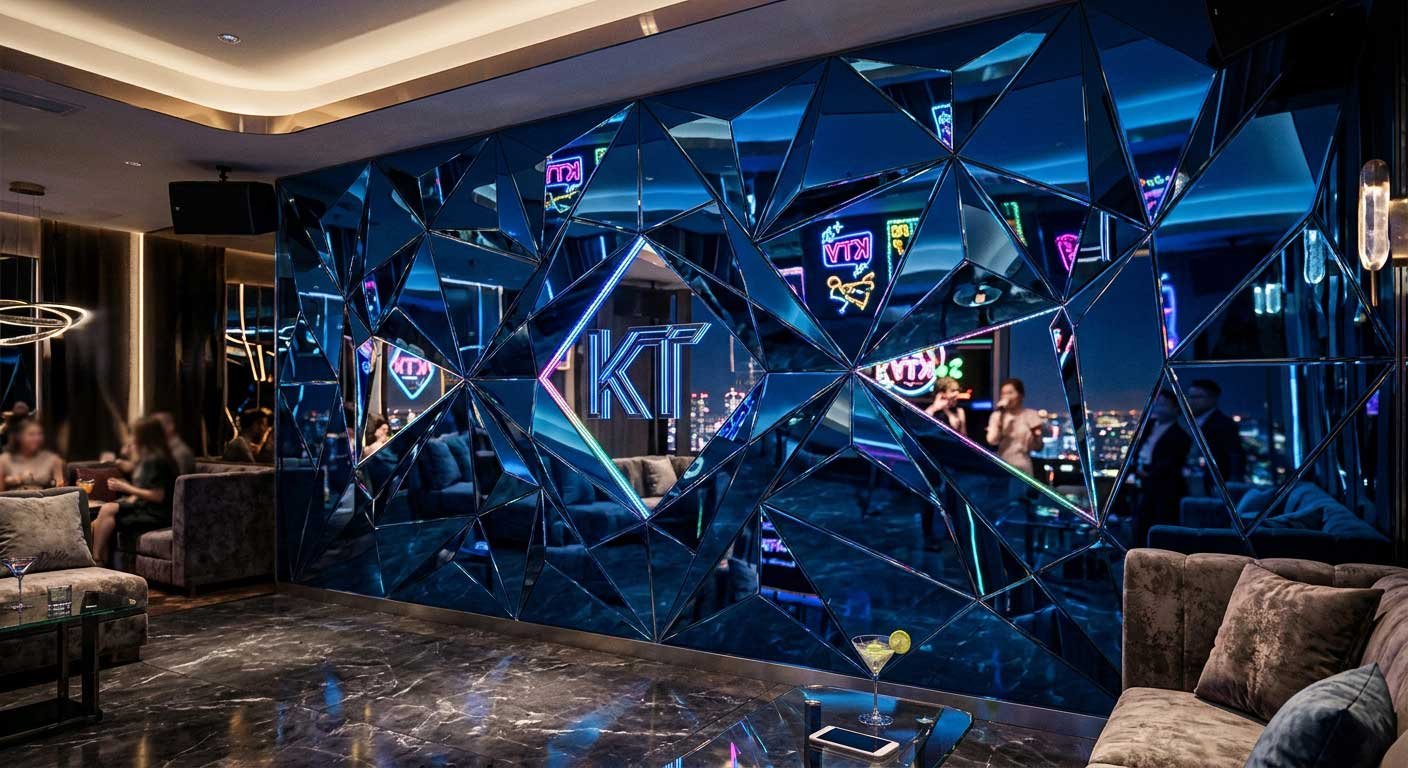
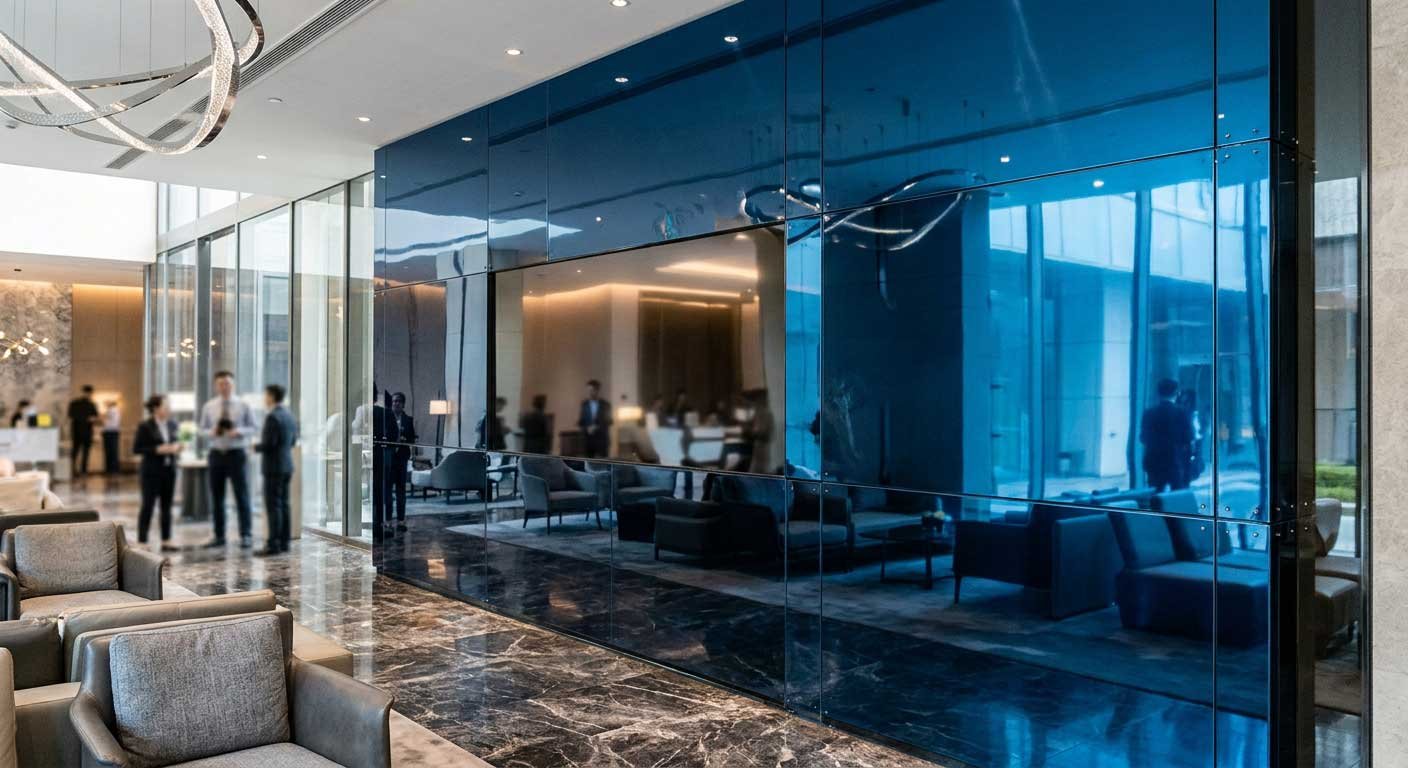
The sapphire blue mirror panels work well on characteristic walls in hotel lobbies and commercial courtyards. Place them on the back wall behind the reception desk or on the elevator floor to reflect the light from the surrounding environment. The deep, shimmering blue completes the natural stone and warm wood – adding depth and giving a sense of serenity and elegance.
Luxury Bar Front Panels & Custom Joinery
For hotels, lounge bars and flagship retailers, sapphire mirror panels can be made into curved bar facades, display bases and custom decorations. This material has strong scratch resistance. It is well resistant to frequent impacts from shoes, luggage, and service equipment, and does not show ugly wear like spray paint or acrylic surface wear.
Reflective Ceiling Insets & Soffit Ribbons
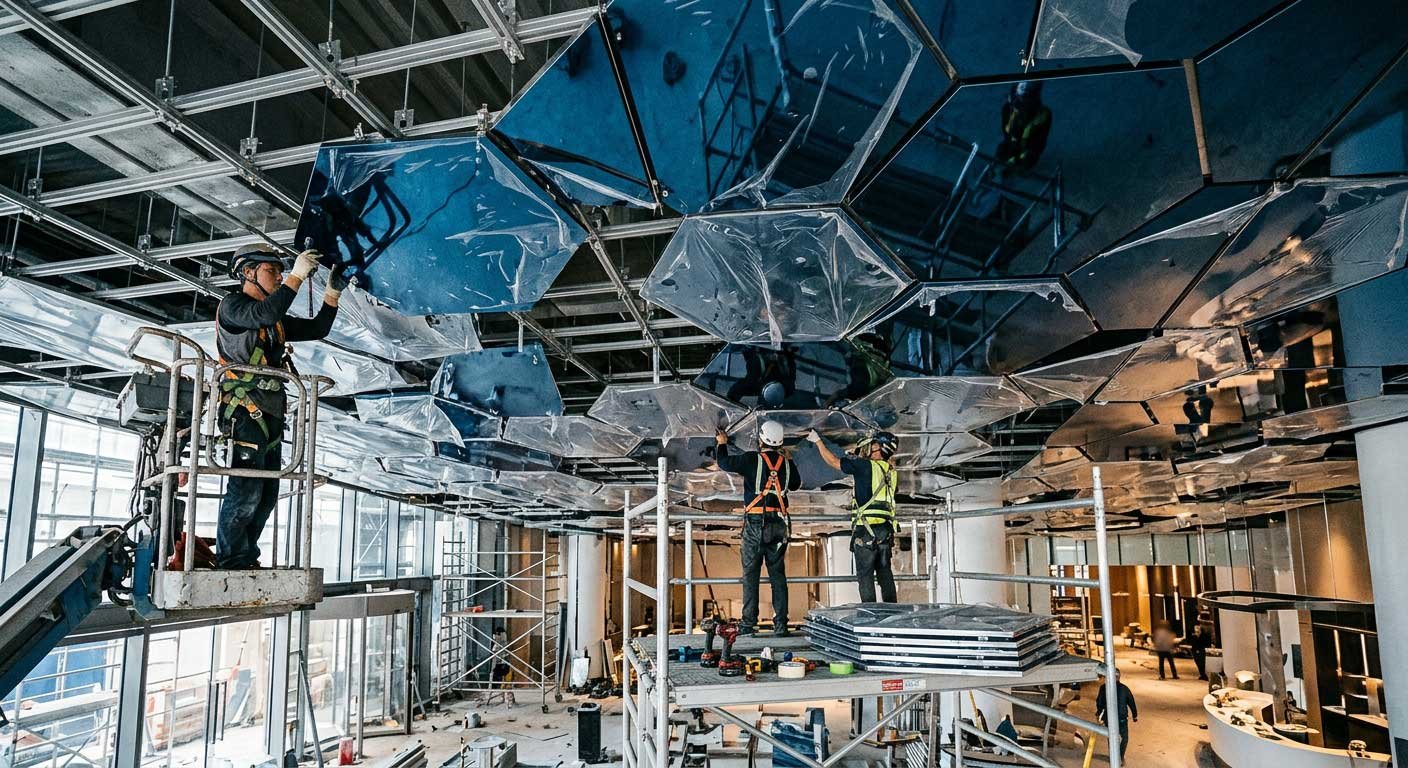
A common mistake on construction sites is to use thin decorative metal sheets as sturdy structural panels. If they are not installed on flat, stable back support, the thin mirror panels will form oil tanks, which will produce noticeable wavy deformation, destroying the surface effect of the mirror surfaces.
Site Installation Engineering & Subframe Details
A frequent mistake seen on construction sites is using thin decorative metal sheets as solid structural panels. If they are not mounted onto flat, stable backing supports, thin mirror panels will develop oil-canning, which creates noticeable wavy deformation and ruins the mirror finish look.
Structural Adhesive Bonding on Plywood Substrates
For indoor feature walls under 3.0m high with stable ambient conditions, mirror sheets of 1.0–1.2 mm thickness can be glued directly onto engineered backing boards:
- Substrate Preparation: Use marine-grade hardwood plywood or exterior MDF (12–18 mm). The panel surface must be sanded smooth, fully cleaned and dry, with moisture kept under 12%.
- Adhesive: Use a neutral hardened structure silicone gel to continuously drip vertical beads, with intervals of 100–150 mm. Pair heavy 1.5 mm PE foam double-sided tape to keep the panel in position at the moment you set it.
- Rolling pressure: Press the metal panel against the backrest with a rubber roller. Start in the middle and roll out ward – this pushes out air pockets and spreads the adhesive evenly.
Engineered Honeycomb Panel Systems
For wall panels taller than 3.0 metres, or ceiling projects, bonding them straight to plywood comes with risks in terms of load bearing, fire performance and surface flatness. Aluminium honeycomb composite panels offer the better overall solution:
- Composite structure: 0.8–1.0 mm sapphire blue metal surface is a factory layer pressed onto 15–20 mm aluminum cell core, and the back is a fine-processed aluminum plate. The adhesion was completed with two sets of split PU glue.
- Rigidity: The aluminum honeycomb structure improves bending resistance rigidity by more than 300%, while maintaining lightness, approximately 7.5 kg/m2.
- Z-clip suspension: The compressed aluminum z-clip is secured to the back of the panel, then hooks onto the continuous horizontal wall rails. Panels hang straight and stay removable. The system lets panels expand and contract with temperature separately, stops oil-canning on the surface, and panels can be easily taken off for MEP maintenance work behind the wall.
Material Performance Comparison
If you need to explain why sapphire blue mirror stainless steel is worth choosing instead of cheaper options, check the physical performance data below:
| Property / Feature | Sapphire Blue PVD Mirror Stainless Steel | Liquid Painted / PVDF Coated Metal | Colored PMMA / Acrylic Sheets |
|---|---|---|---|
| Base Material | AISI 304 / 316L Stainless Steel | Aluminum / Galvanized Steel | Polymethyl Methacrylate Polymer |
| Optical Finish Depth | 8K clear mirror finish with metallic luster | Low reflectivity, obvious orange-peel texture | Glossy at first, easy to get cloudy haze |
| Color Layer Hardness | Micro-hardness over 2000 HV (TiN ceramic coating) | Pencil hardness 2H–3H | Soft surface, F–H pencil hardness |
| Fire Safety | Class A1, non-combustible (EN 13501-1) | Class B / C, rating depends on coating thickness | Combustible; releases toxic smoke when burning |
| UV & Fade Resistance | Inorganic TiN film, no UV degradation | Organic pigments, will chalk and fade over time | Organic polymer, turns yellow and cracks |
| Thermal Expansion | Low (16×10-6 /K) | Moderate (23×10-6 /K) | Very high (70×10-6 /K) |
| Maintenance Profile | Simple wipe cleaning; optional AFP nano anti-fingerprint coating | Soft coating, picks up dirt and scratches easily | High static, attracts dust; sensitive to chemicals |
FAQs
Q1: How do you keep consistent colour across different batches for large PVD orders?
To keep PVD colour uniform over large panels, we rely on precise spectrophotometer testing. Our QC team checks colour values for every production batch with an industrial colorimeter calibrated to the CIE L*a*b* colour system. Production lots are approved only when the color deviation against the golden master sample remains within a strict threshold of ΔE < 1.0. Additionally, all sheets for a single project zone should be ordered from the same master coil batch and installed following the directional arrow markings printed on the protective surface film. For big international projects, JYF METAL provides factory colour samples for your confirmation before production. This helps prevent colour variation after installation on site.
Q2: If we bend or laser cut it, will the blue mirror finish crap out?
Not at all. PVD isn’t painted on-it bonds at the molecular level in a vacuum chamber. Laser cut it, V-groove it, fold it to 90°, the colour stays. No cracks, no chips, no peel, even at minimum radius.
Q3: How should clean blue mirror panels in high-traffic areas?
For daily care, use a soft, ultra-fine fiber cloth and warm water or pH-neutral glass cleaner. Avoid wash mats, steel-wire cotton, and strong acids or alkaloids—including undiluted bleach. Those can scratch the mirror or attack the substrate.
Q4: Can sapphire blue mirror panels be used outside in strong, direct sun?
Yes. The sapphire blue isn’t from dye, paint or anodizing-those are the ones that fade under heavy UV. Our color comes from an inorganic titanium nitrate/carbon nitrate titanium ceramic coating (TiN/TiCN). The ceramic coating blocks ultraviolet light and maintains the color: it doesn‘t fade, bleach, or change color, even during long periods of direct sunlight. Same panel works for high -end interiors and exterior architectural features.
Q5: How do you avoid optical distortion /oil-canning on high-reflective mirror walls?
Keep the back support flat and rigid:
- Don’t screw through the thin metal face unless there’s a solid substrate behind it.
- Marine plywood or MID backing should be flat within +1.0 mm over any 3.0 m span.
- On big panels, use factory – laminated aluminium honeycomb composites and hang them with adjustable aluminium Z-clamps. That keeps the face flat and still allows for thermal movement.