Premium Antique Stainless Steel: Guide to Color Control, Anti-Fingerprint, and Pricing
Table of Contents
In the fields ofcontemporary architectural design and high-end commercial interiors, stainless steel has long dominated the materials landscape thanks to its exceptional corrosion resistance, high strength, and modern aesthetic. However, traditional mirror-polished or standard brushed stainless steel often conveys an “industrial aloofness” due to its overly cold and glaring appearance. As luxury hotels, private mansions, and high-end commercial spaces increasingly pursue “emotional value” and a “sense of cultural depth,” a surface treatment technique has emerged that transforms the modern into the classical and the cold into the warm — the antique finish for stainless steel decorative panels.
Our Two Technical Strengths: Chemical Dyeing and Copper Plated
Within the vast field of stainless steel aging techniques, we do not blindly pursue low-cost spray coating or simple mechanical polishing. Instead, we focus on two core approaches that best capture the metal’s “raw, skeletal texture” and “patina of age”: chemical aging and aging following high-purity water-based copper plating. These two sets of processes not only demonstrate our technical expertise but also represent a perfect fusion of art and industry.
Chemical Coloring and Oxidation Process
The chemical coloring process does not involve simply “applying” a layer of color to the stainless steel surface. Instead, it utilizes specific chemical solutions to induce a controlled microscopic oxidation reaction with the chromium (Cr) elements on the surface. By thickening or altering the chromium-rich oxide layer (passivation layer) on the stainless steel surface and leveraging the principle of light interference, the process naturally produces a range of colors and subtle tonal transitions.
- Substrate Preparation (Vibration/Hairline)
Before entering the coloring tank, stainless steel sheets must undergo rigorous physical surface treatment. We typically opt for a random vibration finish or a precision hairline finish. The irregular circular patterns of the vibration finish effectively minimize mirror-like reflections, creating countless microscopic points of diffuse reflection that facilitate subsequent chemical reactions—this is the foundation for achieving an antique texture.
- Precision-Controlled High-Temperature Coloring (Thermal-Chemical Bath)
Immerse the prepared stainless steel sheets in an acidic coloring solution containing a specific ratio of chromic acid, sulfuric acid, and other components. The temperature is strictly controlled between 118°C and 128°C. As the immersion time increases, the iridescent colors on the stainless steel surface evolve through the stages of “golden yellow, reddish bronze, bluish bronze, and black titanium.” Since this process involves the natural growth of the base material’s surface, the resulting colors exhibit exceptional translucency.
- Hand-Distressed Rubbing and “Patina” Creation
After the coloring process is complete, experienced artisans use polishing wheels of varying grits or scouring pads to perform localized sanding. Along the edges, raised areas, or specific sections of the panel, they gently sand away the dark surface layer to reveal the faint, pale metallic sheen beneath. This intentionally created “irregularity” mimics the “natural highlights” and “patina” that develop on an object after a century of handling.
Multi-Layer Copper Electroplating and Sulfidation Process
If chemical coloring is described as “unlocking the inherent potential of stainless steel,” then the water-plating copper process is akin to “clothing stainless steel in a layer of pure copper.” Products created through this process are indistinguishable from solid copper—whether in terms of the visual metallic sheen or the warm, smooth texture—yet they offer far superior structural strength and cost-effectiveness compared to genuine copper sheets.
- Multi-Layer Plating System
A passivation film forms very easily on stainless steel surfaces, making direct copper plating prone to peeling. Our process begins with rigorous acid pickling to deactivate the surface, followed by the electroplating of a nickel base layer. The nickel layer not only adheres firmly to the stainless steel substrate but also effectively prevents the subsequent diffusion of copper atoms inward. On top of the nickel base, we then electroplate a layer of high-purity bronze, brass, or copper.
Chemical Sulfidation/Blackening
After electroplating, pure copper sheets exhibit a dazzling bright gold or bright red color. At this point, we immerse them in a sulfide solution to induce a rapid sulfidation reaction on the surface, forming a uniform black or dark brown layer of copper sulfide (CuS).
Precision Highlighting
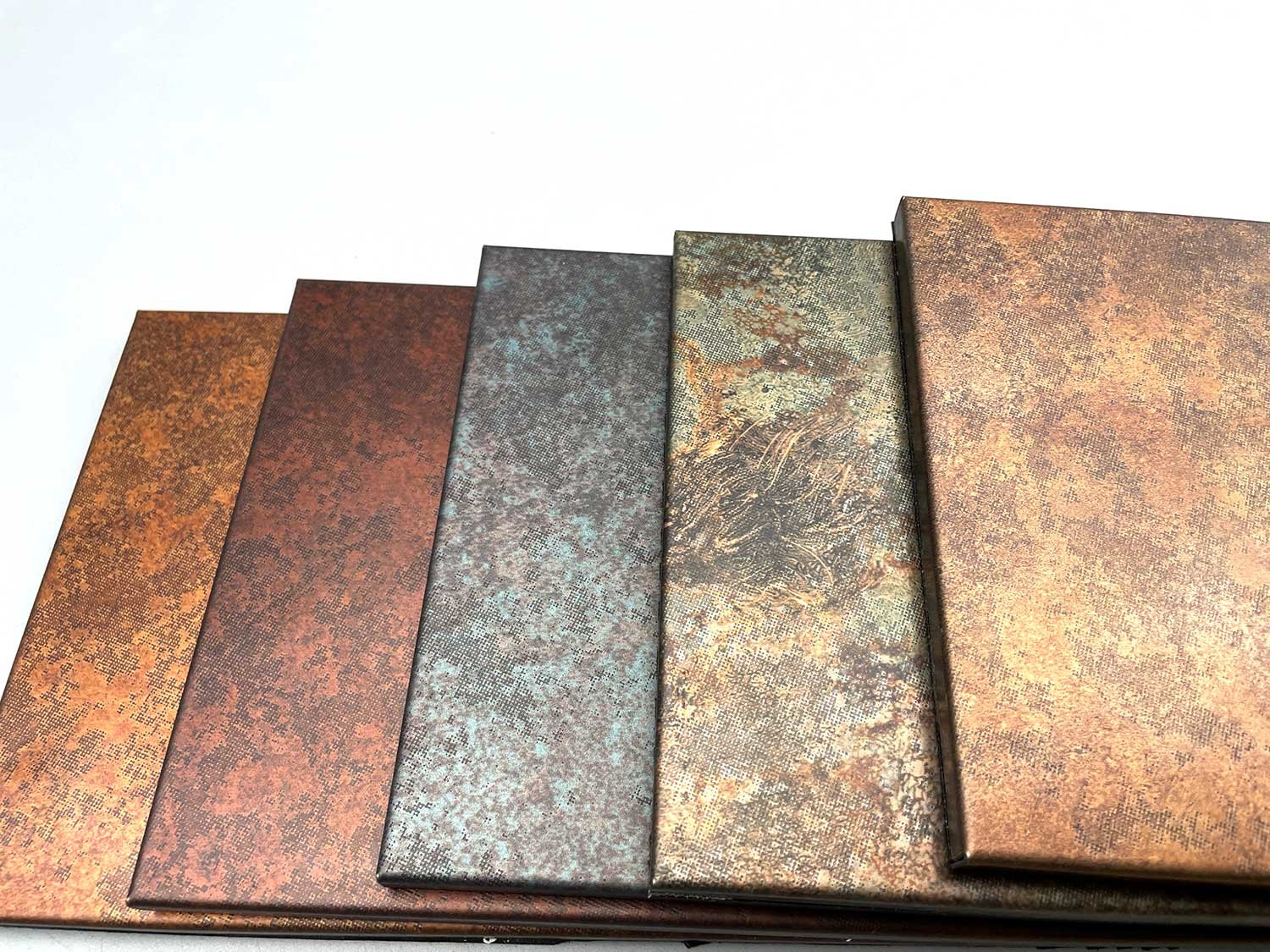
This is the most critical step in the water-based antiquing process. Master craftsmen, relying on a perfect balance of mental and muscle memory, use mechanical polishing equipment to apply either directional brushing or random-pattern grinding to the sulfided, blackened surface. By partially removing the black layer, they reveal the underlying golden or reddish-copper threads. The interplay of black and copper creates a highly textured “Hairline Antique Bronze” finish.
What Customers Want to Know Most and Delivery Pain Points
In our interactions with leading global architectural firms, luxury hotel management groups, and general contractors, we have found that clients’ focus on materials has long since moved beyond the basic question of “whether it looks good.” They demonstrate a high level of professionalism, but this is accompanied by a deep-seated “fear of delivery.”
Below are the five key aspects clients are most interested in when purchasing aged stainless steel panels, along with our solutions as a direct manufacturer.
Color Consistency
- Customer Pain Points
“The samples looked beautiful, but once the mass-produced panels were installed on the wall, some were dark and others light, making it look like a patchwork quilt. Under spotlights, the colors at the seams didn’t match at all. The designer refused to sign off, and the general contractor faced massive penalties for delays.”
- Root Cause
Chemical coloring is extremely sensitive to solution temperature, concentration, and humidity; water-plated copper polishing relies entirely on the worker’s physical strength and touch, so panels polished first thing in the morning versus just before the end of the afternoon shift will inevitably have different tones.
- Preferred Solution
We do not promise clients a false “zero color difference,” but instead implement “risk mitigation and sample production.”
- Raw Material Control: For a single project, all stainless steel must be custom-ordered from the steel mill as material from the same batch and furnace number, eliminating the impact of trace metal elements on color development rates at the source.
- Prototyping: We produce samples exactly matching the client’s original design. Both the original and the new sample are retained by each party. After client approval, production proceeds by cross-referencing the original sample against the parameters used in our prototyping.
Anti-Fingerprint and Long-Term Weather Resistance
Customer Pain Points
“The distressed-finish panels installed in hotel lobby elevator cabs or at bar counters leave indelible black fingerprints whenever someone touches them. Even worse, in some outdoor projects, after just two years, the surface paint has yellowed and peeled, the underlying copper layer has begun to develop green rust and turn white, and the entire high-end building has turned into a mottled, dilapidated factory.”
- Root cause
After the aging process is complete, the metal surface is “exposed” and unstable. Ordinary air-sprayed acrylic clear coats are not wear-resistant or UV-resistant, and will quickly deteriorate under the effects of sweat (acidic) and sunlight (UV).
- Preferred Solution
We have fully adopted bake-cured nano vacuum anti-fingerprint coating (Nano Anti-Fingerprint Coating) across our entire product line. After high-temperature curing at 160°C–180°C, this process forms an extremely hard, transparent protective film—just a few micrometers thick—on the surface of the distressed finish. It is hydrophobic and oleophobic, leaving no fingerprints upon touch and wiping clean with a damp cloth. For outdoor projects, we mandate an upgrade to two-component fluorocarbon clear coat (PVDF Clear Coat) or polymer liquid ceramic coating, which offers exceptional UV and salt spray resistance, ensuring no yellowing, chalking, or corrosion for 20 years indoors and 10 years outdoors.
The Pricing Logic Behind Antique Finishing and the Inevitable Reasons for Its High Cost
When requesting quotes, many people wonder: Why are antique stainless steel panels so expensive when they’re made of the same material? In reality, the high price tag is driven by hard, unavoidable costs:
The scrap rate is extremely high—one misstep can ruin the entire batch
Standard brushed or mirror finishes are produced on automated assembly lines, where pre-set parameters ensure minimal errors. Antique finishing, however, involves a series of overlapping processes. During the final brushing and coloring stage, even if a craftsman’s hand trembles slightly or applies just a fraction more pressure—causing the thin copper layer to wear through and expose the underlying white stainless steel—the entire sheet is ruined. It cannot be repaired locally; the entire sheet must be stripped, re-pickled, and re-plated. The cost of this high scrap rate must be factored into the final product price.
Environmental compliance achieved through significant investment
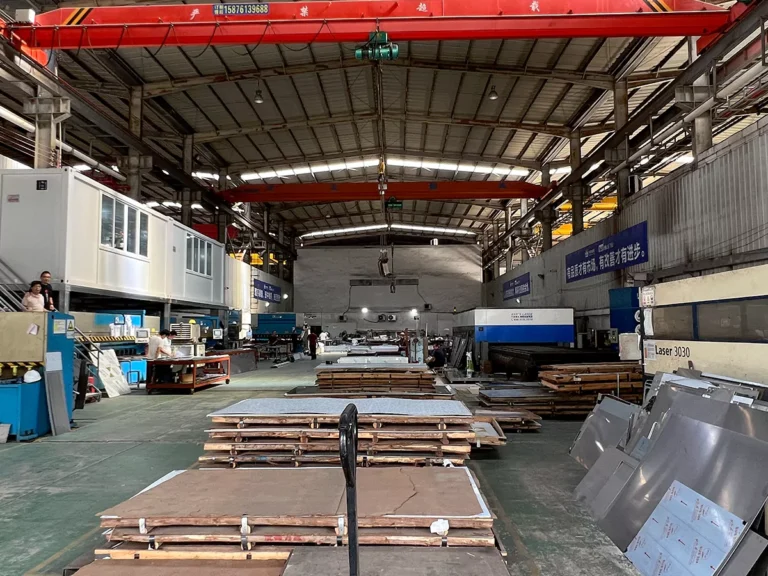
Electroplating and chemical coloring are highly polluting industries. For a legitimate factory capable of operating daily, investments in wastewater treatment and exhaust gas filtration equipment start at several million yuan. Small workshops are frequently shut down due to environmental inspections, leaving customers unable to receive their goods despite having paid deposits; a significant portion of our higher pricing reflects the cost of securing “supply chain reliability and on-time delivery.”
The premium of master craftsmanship
Machines can produce perfectly parallel, rigid lines, but they cannot replicate the organic, weathered patina found on antiques. The master craftsmen in our factory responsible for hand-finishing all have over eight years of experience. The ability to adjust the pressure applied to different types of wood—a form of muscle memory—is something machines simply cannot replicate, so labor costs naturally remain high.
Diverse High-End Applications for Antique Stainless Steel Panels
Distressed stainless steel sheets combine the “indestructibility” of stainless steel with the “sophisticated aura” of antique bronze; it is now the “haute couture” of high-end spaces.
Lobby Entrances of Luxury Hotels
Traditional solid copper doors are too soft, prone to deformation, and susceptible to rust. Using copper plated stainless steel sheets for lobby revolving doors and exterior door frames provides the same dignified, substantial presence as the doors of a century-old bank, while withstanding the elements outdoors.
Display Cases in Luxury Flagship Stores
In jewelry, watch, and other luxury boutiques, aged metal finishes are standard. Combined with nano-fingerprint-resistant technology, these display cases remain pristine and spotless even after being touched up close by countless customers every day.
Custom Home Furnishings for Luxury Villas
Elevator cabins, metal partition screens in grand halls, and interior linings of custom wine cabinets in private mansions. Under the glow of ambient lighting, the mottled, subdued diffuse light emitted by aged metal enhances the space’s sense of understated luxury more effectively than marble.
Building Facades and Landscape Sculptures
On the exterior walls of museums and art galleries, chemically colored panels display varying hues depending on the intensity of sunlight and changes in weather. Moreover, unlike weathering steel (red rust panels), they do not leach red rust water during rain, thereby preventing contamination of the surrounding stone surfaces.
Conclusion:The Warmth of Handcrafted Work-Time Tells
The popularity of aged stainless steel for interior design stems from people growing tired of the stiffness and coldness of mass-produced industrial goods, and instead yearning for items that carry the warmth of handcrafted work and the marks of time. Our process transforms the unpredictability of traditional craftsmanship into a controllable, high-quality engineering solution. If your project requires a material with this kind of presence, JYF METAL can arrange a sample for you in our workshop at any time.