Stainless Steel Guide to Selection and Application of Water Ripple Sheets in Luxury Hotel Projects
Table of Contents
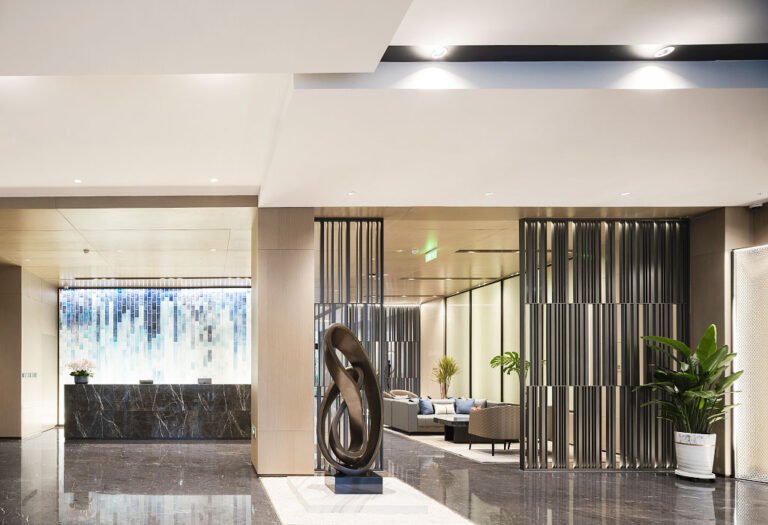
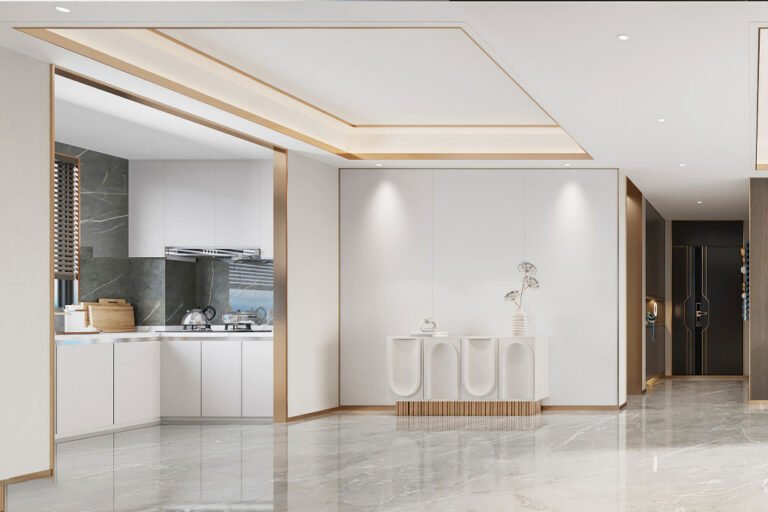
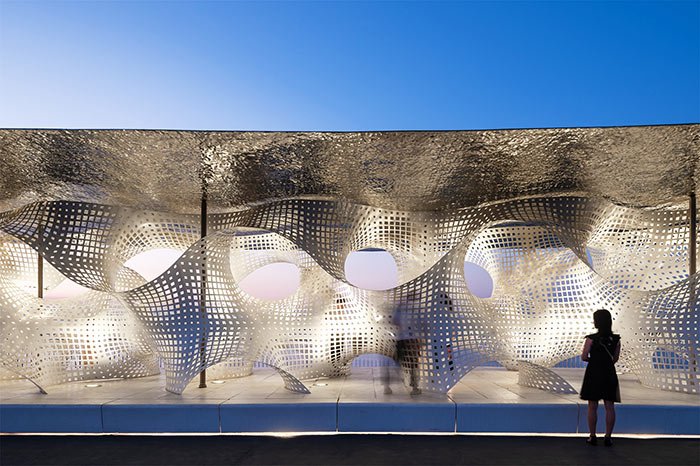
In modern hotel architecture and high-end commercial interior engineering, smooth metal finishes often fail to capture the dynamic interplay of light and shadow in the space. The stainless steel water ripple sheets, by transforming the hard metal into a lustrous and 3D ripple texture, are becoming the core decorative solution for the ceiling of luxury hotel lobbies, distinctive background walls, and structural columns.
The guide is specifically designed for architects, interior designers, general contractors and material purchasing managers. It comprehensively explains material selection, cold stamping and pressing processes, PVD coating, structural base installation and on-site quality inspection standards.
Analysis of Manufacturing Process and Material Selection
Precision cold stamping and forming technology
The production of high-quality stainless steel water ripple sheet begins with the selection of cold-rolled stainless steel sheets. These sheets are sent into large-tonnage hydraulic presses equipped with special texture molds. Under precise control of pressure, the flat steel plates undergo permanent plastic deformation, creating natural organic wave patterns. The depth of the water ripple pattern imprint is usually adjusted between 1.0mm and 2.0mm according to the visual scale requirements of the space.
Comparison of material: SUS 304 VS. 316L
Selecting the correct material grade plays a key role in helping projects deliver multi-decade service life while preventing pitting corrosion.
AISI 304 decorative sheets work well in dry-use scenarios, including hotel interior feature walls, elevator cabins and suspended ceilings. It offers great ductility and solid cost-performance.
AISI 316Lcorrosion-resistant sheet: Due to the addition of 2%–3% of molybdenum, it has outstanding resistance to salt spray and chloride, and is the designated material for the exterior facades of coastal hotels, outdoor water features, and indoor high-humidity swimming pool areas.
Pre-embossing: 8K mirror surface polishing
In order to achieve a smooth reflection effect like that of liquid metal, the original sheet needs to undergo multiple rounds of mechanical polishing before entering the press machine, being polished to an 8K super mirror finish. The process of first polishing and then embossing ensures that every curved surface after pressing can clearly refract light, without causing minor scratches, fogging or polishing marks.
Specification Parameters, Water Ripple Pattern Dimensions and PVD Coating Process
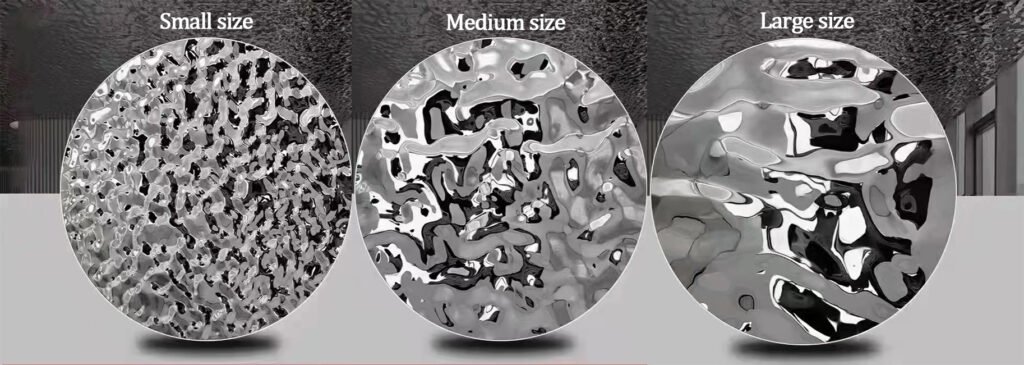
Classification of visual scale of water ripple patterns
By selecting the appropriate wave frequency based on the ceiling height and viewing distance, the best visual hierarchy can be achieved:
- Small water ripples (high-frequency waves): The texture is compact and fine, suitable for areas where close visual contact is required, such as lower-level corridors, cabinet doors, and interior decorations of elevator carriages.
- Medium water ripple (standard ripple): The most widely used classic scale, commonly used for the background walls of hotel reception areas, bar counter, and restaurant partitions.
- Large water waves (deep sea waves): With a broad undulation and extremely strong visual tension, they are specially designed for double-height hotel lobbies, commercial atriums, and building exteriors.
Control of thickness, size tolerance and deformation
To prevent visual deformation of the panel surface during large-scale and large-sized installation (i.e., the “oil tank phenomenon”), it is necessary to properly match the thickness of the panels:
- General specification widths: 1000mm, 1219mm and 1500mm.
- General specification lengths: 2000mm, 2438mm, 3048mm, and we also support customized laser cutting with a maximum length of 4000mm.
- Suggested thickness ranges: 0.6mm to 1.0mm is ideal for mirror ceiling panels. For wall cladding installed in high-traffic public spaces, select material between 1.0mm to 1.2mm.
Physical Vapor Deposition (PVD) Coating Finishing
For designs that require warm tones or distinctive visual highlights, the PVD titanium gold coating process can be adopted. Unlike ordinary spray paint which is prone to peeling or discoloration, PVD can form a strong molecular-level bonding layer on the stainless steel surface.
Application scenarios and material configuration matrix table:
| Application Area | Recommended Material | Recommended Thickness | Surface Treatment | Back Panel Structural Support |
|---|---|---|---|---|
| Hotel Interior Ceilings | AISI 304 | 0.6 mm–1.0 mm | 8K Mirror Finish & PVD Coating | Aluminum honeycomb composite core panels |
| Lobby Feature Wall | AISI 304 / 316 | 1.0 mm–1.2 mm | 8K Mirror Finish & PVD Coating + Anti-Fingerprint | Fire-Retardant MGO Panels |
| Coastal Building Facades | AISI 316L | 1.2 mm–1.5 mm | 8K Mirror Finish & PVD Coating | Steel Frame Structure |
Structural Base, Node Installation and Lighting Design
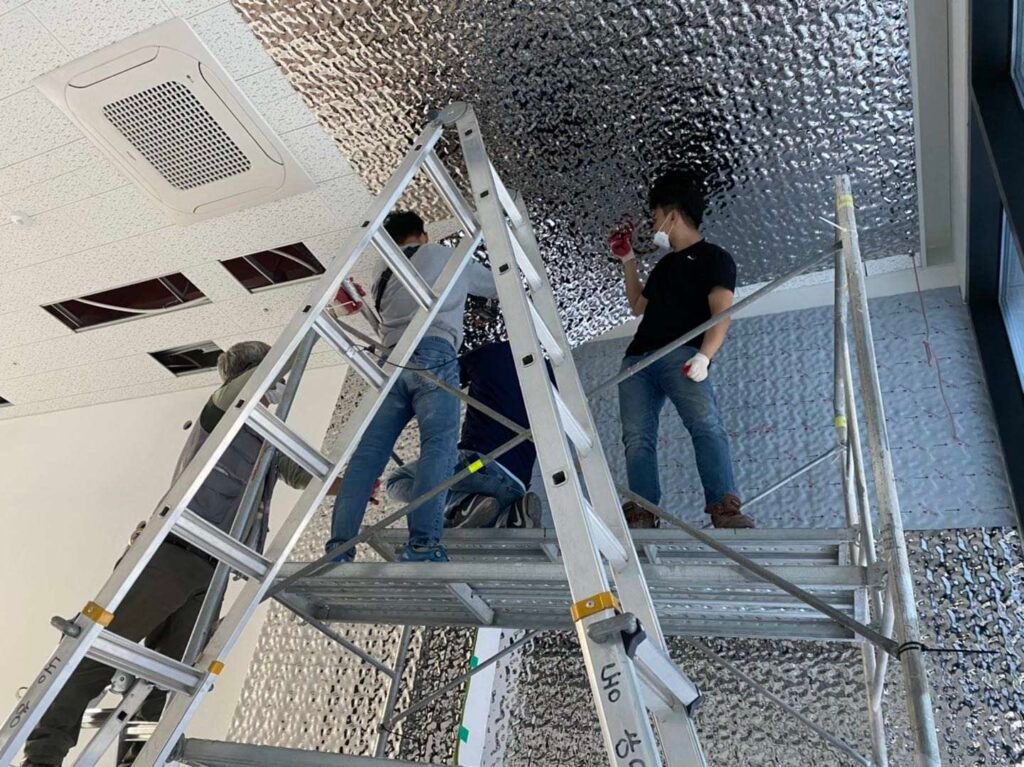
Control the flatness of the aluminum honeycomb composite panel and base layer
Simply attaching a thin metal sheet directly to an uneven wall will seriously disrupt the light reflection effect. To ensure the sheet is absolutely flat:
- Aluminum honeycomb composite panel: A thin stainless steel skin is bonded to an aluminum honeycomb core using structural adhesive. This construction delivers excellent flatness and bending stiffness while keeping overall weight low.
- Wooden / flame-retardant substrate: For direct adhesive installation, the backing must be a flat, flame-retardant plywood or magnesium oxide (MGO) board.
Design of building joints and corner sealing details
- V-shaped concealed seam closure: 3mm to 5mm deep groove seam is left between adjacent panels, which can create a modern and sleek line effect.
- Same-color metal strips: Utilizing T-shaped or L-shaped extruded strips of the same PVD champagne gold color, they can naturally cover the edge of the seams.
- CNC slotting and bending: After the back side of the sheet material undergoes CNC laser V-shaped slotting, it can be precisely bent to a 90-degree angle, achieving a seamless closure for the column and the corner.
The polishing effect of the diffused light strips and the spotlight
Thought out lighting design brings out the full visual impact of textured ripple panels. Mount LED linear diffused strips or directional spotlights at a low angle toward panel edges. Light hitting the undulating surface generates dynamic shadow patterns across floors and surrounding areas.
Inspection Standards, Quality Certification and Export Packaging
Quality Inspection Certificate (MTC)
When purchasing, it is required that the manufacturer provide a material inspection certificate along with the goods. Double-check the chemical content for nickel, chromium and molybdenum. Avoid using inferior products and ensure the long-term corrosion resistance of the project.
Technical CAD deepening drawings and physical sample making
By collaborating with source factories that have OEM production experience, you can obtain comprehensive technical support during the project’s early stages:
Provide complete CAD detailed drawings for node installation and ceiling keel.
Send A4-sized physical samples for sample room design.
Export packaging standards
To prevent the seawater salt fog from eroding and scratching the surface of the plates during the shipping process, a laser-specific protective film should be attached to the surface of the plates. High-density mineral wool should be placed between the plates, and they should be packed in a moisture-proof and desiccant-filled non-steam-treatment wooden box to meet the requirements of container transportation.
Conclusion
With JYF METAL stainless steel water ripple panels, architects and design teams can turn plain, sterile walls and ceilings into striking focal points defined by shifting light and shadow. Careful selection of material grade, ripple pattern, substrate build-up and lighting layout delivers premium aesthetic results, alongside reliable long-term safety and durability for your project.
FAQ
Q1: Why are JYF METAL stainless steel water ripple panels widely used in luxury hotel projects?
JYF METAL decorative sheets leverage metal’s fire-resistance and long service life, paired with three-dimensional ripple profiles. They soften ambient light and bring lively water-like visual movement to otherwise still interior spaces.
Q2: Which grade works better for hotel ceiling finishes, AISI 304 or AISI 316L?
Standard indoor hotel lobbies can use JYF METAL AISI 304 for ceiling applications. For coastal resort properties or indoor heated pool areas, select AISI 316L to withstand corrosion triggered by salt spray and chlorine.
Q3: Can the water ripple sheet be laser-cut and bent on-site?
YES. The high-quality mirror panel with laser-specific protective film can be cut using a fiber laser cutting machine and then bent after being processed by a CNC V-shaped grooving machine. This process will not damage the mirror finish or the PVD coating on the surface.
Q4: What is the production lead time for custom PVD water ripple panels from JYF METAL?
Once CAD drawings are confirmed against project templates, standard lead time for embossing, PVD titanium finishing and fixed-size cutting runs 10 to 18 working days, subject to total order volume.