Table of Contents

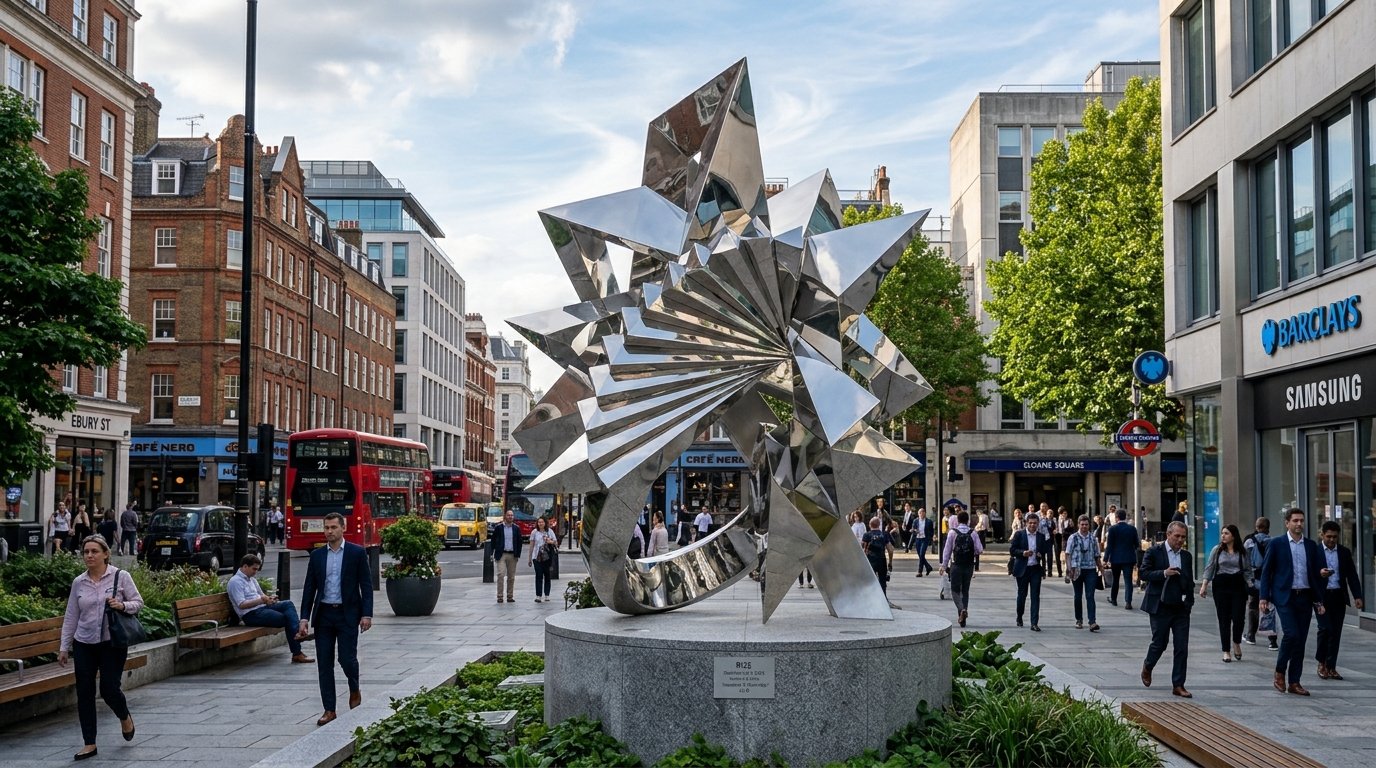
There are no doubts concerning the fact that metal sculptures have to be considered in the process of landscape design of commercial buildings since it helps to make the site unique and memorable. There are hotels, shopping centers, parks, business buildings – whatever it could be; metal sculptures help to create the uniqueness of the site.

It is true that any type of decoration has its unique features; however, the Custom Metal Sculptures are produced according to your wishes and needs as far as the size, materials, shape, color and time of installing the sculpture are concerned. When choosing the sculpture, it is necessary to pay attention not only to its design but also to the possibility of its production.

Quick Answer

For commercial landscape sculptures, most of the practical risk sits in fabrication rather than in the design itself. Before production starts, buyers should settle the material grade, the approved surface finish, and the structural and installation arrangement that the site can actually support.

  • Confirm the stainless steel grade and sheet thickness in writing — grade 304 for general decorative work, grade 316 where moisture or chlorides are involved — and record Corten or aluminium where the design calls for weathering or light forming.
  • Approve a physical finish sample under lighting close to the final site: mirror polishing, brushed, sandblasted and PVD finishes all read differently outdoors and under artificial light.

Fix the support and installation package early — base plates and anchor bolts for smaller pieces, concealed steel frames, wind-load checks and foundation connections for tall, hollow or asymmetrical shapes — together with shipping dimensions, lifting equipment and site access.

add62eeb5aa78d6fa53b7f1c7acb2845

The Role of Metal Sculptures in Modern Landscape Design

Metal sculptures provide aesthetic value and uniqueness to the commercial spaces. Metal sculptures can be the focal points of the outside environment and can link architecture with nature.

Creating Distinctive Commercial Spaces

The statues are commonly used in commercial spaces like hotels, malls, offices, etc., which need to give their outdoor space an identity. Whenever an excellent statue is installed close to the entry point of these buildings, they will help make them famous landmarks. Abstract shapes suit commercial buildings, whereas natural shapes suit landscaping requirements. Custom Metal Sculptures blend both concepts of your project in any theme.

Connecting Architecture with Landscape Design

Metal Sculpture in Architecture should harmonize with the building and should not contradict the general construction.

Such aspects as color of the materials, texture of the surface, dimensions of the sculpture and geometry lines should be considered.

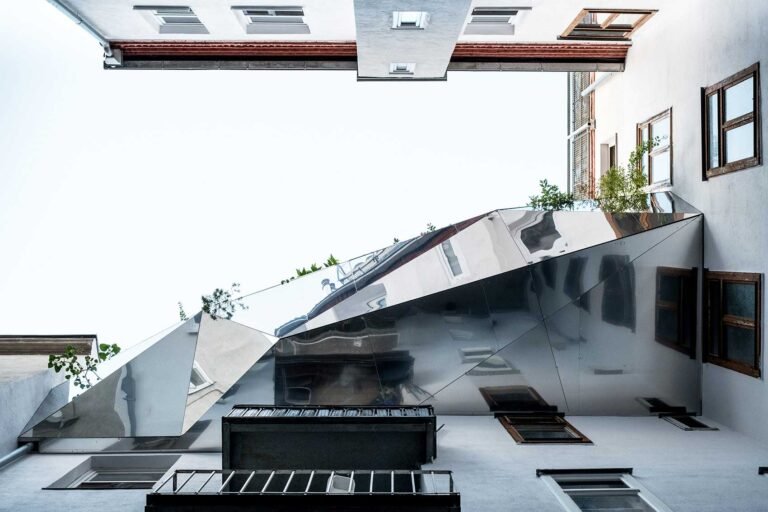
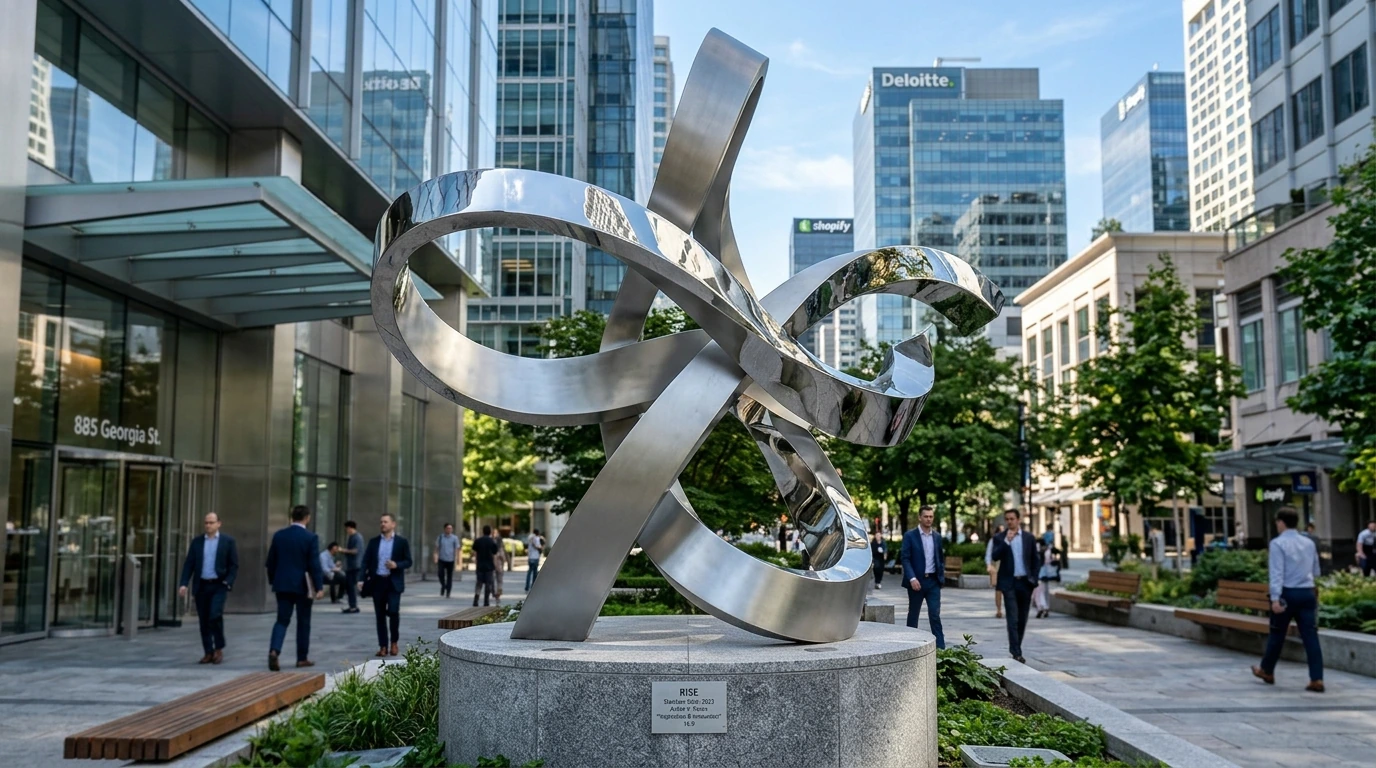
For example, the smooth stainless steel will perfectly match the glass façade and other materials utilized in architecture. The rusted metal surface will be ideal for those projects which contain stone, concrete and landscaping.

Outdoor Metal Sculptures can be combined with decorative screens, planters and architectural panels.

Popular Materials for Outdoor Metal Sculptures

Choosing an adequate material will influence the appearance, fabrication possibilities, longevity, and maintenance of a sculpture. It all depends on the location of installation, complexity of design, and budget.

Stainless Steel for Modern Applications

Stainless steel is one of the most popular materials for metal sculptures due to its neat look, fabrication properties, and rust resistance.

Custom stainless steel sculptures can be fabricated in a variety of ways, including curved panels, hollow bodies, geometrical shapes, and sophisticated assembled constructions.

Grade 304 and grade 316 are usually recommended for architecture use. Grade 304 is a common choice for decorative projects. Grade 316 may be preferred for more humid environments and places with chloride content.

Corten Steel for Natural Visual Effects

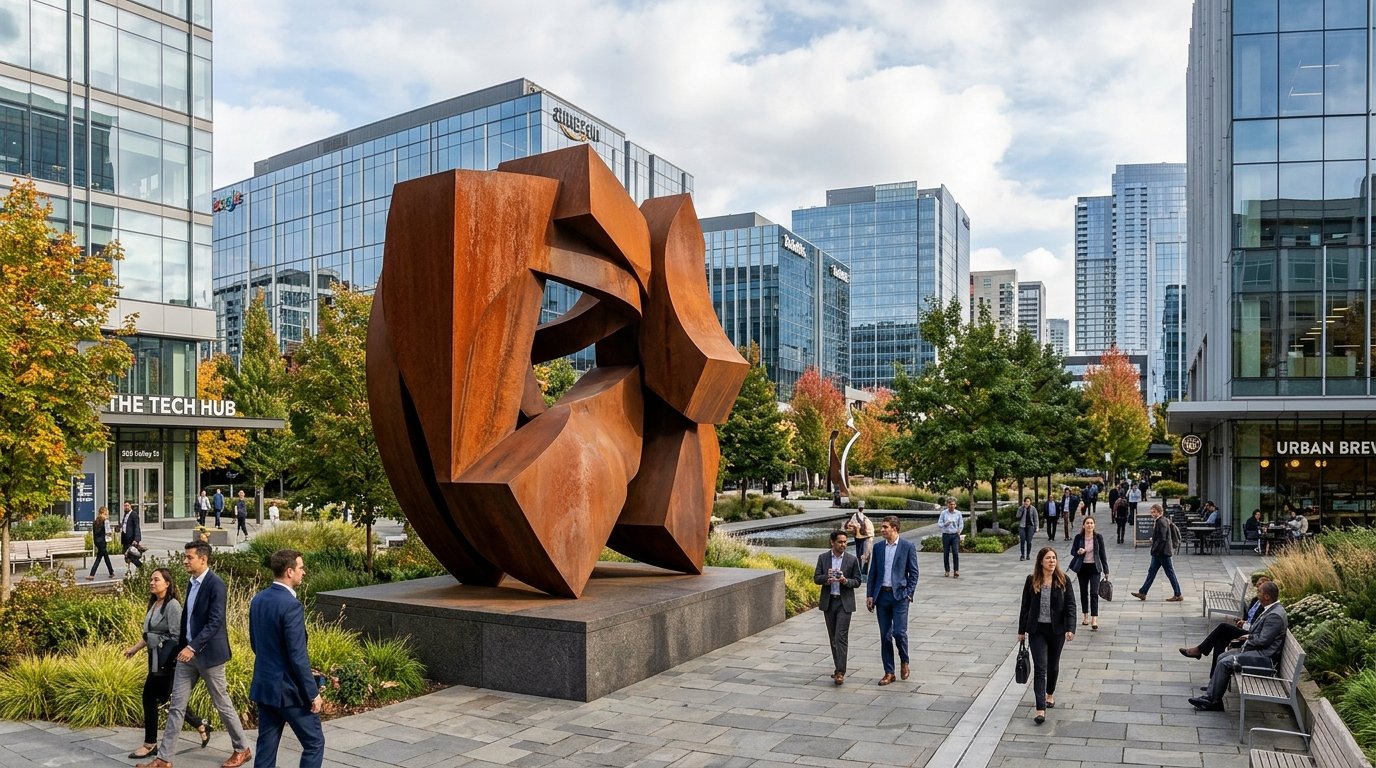
Corten steel is often chosen for landscape projects requiring an industrial aged appearance. It creates a unique contrast with plants, stone pavements, and concrete constructions.

Corten steel sculpture may be especially convenient for public parks, gardens, and modern landscapes. At the same time, the designer must take into account surface run-off, drainage, and staining of pavements from corrosion.

Aluminum and Other Metal Options

Aluminum is also an alternative material for custom metal sculptures in case of the need for light construction or special forming.

Copper and brass are also available as materials to use in cases when projects need special metal color effects and decorations. Every material has its own physical and environmental properties, which is why buyers should be aware of material specification based on the dimensions, construction needs, and installation conditions of the sculpture.

b60cdb1d524d693afdcb440a1701b068

Custom Shapes, Sizes and Surface Finishes

One of the major benefits of custom metal sculptures is the ability to design the sculpture according to customer needs. This means manufacturers can work using architectural drawings, photos, drawings, and 3D modeling of sculptures.

Customized Shapes and Dimensions

Common sculptures can include geometric shapes, abstract shapes, curving shapes, hollow constructions, and assembled elements.

The size of the sculpture must correspond to the environment and viewing distances. Thus, the sculpture located in a large public square will have other dimensions than a sculpture in a hotel patio or entrance.

For larger outdoor metal sculptures, consideration should also be taken into account when transporting them, their support structures, and how they will be assembled at the site. It may be easier to divide a larger structure into a few fabricated parts when it comes to manufacturing and transport.

Surface Finishes for Different Architectural Styles

Surface treatment is very significant in the final look of the architectural metal sculpture.

Mirror polishing gives a shiny surface that reflects other nearby buildings and light. Brushing gives a subdued metallic finish while sandblasting results in a matt finish. PVD coating provides decorative finish options like gold, rose gold and bronze.

Various finishes can be incorporated into custom stainless steel products.

Buyers should make sure that the chosen surface treatment is appropriate for the local climate.

From 3D Design to Metal Fabrication

The translation of design into a completed metal sculpture involves collaboration of designers, engineers, and fabricators. The outlined production procedure can facilitate achieving the desired result that fits the design and will meet the installation conditions.

Design Development and Technical Drawings

The usual starting point is a design idea, project dimensions, materials preferred, and relevant examples. In case of complex custom metal sculptures, 3D modeling can reveal the general form, proportions, elements linking, and assembly system.

Prior to the production of the sculpture, the manufacturer must analyze the drawings and establish whether it is possible to produce the design using the chosen materials and methods of fabrication.

Engineering and Fabrication Planning

The production of the architectural metal sculpture may consist of several fabrication procedures, such as cutting, bending, forming, welding, grinding, and polishing.

The fabricators have to analyze the material thickness, bending possibilities, details of connecting parts, inner reinforcement, and supporting constructions. The last three parameters are especially important for large or unusual-shaped outdoor metal sculptures.

In case of the installation on the sites with windy or other environmental conditions, the support and foundation connections should be verified by specialists.

Cutting, Welding and Finishing

Using laser cutting or other cutting means will ensure production of components based on approved drawings. Bending and forming operations provide required profiles and welding ensures that separate parts will form one piece.

Grinding and polishing operations may be used to optimize weld transitions and increase surface smoothness. Finishing is critical for custom landscape stainless steel sculpture because any scratches, polishing inconsistencies or weld marks will be visible.

Dimensional check, connection inspection and surface quality evaluation must be conducted before shipment.

13cada6dff0f3f87e8b941c3e73d7941

Installation and Durability for Outdoor Projects

Only quality production does not guarantee success of an outdoor installation. One should consider foundation, durability, weathering, transportation and maintenance issues during project preparation.

Foundation and Structural Support

The installation approach is dependent on the sculpture dimensions, weight, shape and location. Smaller structures may be assembled using base plates and anchor bolts, while the larger installations may need concealed steel frames.

For large commercial landscape sculpture engineers should conduct analysis of wind loads, overturning, foundation conditions and center of gravity. It is particularly important for the large, hollow or asymmetrical shapes.

Weather Resistance and Maintenance

Outdoor metal sculptures are subjected to weathering elements such as rain, sun rays, temperature variations, dust, and air pollution. Hence, the material used must correspond with the conditions of the installation.

The custom stainless steel sculptures might need to be cleaned periodically to keep them clean; especially those installed in a coastal area or an industrial location. Corten Steel sculptures might need proper drainage since they may cause some staining issues.

It is best to plan a maintenance schedule before the installation of sculptures, more so, in case of large sculptures that will be hard to reach.

Transportation and On-Site Installation

Sometimes large sculptures need to be broken into several parts to ease transportation and installation. The buyer must ensure that all shipping dimensions, means of lifting, access to the site, connections, and ground preparations are clear before the manufacture of the sculptures.

This applies especially to large and complicated Outdoor Metal Sculptures.

Custom Metal Sculpture Solutions by JYF Metal

The product applications of JYF Metal include the services for landscape decoration, stainless steel fabrication, commercial metal sculptures and other custom metal projects.

Commercial developers, architects and contractors should find the balance between the creative design and manufacturing when working on Custom Metal Sculptures.

Customized Design and Manufacturing

JYF Metal can provide customized metal products according to the project drawings and particular requirements. The design of sculptures can be altered regarding its shape, sizes, materials and surface treatment.

If the project requires an abstract stainless steel sculpture or a decorative Architectural Metal Sculpture, the manufacture process has to be organized in accordance with its geometry and usage.

Material and Surface Treatment Options

The architectural metal materials and stainless steel materials provide their own opportunities for both practical use and aesthetics. The custom stainless steel sculptures may be manufactured with mirror polishing, brushed finishing and other kinds of decoration in order to match the environment.

Material selection will depend on the environmental conditions, fabrication and appearance of sculpture after installation.

Fabrication Support for Commercial Projects

As a buyer of Outdoor Metal Sculptures, supplying the manufacturer with sketches, materials, size, finishing, and installing conditions enables them to consider your project more accurately.

JYF Metal can assist you in creating customized metal fabrication solutions for architecture to help you turn your concepts into products.

Conclusion

The custom metal sculptures allow architects, landscape designers, and commercial developers to make unique outdoor spaces. Using stainless steel or weathered Corten steel sculpture will help you create the combination of art and architecture.

For commercial landscape projects that require distinctive metal features, JYF Metal offers customized fabrication services to bring individual design concepts into reality. With capabilities covering material processing, metal forming, welding, and surface finishing, the company works with clients to develop metal products that match specific architectural styles, dimensional requirements, and project expectations. From decorative stainless steel sculptures to other customized architectural metal elements, JYF Metal helps create solutions that combine creative design with practical manufacturing.

FAQ

1. What materials are best for outdoor metal sculptures?

Stainless steel, Corten steel, and aluminum are common options. The choice depends on the design, installation environment, corrosion exposure, and budget.

2. Can custom metal sculptures be made according to 3D drawings?

Yes. Manufacturers can use 3D models, CAD drawings, sketches, and reference images to develop customized shapes and dimensions.

3. Are stainless steel sculptures suitable for commercial landscapes?

Yes. custom stainless steel sculptures are widely considered for commercial landscapes because of their modern appearance and corrosion resistance. The appropriate grade and maintenance requirements depend on environmental conditions.

4. What surface finishes are available for metal sculptures?

Common finishes include mirror polishing, brushed finishing, sandblasting, and PVD coating. The final choice should match the architectural style and outdoor conditions.

5. What should buyers prepare before requesting a quotation?

Buyers should provide design drawings, dimensions, material preferences, surface finish requirements, installation location, estimated quantity, and project schedule.

6. Can large metal sculptures be manufactured in separate sections?

Yes. Large Custom Metal Sculptures can be divided into several sections for easier transportation and on-site assembly, provided that connection and structural requirements are properly addressed.

免费AI检测器和AI检查器 - 适用于ChatGPT, GPT-5, Gemini和Claude 和另外 8 个页面 - 个人 - Microsoft​ Edge

Elevator interiors play an important role in commercial building architecture. No matter if it is a hotel, skyscraper, shopping mall, or any other building, elevator cabin interiors help create a general image of the building. They have to look good and at the same time be durable and convenient for maintenance.

There are many reasons why stainless steel is widely used to decorate elevators. It combines good aesthetic qualities and durability of the material and provides a lot of opportunities for customization of panels.

For architects, contractors, and real estate developers choosing the proper material is just a beginning of the process. The sizes of the panels, treatment of the surfaces, their accurate fabrication, and installation are all the points that need to be considered carefully.

Quick Answer

For an elevator cabin, most specification errors show up on site rather than in the drawing. Before fabrication begins, buyers should settle the surface finish, the panel divisions and fixing details, and the interface with the door mechanism.

Confirm the finish on a physical sample under the cabin’s own lighting: mirror panels read brighter but show fingerprints, while brushed, sandblasted and textured surfaces appear quite different under LED downlights.

Fix panel dimensions, joint gaps and edge details against the approved cabin design, and verify that the decorative cladding leaves the door structure, clearances, sensors and operating mechanism untouched.

Coordinate the cabin with reception, corridor and entrance finishes, and settle steel grade, sheet thickness and site measurements before cutting, bending or polishing starts.
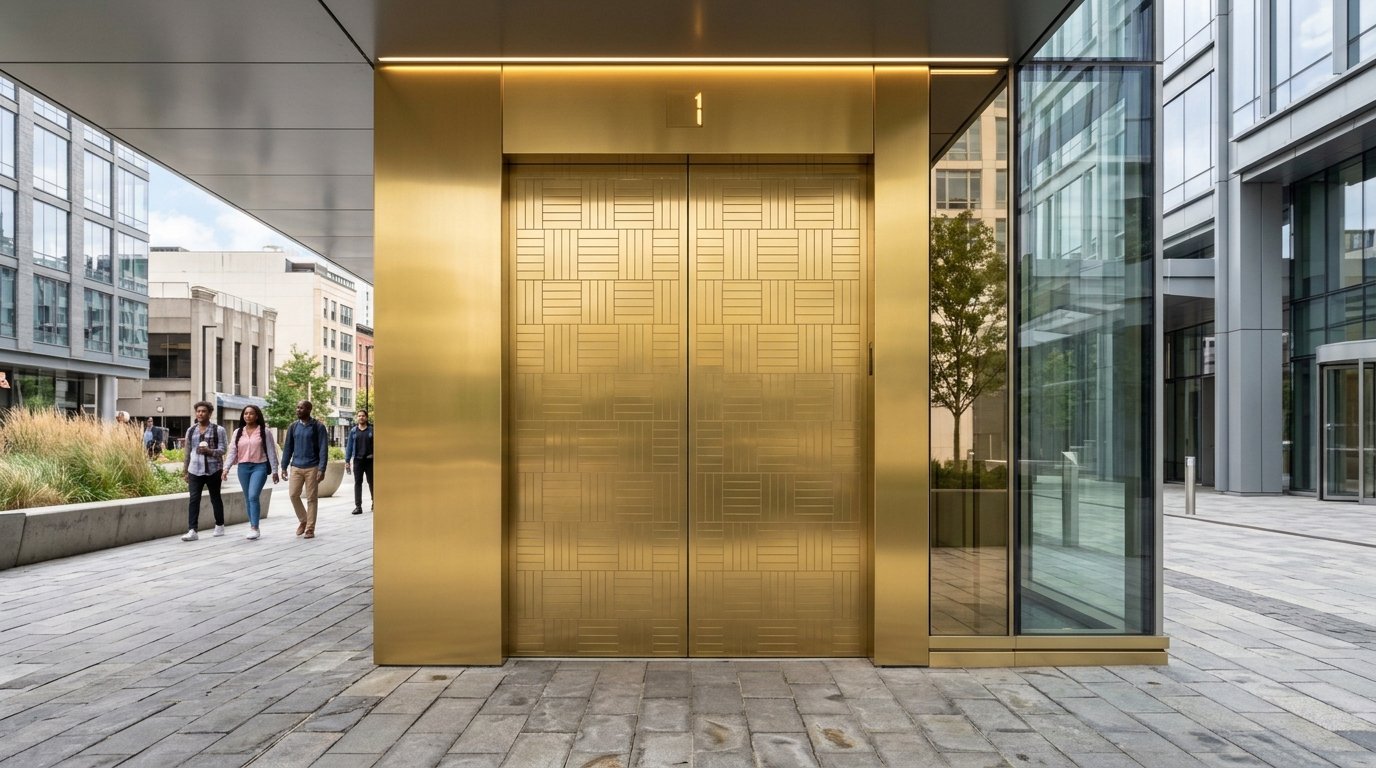
Gold stainless steel elevator entrance integrated into a modern glass office building

Why Stainless Steel Is Ideal for Elevator Interiors

Durability for High-Traffic Environments

The stainless steel is a metal surface that will work well for any heavily used commercial environment. Due to its resistance to corrosion, stainless steel is a viable option for elevator walls, door panels, and decorations.

In comparison with some decorating surfaces that need regular refinishing, stainless steel does not lose its appeal with proper maintenance. That is why Stainless Steel Elevator Interior solutions are good for hotels, shopping malls, office buildings, and other areas with heavy traffic.

Flexible Surface Treatments

Stainless steel accommodates various surface finishing techniques such as brushing, polishing, sandblasting, etching, and embossing.

These techniques give different results but do not alter the base metal. Thus, brushed finish gives a muted metallic effect, while a mirror finish gives brighter reflection.

Such flexibility enables the development of custom elevator interiors to fit diverse architectural designs.

Compatibility with Other Materials

Stainless steel is easily combined with glass, stone, wood, and other decorative materials. Designers may combine these materials to harmonize elevators interiors with the reception areas, corridors, and other places.

In commercial projects, uniform metal finishes are also important to create an architectural style.

Popular Stainless Steel Finishes for Elevator Cabins

The surface finish plays an important role in determining the final appearance of an elevator cabin. When choosing elevator decorative panels, one should take into account the style of the building, lighting, cleaning and maintenance needs.

Brushed Stainless Steel

Brushed stainless steel has a subtle surface with directional lines. This surface gives an elegant look and is quite popular in contemporary commercial interiors.

It is a good choice for Stainless Steel Elevator Interior, the surrounding of doors and other decorative elements. In some cases, depending on the direction of the lines and lighting, this finish may conceal fingerprints better than highly reflective surfaces.

Mirror Stainless Steel

Mirror stainless steel is a highly reflective surface and will make small elevators look bright and spacious.

This finish is often chosen for hotels, luxurious apartment buildings and commercial projects. Fingerprint and scratches will be more visible, however, and therefore should be taken into consideration when choosing this finish.

Sandblasted and Decorative Finishes

Sandblasted stainless steel gives a matte finish, while vibration finishes add irregularity and uniqueness to the metal. Etched and embossed finishes can include geometric shapes, logos, and many other decorative elements.

Coloration of stainless steel opens another option for matching metal panels with the interior color scheme of the building.

JYF Metal provides a choice of finishes for architectural decorative metal panels: brushed, mirror, water ripple, sandblasted, vibration, embossed, etched, and antique finishes.

These finishes allow the designer more freedom for development of customized decoration scheme.

Custom Elevator Wall Panels and Door Frames

Decoration of the elevator includes various elements made of metal. Wall panels, doors, door frames, and decorative trims need to match before manufacturing.

Stainless Steel Elevator Wall Panels

The main role of stainless steel elevator wall panels is to decorate the interior of the cabin.

The size of panels, the division into separate panels, the finish of the surface, and joints need to correspond to the approved design of the cabin. The designer can use uniform wall panels, or combine several types of finishes for decoration.

Custom Stainless Steel Elevator Wall Panels can have also special grooves, patterns, and edges.

Prior to production, it is necessary to clarify the size of panels, their thickness, corner profiles and mounting system in order to avoid problems with installation.

Elevator Door Panels

Elevator doors are one of the most noticeable metal constructions in commercial buildings. The finishing of such elements should harmonize with the interior design of the cabin and corridors.

It is possible to customize elevator door panels to get brushed, mirror or any other decorative surface from stainless steel. The harmonization of door panels with cabin walls will help achieve consistency of the design.

However, any decorative cladding should not influence the work of the door construction, clearances, sensors and mechanisms of the manufacturer.

Decorative Door Frames and Trims

Stainless steel door frames are an element of smooth transition between the entrance to the elevator and the walls of surrounding corridor.

The width, profile, finishing and edges of such elements may be customized according to the drawings. On large-scale projects, custom elevator cladding may include also the surroundings of the entrance and selected decorative elements.
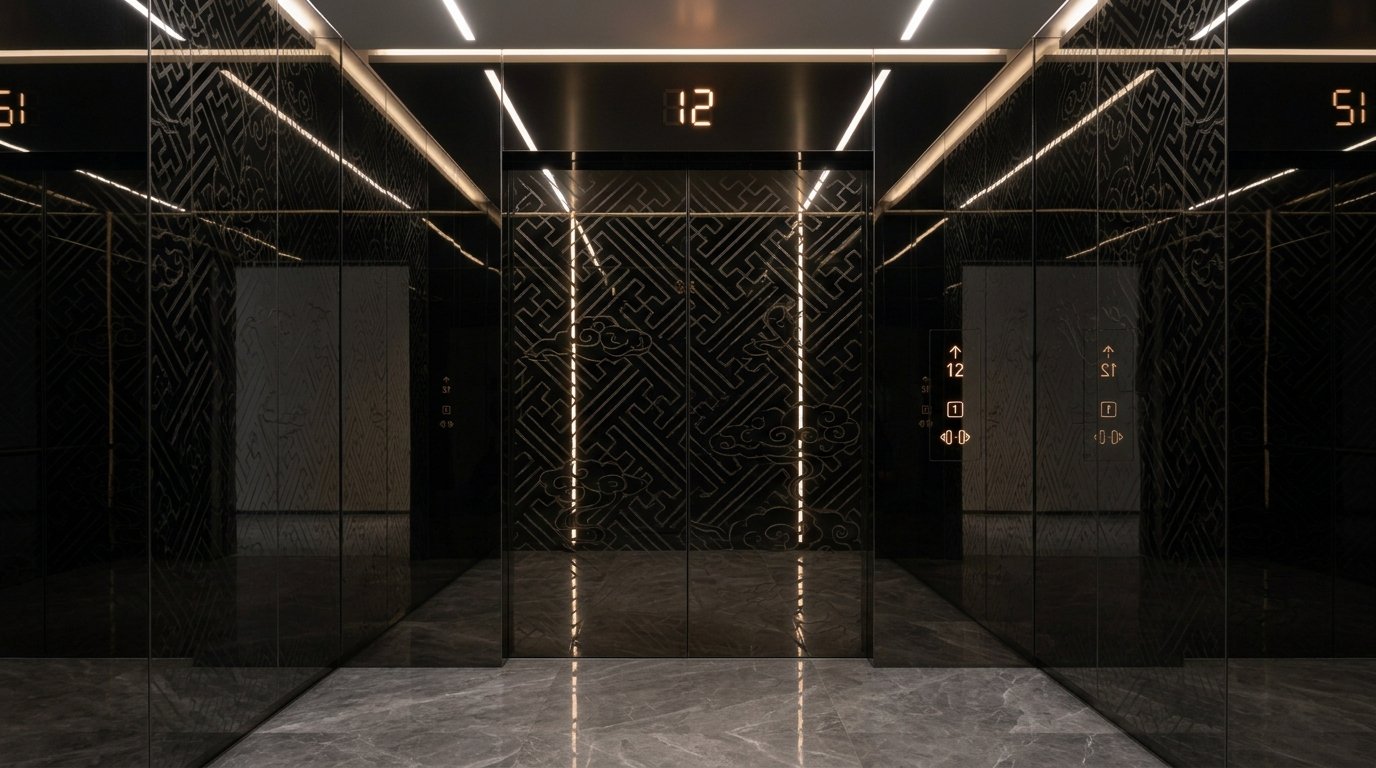
Dark stainless steel elevator doors with engraved geometric patterns in a reflective lobby

How to Match Elevator Interiors with Building Design

Elevator cabin should reflect the architecture of the building and not be the separate decorative object.

Match Finishes with Interior Design

Polished or sandblasted stainless steel works well with the neutral colors and clean lines used in contemporary office buildings.

Mirror finishes, color-coated metals or decorated etching can be used in hotels and upscale housing developments. Mixed finishes can be selected by shopping centers to define public spaces and individual elevators.

The decision needs to take into account the position of the building as well as the general interior design philosophy.

Consider Lighting and Visual Effects

Lighting impacts the appearance of the metal. Mirror finish reflects all the lights in the environment, while the brushed and textured finish creates more sophisticated effects.

Designers should study the material sample in lighting conditions similar to the lighting in the final elevator cabin. This is especially true if you select colored stainless steel or elevator decorative panels with patterned finish.

Maintain Design Consistency

The stainless steel elevator interior should match the receptions, walls of the corridors, decorative screens and entry points.

Similar metal finishes for these parts help to maintain design coherence. Custom-made metal products help in matching patterns, colors and finishes of other architectural elements.

Fabrication, Dimensions and Installation Considerations

A good elevator decoration project is not only about using beautiful material. Fabrication quality and proper installation are crucial as well.

Confirm Drawings and Dimensions

Prior to starting production, contractors have to provide correct drawings and verify the dimension of each piece.

Important factors to consider are cabin width and height, wall panel dimensions, dimensions of the doors openings, frame width, corners, and spaces between panels.

In case of custom elevator cladding project, customers have to verify the differences between dimensions of the sheets prior to fabrication and dimensions of the pieces after cutting, bending, or folding.

On-site measurements have to be verified prior to fabrication to minimize any fit issues.

Select Suitable Material and Thickness

Grade and thickness of the material have to be chosen according to the type of the application, requirements of the design, and fabrication process.

Different pieces might require different specifications. Customers have to verify grade, thickness, and surface of the stainless steel sheets.

Review Fabrication and Installation Details

Customized stainless steel components may include cutting, bending, welding, polishing, and any other finishing operation.

Project managers need to be aware of the following aspects:

  • Edge finishing: Check if folding edge, round corner, or other finishes are needed.
  • Joints: Make sure panel gaps and joints are the same as those designed in the drawing.
  • Surface protection: Apply proper protection to avoid scratching panels during transportation and installation.
  • Color uniformity: Make sure panels made for the same project have uniform colors, textures, and reflective features.

Decorative components have to fit together with the control panels, lightings, ventilation holes, handrails, doors movements, and access for maintenance. Interface checks should be done by the elevator manufacturer or professional installer before installation.
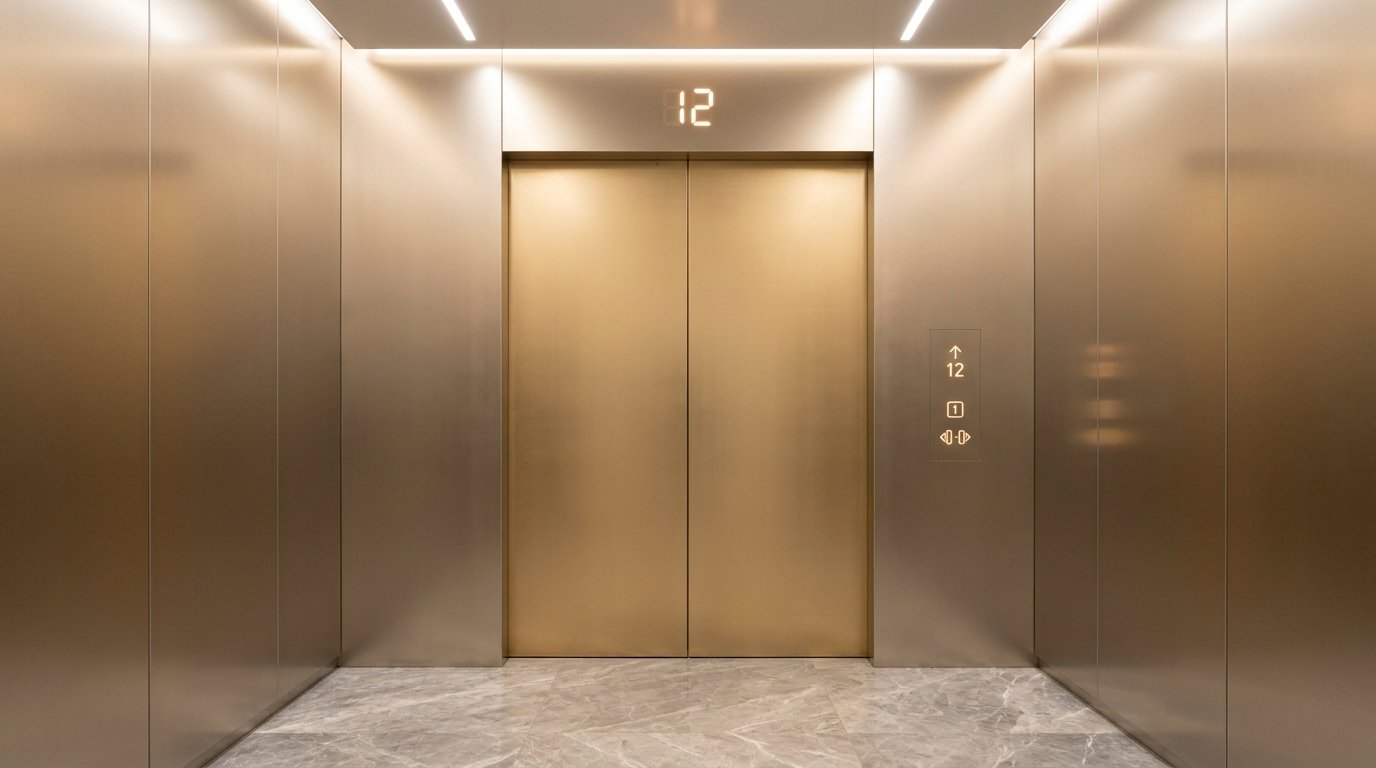
Brushed gold stainless steel elevator doors inside a minimalist cabin

Why Choose JYF Metal for Custom Elevator Decoration?

The selection of right fabricators plays a crucial role in commercial elevator decoration projects. Customers require a supplier who understands the architectural drawings and provides metal fabrication services accordingly.

Customized Metal Fabrication

Every building will have its own elevator sizes, decoration themes, and installation conditions. Standard panels will not meet all project needs.

The JYF Metal company can produce custom architectural metal products by providing dimensions, shapes, designs, patterns, and different surface finishes. This technology will help create architectural metal products like elevator wall panels and decorative door frames.

Multiple Decorative Surface Options

JYF Metal produces various surface finishes like brushed, mirror, water ripple, sandblasted, vibration, embossed, etched, and antique surfaces.

These options help choose the right look for stainless steel elevator decoration among various options.

Support for Architectural Projects

Elevator decoration is always part of the whole building project. There may be a necessity to match the metal products with decorative panels, metal screens, columns, and other architectural details.

JYF Metal application list covers customized architectural products.

Buyers can give drawings, dimensions, preferred surface finish, material requirements, and required quantities in order to find the best fabrication solution.

Frequently Asked Questions (FAQ)

What is the best stainless steel finish for elevator interiors?

Brushed finish of stainless steel is used in commercial elevators due to its modern look and relatively simple texture. Mirror, sandblasted, and colored finishes are alternatives.

Are stainless steel elevator wall panels customizable?

Yes. The panels are customizable based on the project drawings such as dimension, thickness, surface finish, pattern, and edges.

What are the advantages of custom elevator cladding?

Custom Elevator Cladding enables architects to integrate the elevator interior into the overall architectural concept of the building. It also gives options for dimensions of the panels, decoration patterns, and surface finish.

Can elevator door panels match cabin wall panels?

Yes. Door panels and cabin wall panels are made from the same type of stainless steel and surface finish. The buyer should verify samples and specification before production.

How should stainless steel elevator decorative panels be maintained?

Cleaning using a soft cloth with an appropriate mild cleaning solution will help maintain their appearance. Abrasive materials and aggressive chemicals should not be used because they could affect the surface.

What information is needed for a custom elevator interior project?

The buyer should collect architectural drawings, panel dimensions, stainless steel grade, thickness, surface finish, quantities, and installation requirements.

Can JYF Metal supply custom elevator decorative panels?

Customized metal fabrication of various products is offered by JYF Metal. The company allows buyers to discuss drawings, dimensions, surfaces, and fabrications to find a suitable solution.

Conclusion

A well-designed stainless steel elevator interior is more than a functional passenger space. The choice of stainless steel finishes, the arrangement of decorative wall panels, and the detailing of elevator doors all contribute to the architectural character of a commercial building. When these elements are carefully coordinated, they can create a more cohesive interior that balances aesthetics with everyday functionality.

For projects with specific design and dimensional requirements, JYFMETAL offers customized architectural solutions, with options for different materials, surface treatments, decorative patterns, and formed metal components. Whether developing a distinctive elevator cabin or coordinating metal decoration across an entire commercial building, the right fabrication approach can bring greater flexibility to the design process.