Stainless Steel Water Ripple Decorative Systems: A Comprehensive Guide from Concept to Installation
Table of Contents
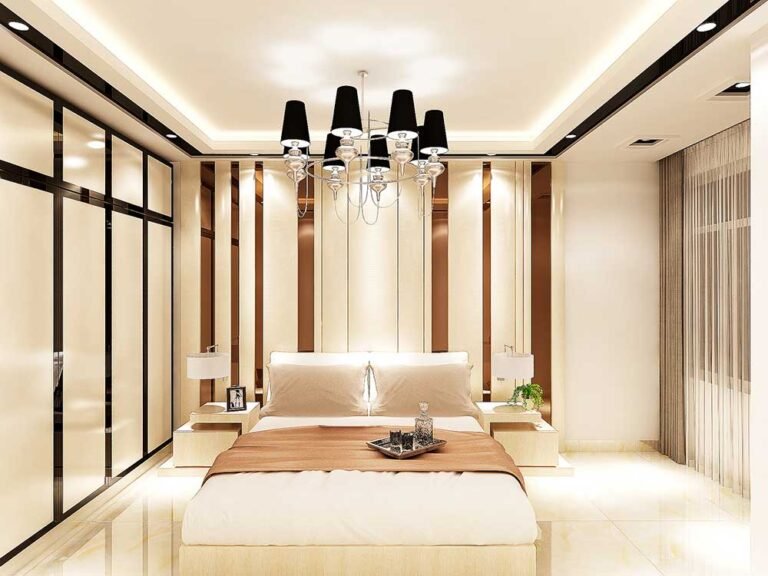
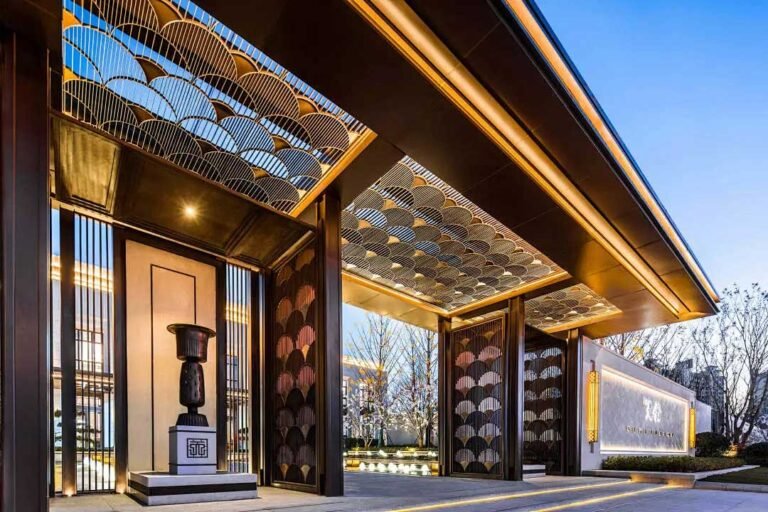
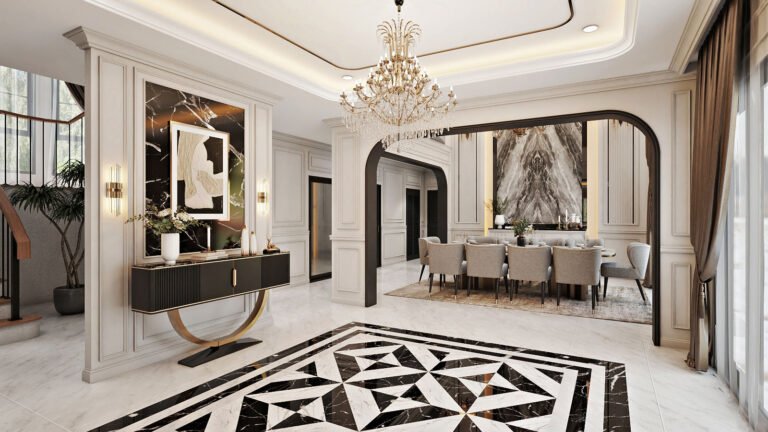
In the context of contemporary architectural design, materials are no longer merely fillers for space, but rather vessels for light and shadow. With years of deep industry experience, JYF METAL has witnessed the evolution of stainless steel from traditional flat, mirror-like surfaces to highly dynamic “rippled” forms. The reason rippled stainless steel has become the “darling” of luxury hotels, high-end commercial spaces, and art galleries is that it breaks away from the inherent coldness and rigidity of metal, infusing spaces with a “flowing vitality.”
However, this aesthetic is not easily achieved. A successful ripple-pattern project involves precise control of color saturation, visual assessment of ripple density, and—most crucially—the scientific selection of installation methods. Drawing on practical operational and business experience, this article provides an in-depth analysis of the selection logic for ripple-pattern stainless steel and the four core installation techniques, helping designers and contractors avoid construction pitfalls.
The Cornerstones of Visual Design: Choosing Colors, Specifications, and Textures
Before delving into complex installation discussions, we must first understand the inherent properties of the materials themselves, as these directly determine the flexibility of subsequent processing.
The Psychology of Color and the PVD Coating Process
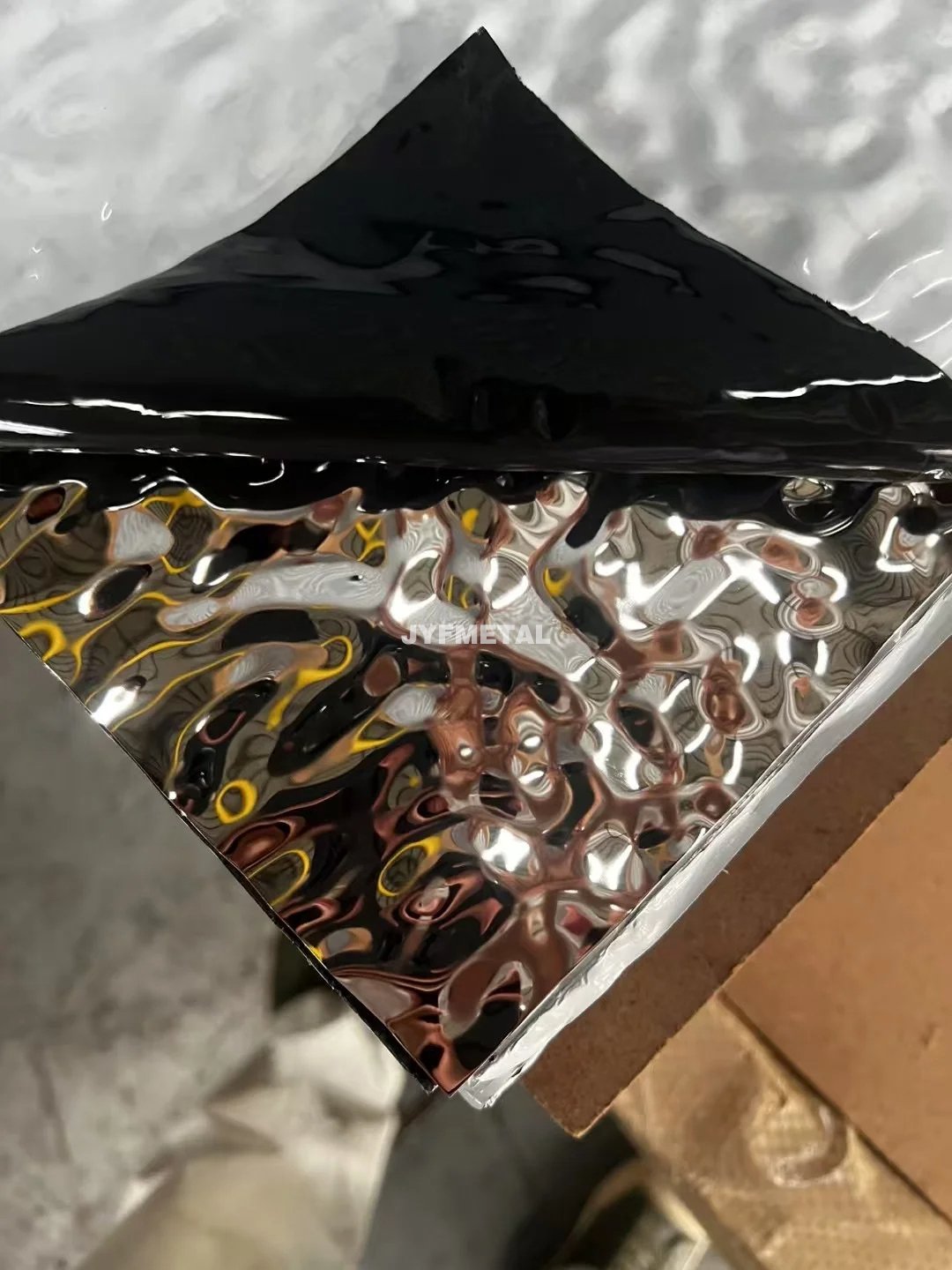
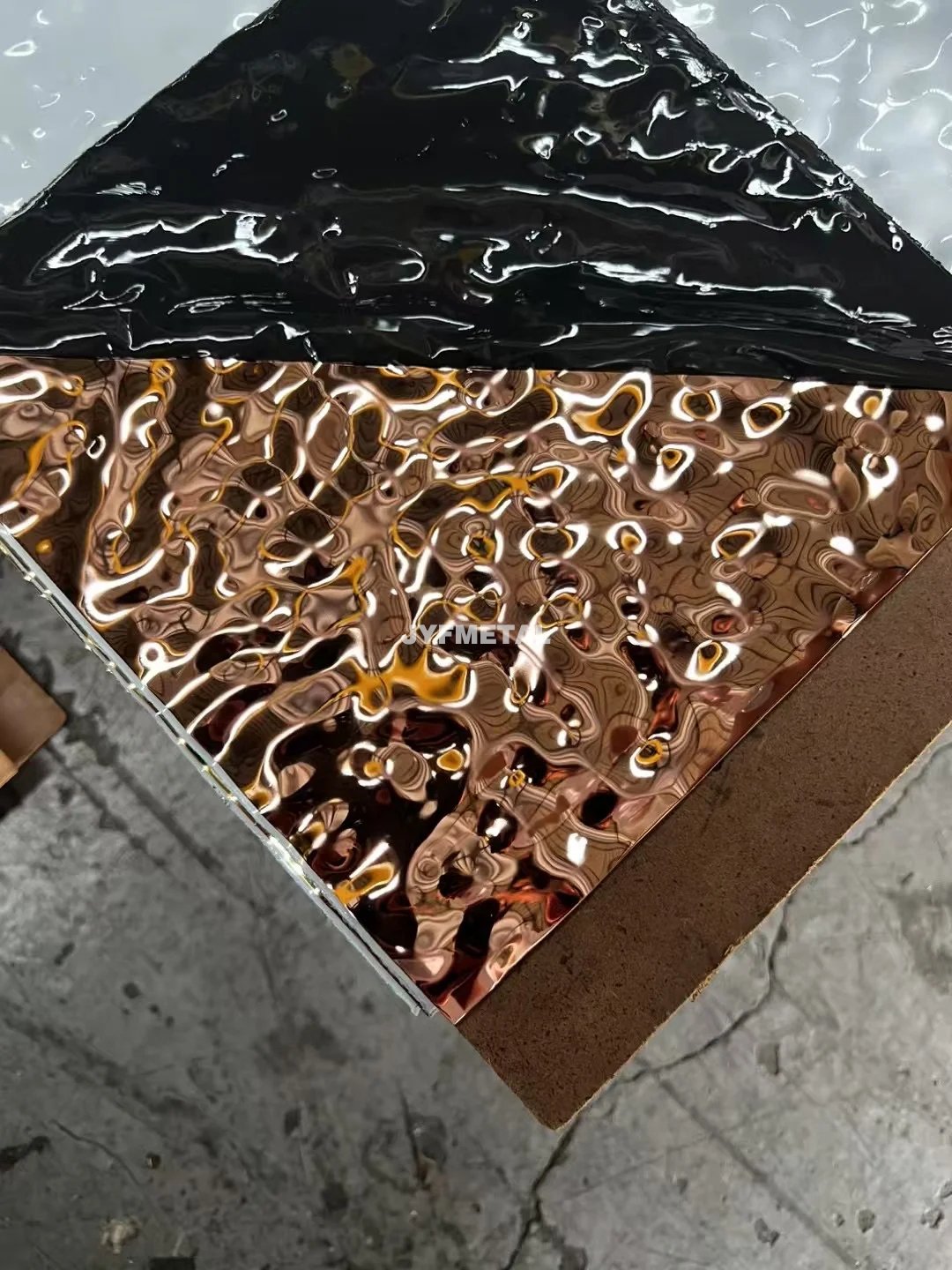
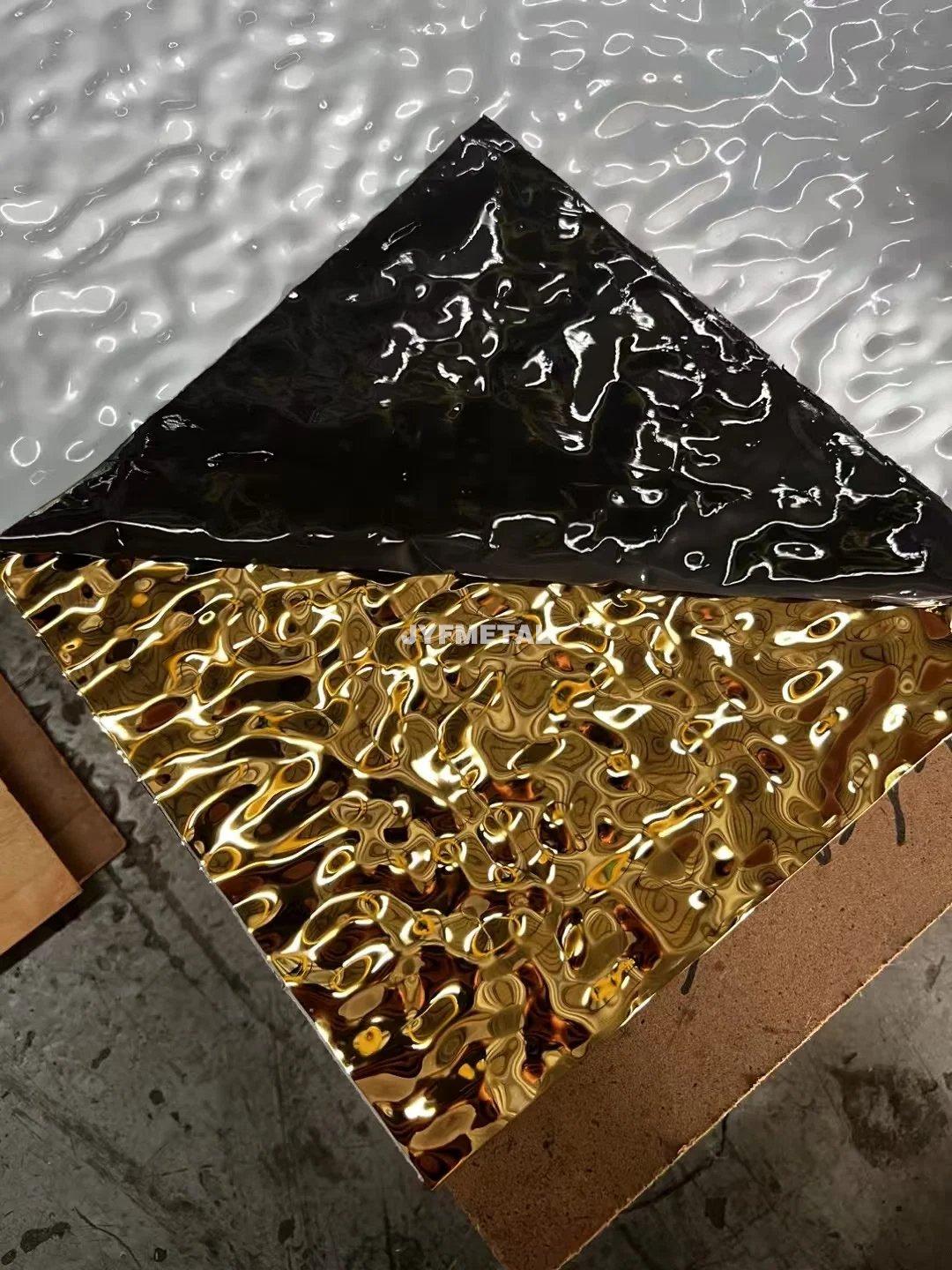
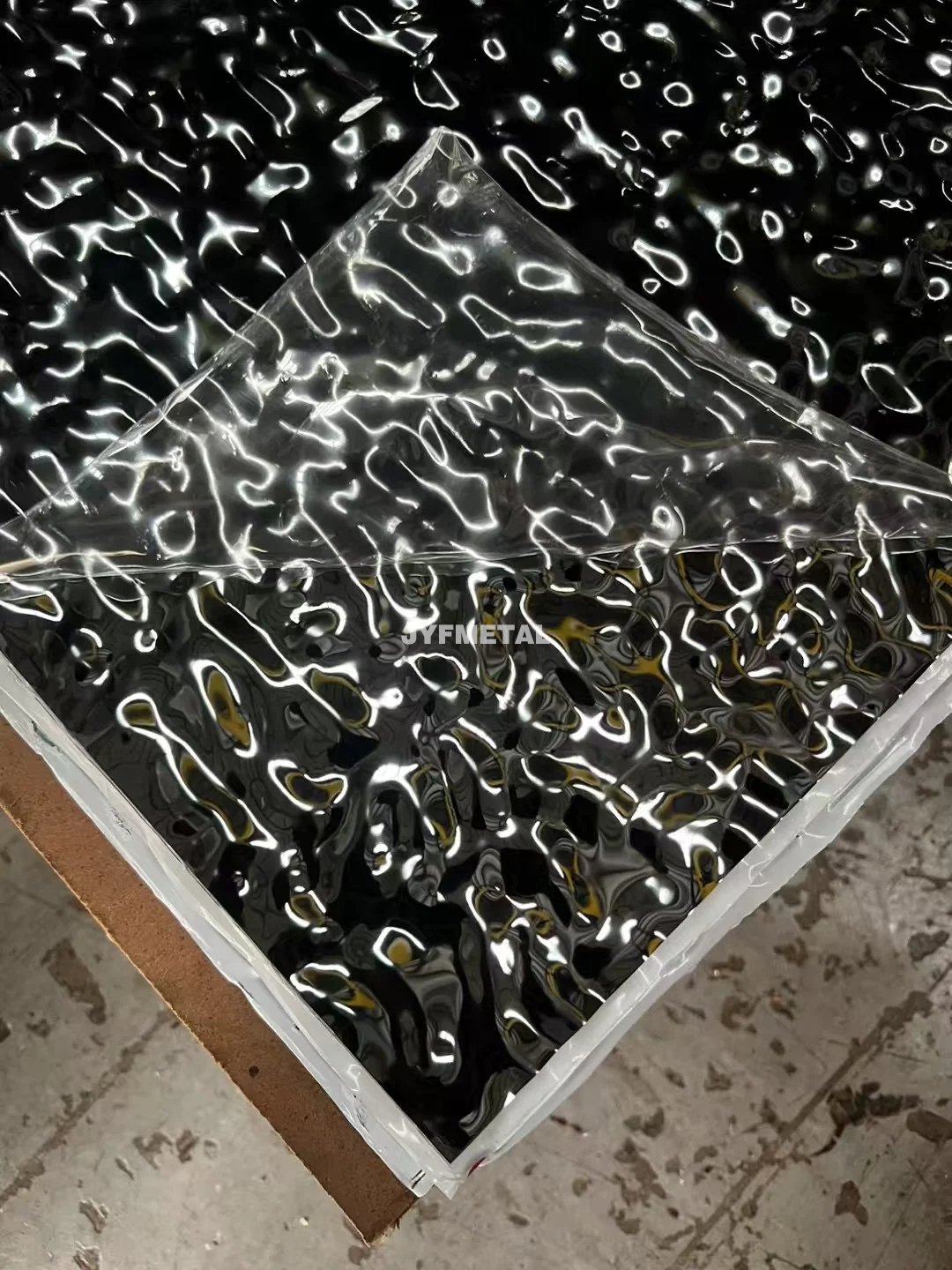
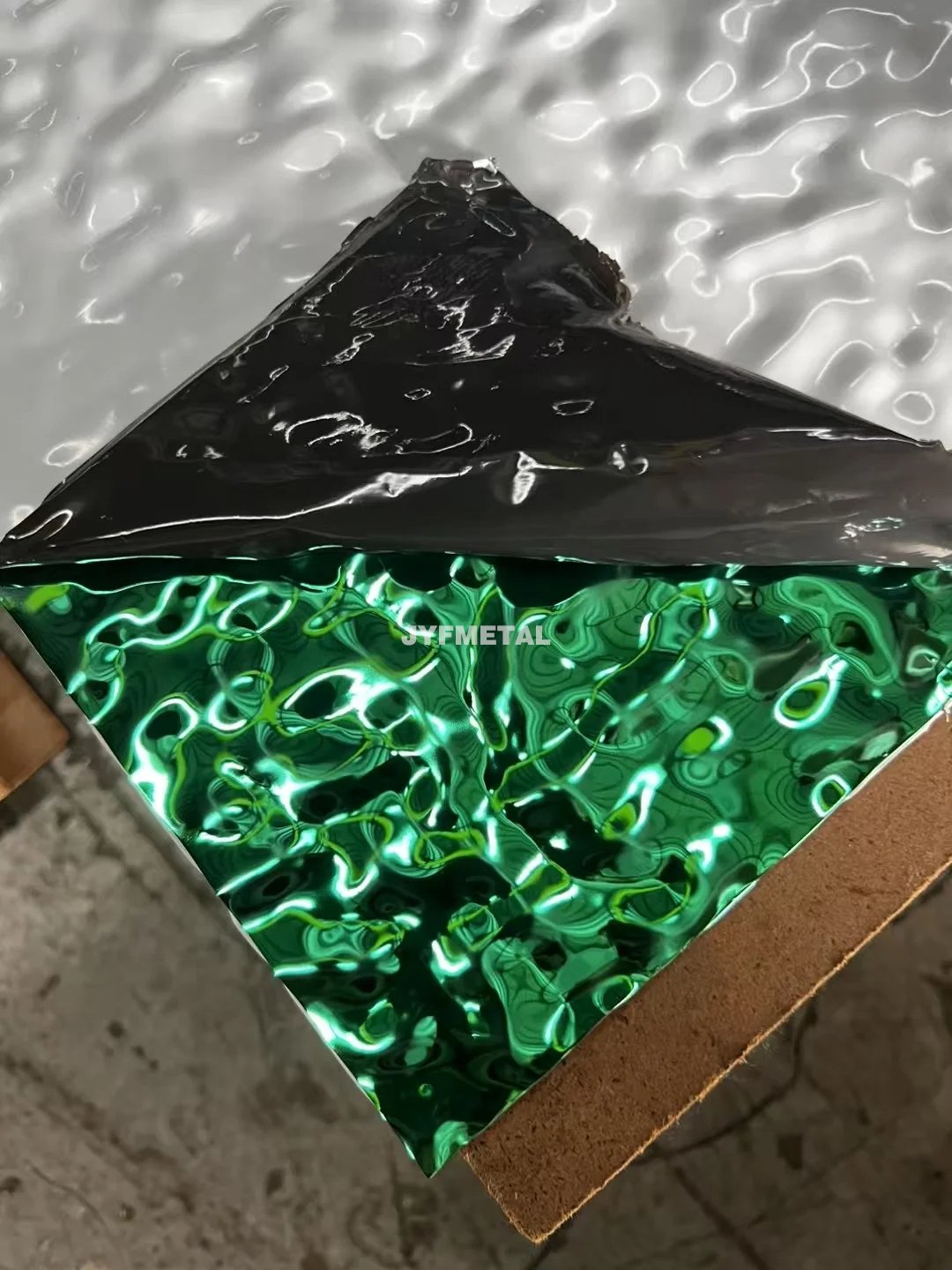
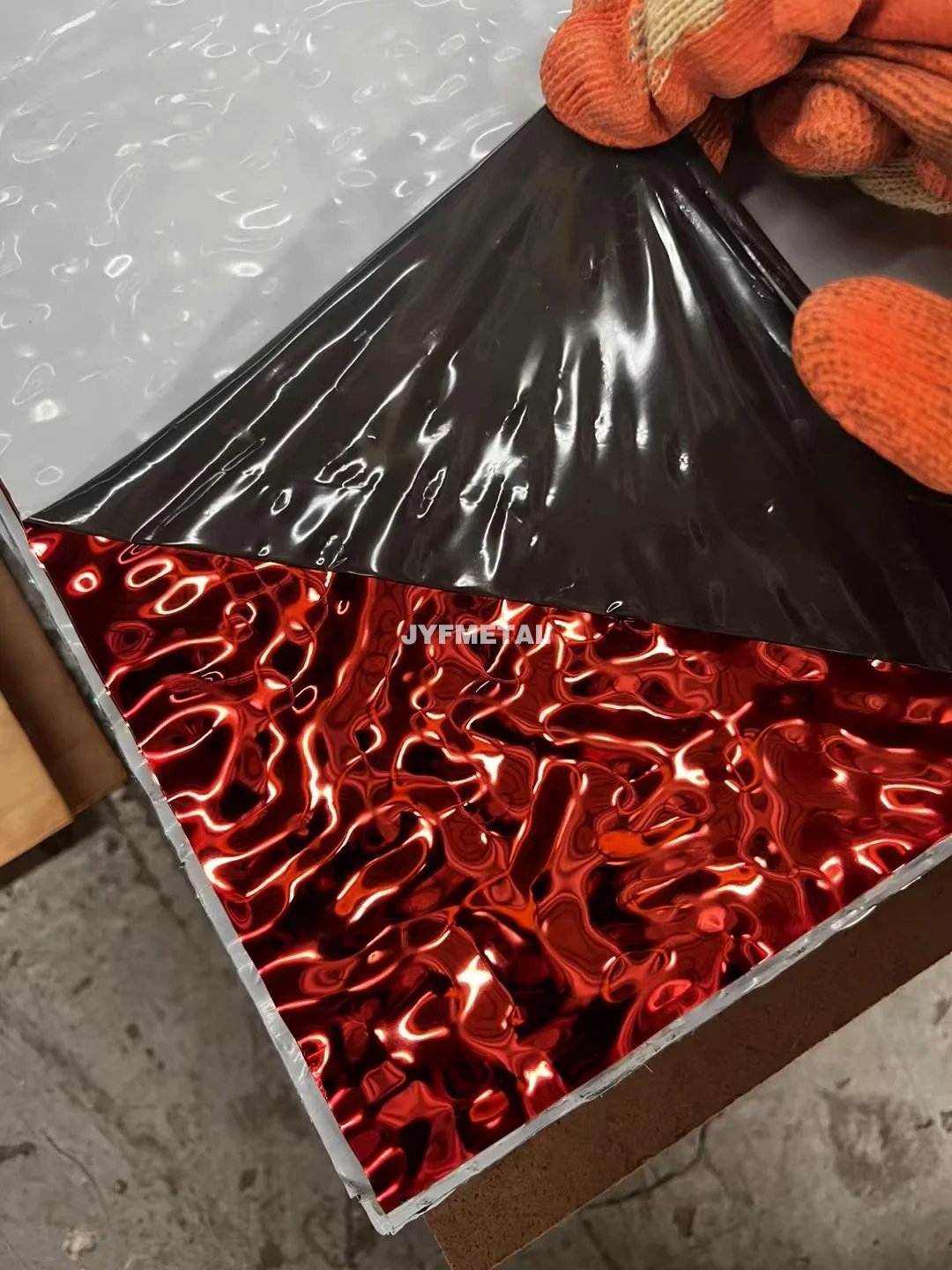
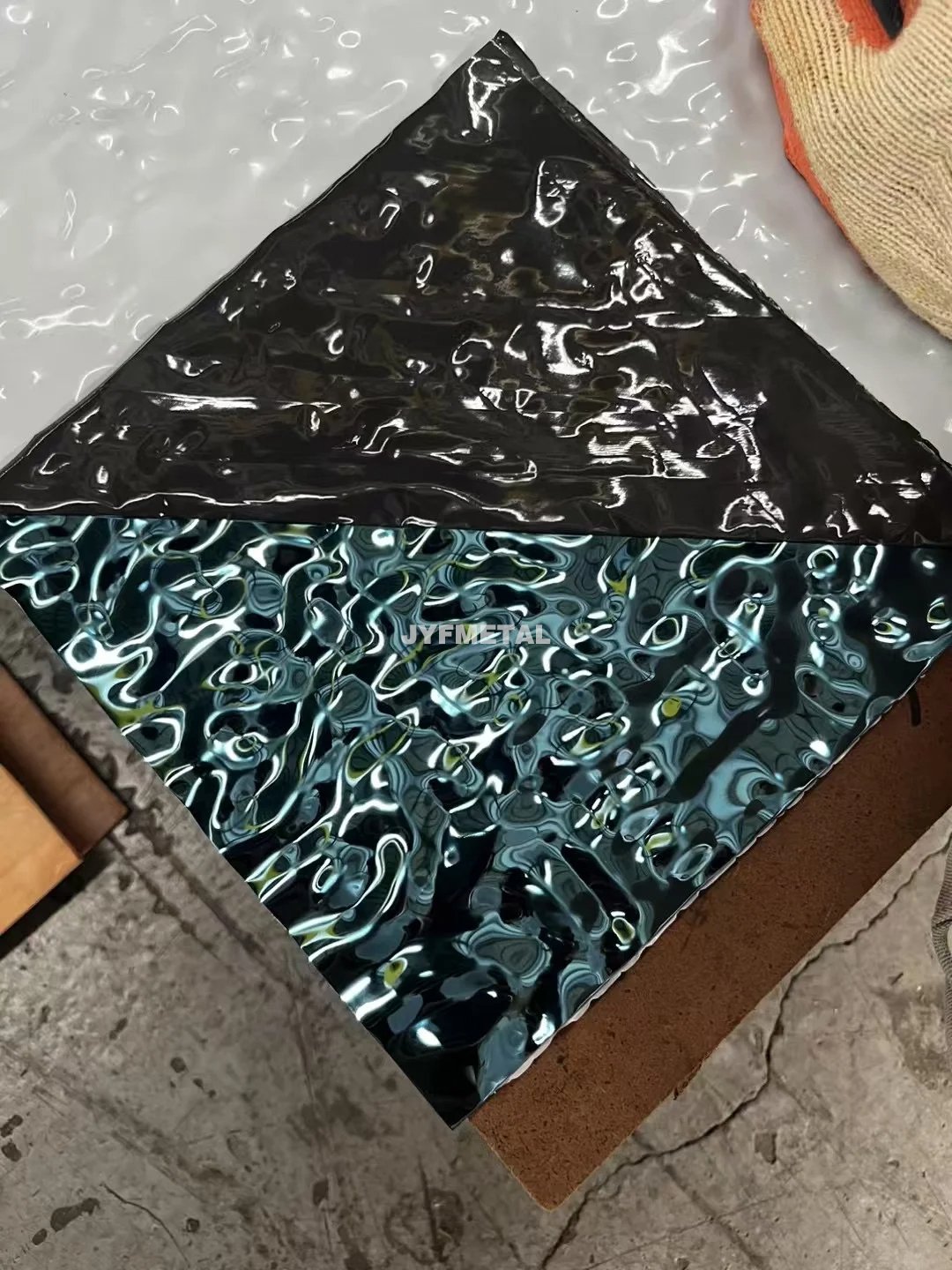
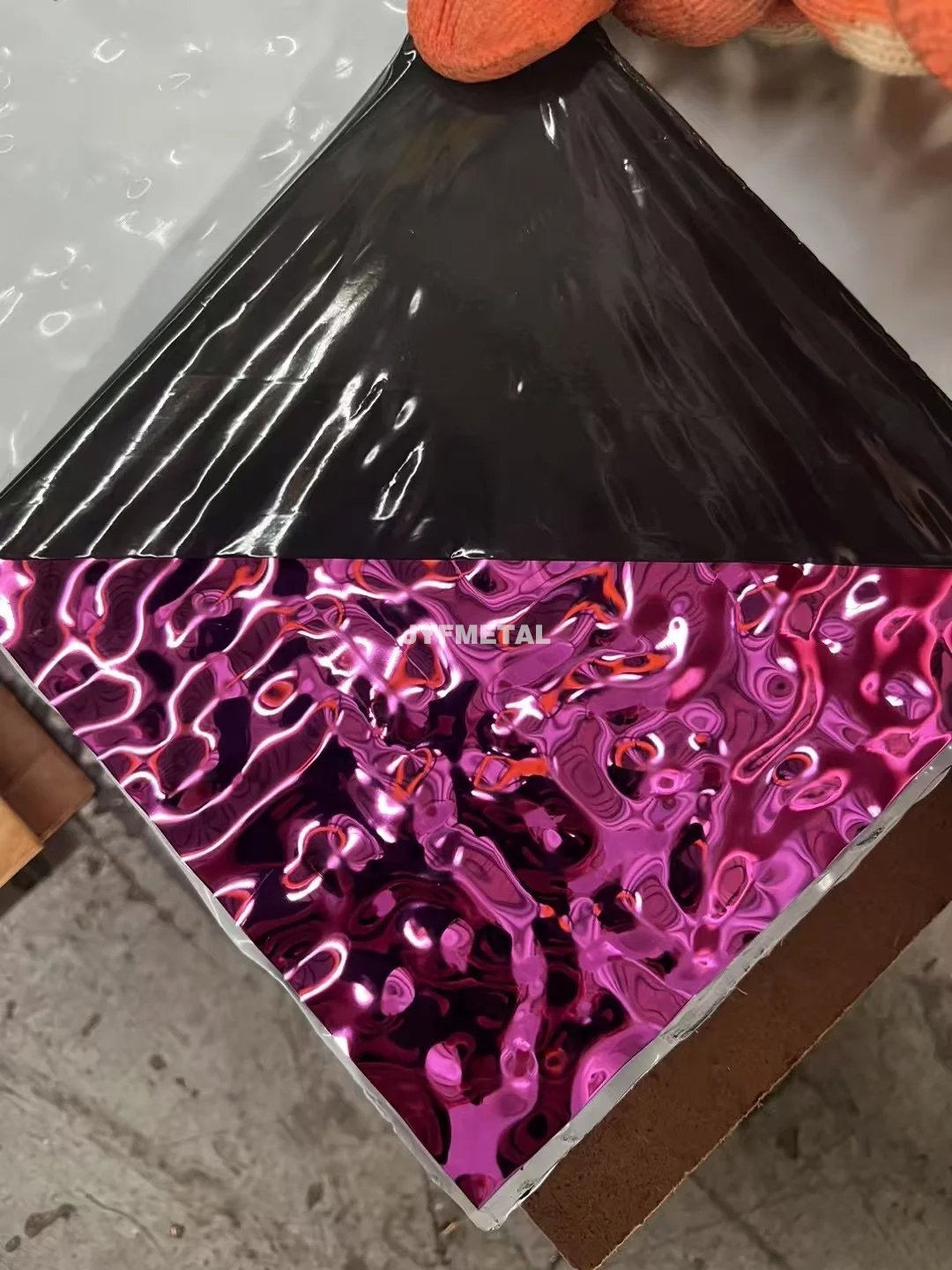
JYF METAL employs a PVD (Physical Vapor Deposition) vacuum plating process, which involves ionizing titanium metal in a high-vacuum environment and depositing it onto the surface of stainless steel. This is not merely a coloring process; it is a molecular-level bond.
- Silver: Closely mimics the natural ripples of water, embodying the fashionable style of modern metropolises and creating a more open visual space.
- Titanium Gold: Evokes a grand, regal atmosphere, making it ideal for large hotel lobbies.
- Rose Gold: Soft and approachable, it is the top choice for high-end beauty salons and luxury boutiques.
- Sapphire Blue: Combined with a water ripple texture, it realistically simulates deep-sea landscapes and is often used on ceilings to create a sense of depth.
- Black Titanium: Cool and mysterious, it is suitable for industrial-style or avant-garde art spaces.
Limits of Custom Sizing
Standard dimensions are typically 1219x2438mm or 1219x3048mm. However, in practice, we can provide extra-long panels measuring up to 4000mm. Why pursue longer panels? Because minimizing horizontal seams is the only way to enhance the overall visual sophistication.
Visual Classification by Wave Density
Standard dimensions are typically 1219x2438mm or 1219x3048mm. However, in practice, we can provide extra-long panels measuring up to 4000mm. Why pursue longer panels? Because minimizing horizontal seams is the only way to enhance the overall visual sophistication.
- Large Waves: Pronounced undulations and deep shadows, suitable for spaces with ceilings over 5 meters high.
- Medium Waves: The most visually balanced option, serving as the standard choice for wall decoration.
- Small Waves: Exquisite and delicate, suitable for close-contact scenarios such as elevator cabins and bar counter edging.
In-Depth Breakdown of Core Installation Techniques (Key Sections)
The installation method not only determines the cost but also the final “flatness.” Under bright light, any imperfections in stainless steel are magnified infinitely; therefore, selecting the appropriate installation technique is a “must-know” that sales representatives must clearly explain to clients.
Method 1: Direct Adhesive Bonding with Structural Adhesive (Economical Solution)
This is the most basic and lowest-cost solution.
- Installation Process:
Apply structural adhesive or neutral silicone sealant evenly to the back of the stainless steel panel and bond it directly to a level substrate (such as plywood, calcium silicate board, or a smooth plastered wall).
- Business Insights (From the Customer’s Perspective):
Advantages: Extremely low installation threshold; no complex metal fabrication is required, saving significant fabrication costs at the factory.
Challenges and Risks: This solution is highly dependent on the flatness of the substrate. Even the slightest unevenness in the wall surface will cause the mirror-finished stainless steel to produce a “funhouse mirror” effect. Additionally, “natural joints” will appear between materials, making it impossible to achieve a completely flush finish.
- Suitable Scenarios:
Small restaurants with limited budgets, temporary exhibition booth decorations.
Method 2: 90° Edge Bending with Welded Corner Brackets (Standard Construction Method)
This is currently the most commonly used “balance point” solution for medium- to large-scale projects.
- Construction Process:
During manufacturing, the factory performs 90° folding on all four sides of the stainless steel panels and welds stainless steel corner brackets (L-shaped connectors) at the folded edges. On-site, light-gauge steel or wooden furring strips are first installed, and then the corner brackets are secured to the furring strips using screws.
- Business Insights:
Advantages: Sturdy structure and high safety. Because the panels have “depth” (typically 20mm–30mm folded edges), they form neat, uniform joints (V-grooves or recessed joints), creating a visually appealing industrial design aesthetic.
Challenges: Requires high precision in factory bending. If the folding angle is inaccurate, height discrepancies will appear at the joints.
- Suitable Scenarios:
Hotel corridor walls, column cladding in commercial centers.
Method 3: Interlocking Structural System (High-Efficiency Aesthetic Solution)
This is a proven solution inspired by high-end aluminum clip-on ceiling panels.
- Installation Process:
The edges of the panels are machined into a special “interlocking” shape and installed using the manufacturer’s proprietary track system. During installation, the panels snap together like buttons, with one panel interlocking with the next.
- Business Insights:
Advantages: Installation is extremely fast and requires no surface screws. Most importantly, this method enables “removability.” If maintenance is needed on the piping inside the ceiling, a specific panel can be removed without causing damage.
Visual Effect: The gaps are extremely uniform, creating a highly continuous “water surface” visual effect.
- Cost Assessment:
Customized specialized grid systems are required, making the cost higher than the previous two options; this is a mid-to-high-end configuration.

Method 4: Stainless Steel Ripple Honeycomb Composite Panels (Top-Tier Luxury Solution)
This is the high-end engineering solution most highly recommended by JYF METAL.
- Installation Process:
0.6mm–1.0mm-thick ripple-patterned stainless steel sheets are bonded to an aluminum honeycomb core using aerospace-grade adhesive through high-temperature, high-pressure lamination, forming a monolithic “composite sandwich panel.” The edges are then installed using corner brackets or hook-and-loop fasteners.
- In-Depth Analysis:
Solving the “Oil Canning Effect”: Due to internal stress, thin stainless steel sheets are prone to visual distortion (oil canning) when installed over large areas. The honeycomb core provides robust structural support, ensuring each panel remains as flat as a steel plate.
Sound Insulation and Seismic Resistance: The honeycomb structure effectively absorbs sound waves and reduces vibration noise from the metal surface.
Achieving Extra-Large Dimensions: Only by incorporating a honeycomb core can individual panels exceed 1.5 meters in width without warping.
- Suitable Scenarios:
Ceilings in five-star hotel lobbies, exterior walls of luxury flagship stores, and airport terminals.
Common Pitfalls at Construction Sites and Guidelines for Avoiding Them
When to Remove the Protective Film
The surface of rippled panels features a precision coating. Should the protective film be removed immediately after installation? No, you must wait until all dust has settled and painting work is complete before removing it. However, if the protective film is exposed to direct sunlight outdoors for more than 30 days, it may “delaminate,” making it extremely difficult to clean.
Color Variation Management
For a single project, you must use roll materials from the same production batch. Even with identical PVD parameters, colors from different furnace batches will exhibit slight variations, which are magnified on rippled panels—a material that plays with light and shadow.
Consistent Installation Direction
Each rippled panel’s protective film features an arrow. During installation, ensure that the arrows all point in the same direction. The ripples are directional; if installed incorrectly, the angle of light reflection will be disrupted.
Conclusion
In Foshan, the global hub for stainless steel, JYF METAL stands out not only because we produce beautiful rippled panels, but also because we understand engineering. We don’t sell “steel sheets”; we sell “the finished result.”
Whether your project is in the deserts of Dubai or along the coast of London, Our engineering team can provide the most scientifically sound installation recommendations based on your budget and environmental requirements. We firmly believe that materials are the body of design, and installation is its soul.