
Reinventing Urban Barriers with Stainless Steel Traffic Bollards
Table of Contents
In contemporary urban planning, the challenge is to seamlessly integrate safety, accessibility, and urban aesthetics. Today, stainless steel traffic bollards meet the needs of cities desirous of keeping open spaces regulated without compromising on aesthetics.
Modern bollards go beyond mere vehicle restriction but create environmental awareness, add to the comfort of pedestrians, and enhance urban functionality. They are long-lasting investments for both civic and commercial stakeholders, reducing recurring costs due to replacement or repair.
This paper discusses new dimensions that stainless steel bollards bring into urban infrastructure, focusing on new perspectives over installation, integration into urban design, technological features, and long-term benefits, keeping functionality and aesthetics in perfect harmony.
Evolving Roles of Stainless Steel Traffic Bollards
Urban barriers are not only functional anymore, but they also can play several social, aesthetic, and technological roles. The use of stainless steel road bollards is illustrative of this shift toward providing versatile solutions to innovative contexts in urban planning that contribute to safety and to the visual and social dynamics of the public space.
Pedestrian Flow Optimization
Bollards can be located in high-traffic areas to subtly affect pedestrian movement by guiding and dictating pedestrian flow. Their reflective or sculpted surfaces can visually guide people without being obtrusive, thus naturally developing pathways that ease pedestrian circulation and lessen congestion in urban centers. Beyond simple separation, these bollards create intuitive pedestrian corridors that promote smooth foot traffic during peak hours, large-scale events, or emergency evacuations and contribute to both safety and urban efficiency. Thoughtful placement will also encourage responsible pedestrian behavior, reducing conflicts between pedestrians and cyclists or vehicles in mixed-use spaces.
Low-Impact Traffic Segregation
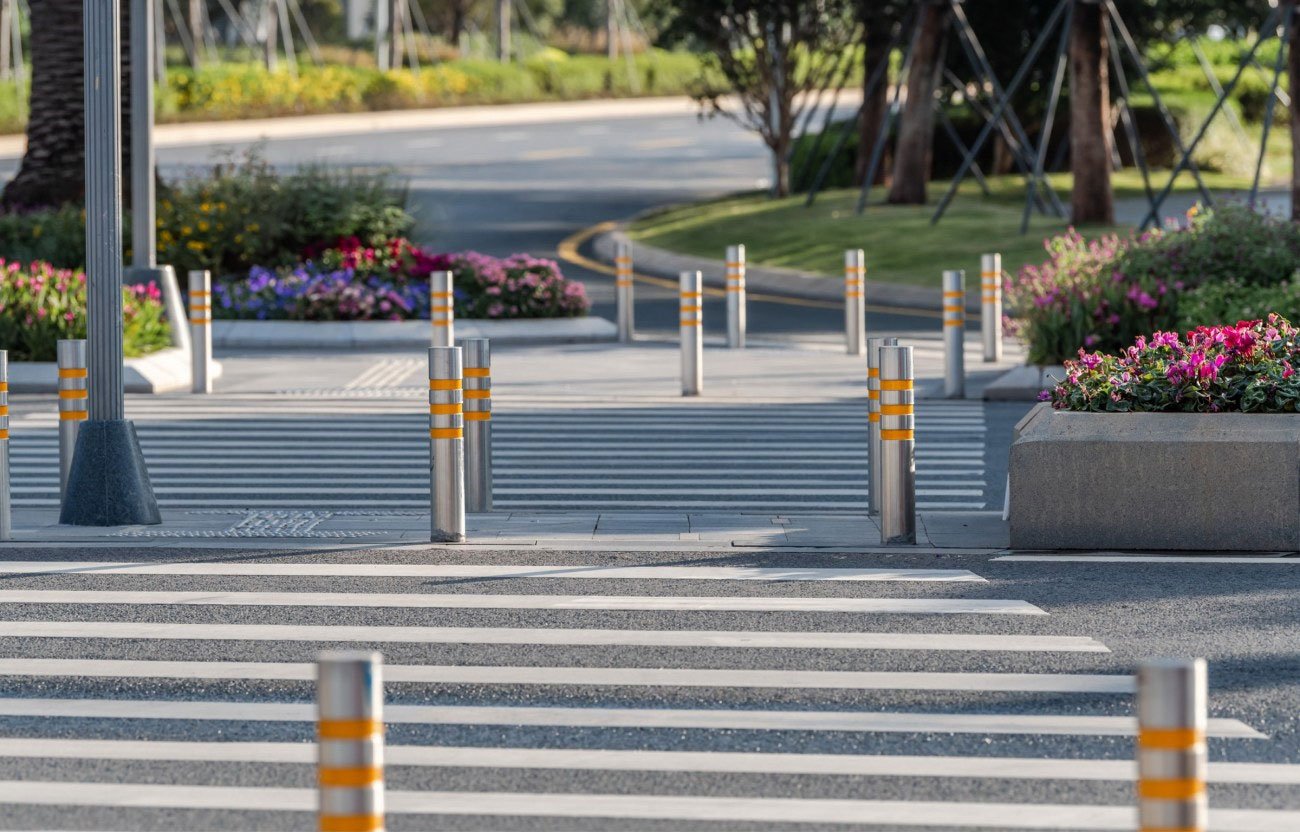
Stainless steel bollards can subtly separate vehicles from shared spaces without creating visual clutter. With slim geometric profiles, a design that does not overwhelm the environment and offers protection can be achieved. This approach seeks a balance between access and control, granting limited access to vehicles while maintaining the openness of public spaces. By preserving sightlines and minimizing obstruction, these bollards contribute to both safety and aesthetic integration, supporting urban designs where visual continuity and openness are essential.
Integration with Smart City Technologies
Some stainless steel bollards today have sensors inside them or reflective materials that work with smart urban systems. This can include interfacing with lighting, traffic signals, or pedestrian alerts for enhanced safety via technological integration. By merging physical infrastructure with digital solutions, they support the development of responsive, intelligent urban environments able to adapt in real time to traffic patterns, weather conditions, or emergency scenarios and offer a proactive approach to city management.
Innovative Design and Architectural Synergy of Stainless Steel Traffic Bollards
Stainless steel bollards have become today as much design elements as functional barriers. Complementing or even enhancing urban architecture allows planners to integrate safety seamlessly into the visual identity of the public spaces, without functionality compromising aesthetics.
Harmonizing with Public Art
Modern-day bollard designs can adopt sculptural forms, reflecting urban art initiatives in which essential safety features take on an engaging characteristic within the cityscape, creating cohesion between infrastructure and cultural expression. Sculpted stainless steel bollards can mark places, encouraging safety and public interaction. Moreover, some artistic bollards double as conversation pieces that subtly encourage community interaction and foster a sense of place while ensuring protection against accidental or unauthorized vehicle access.
Adaptive Geometry for Space Efficiency
Specially created shapes for bollards, like tapered, cylindrical, or modular, efficiently use very limited space. Designers can create compact protective structures with minimal footprint without sacrificing performance. Adaptive geometry is of real importance in narrow streets, plazas, or transportation hubs where traditional barriers might interfere with the flow. Such designs offer the guarantee that bollards perform their work of protection without compromising either the comfort or accessibility of pedestrians and support inclusive and efficient urban environments.
Visual Signaling and Awareness
Some bollards use light-reflective finishes or embedded LEDs to increase visibility in conditions of reduced light or inclement weather. This dual function ensures that bollards are not only physical barriers but also active contributors to urban safety. Signaling boundaries clearly, they reduce accidental crossings, improve situational awareness for both drivers and pedestrians, and boost the perception of security in public areas. Visibility is also enhanced to lower insurance liabilities and public complaints in commercial or municipal environments.
Installation Strategies and Long-Term Performance of Stainless Steel Traffic Bollards
The successful performance of stainless steel bollards is contingent upon careful installation, appropriate placement, and sustainable maintenance. Long-term success requires consideration for environmental and operating variables such that the bollards will remain functional, stable, and attractive for many years.
Soil and Surface Adaptation
Bollards can be installed in various terrains, whether it is concrete, asphalt, or uneven. Custom anchoring systems ensure stability and prevent the loosening effect over time. These adaptations enable municipalities to deploy bollards across diverse urban environments while maintaining performance and safety without compromise. Proper adaptation to site-specific conditions ensures longevity, reducing frequency of maintenance and offering both safety and financial efficiency.
Weather-Resilient Installation
In areas exposed to inclement weather, stainless steel bollards can be combined with protective coatings or drainage systems to prevent corrosion, water accumulation, and structural fatigue, ensuring that bollards retain integrity throughout seasonal changes. Appropriately engineered installations extend the life, limit replacement costs, and sustain aesthetic consistency both within urban and coastal environments where exposure to elements is extreme.
Modular and Removable Configurations
Bollard design can accommodate temporary events or flexible urban layouts, including easy removal or repositioning of the units. Modular systems in cities enable dynamic access control without permanent disruption. Such adaptability enables the management of emergencies, construction zones, or seasonal pedestrianization so that functionality aligns with changing urban needs while public safety and operational efficiency are maintained.
Environmental and Community Impact of Stainless Steel Traffic Bollards
Beyond safety and design, stainless steel bollards positively contribute to urban sustainability and community engagement by reflecting modern priorities in responsible infrastructure development.
Resource Efficiency and Lifecycle Benefits
Due to the durability of stainless steel, these bollards reduce material usage and waste throughout their life cycle. The strength means that replacements will be needed less often, further reducing energy use and environmental impact during fabrication and transportation. High-quality materials mean that investment by municipalities and developers translates into sustainable infrastructure, reinforcing environmental objectives while reducing their long-term operational costs.
Promoting Social Awareness
Bollards with integrated interactive or visually engaging elements may help build a sense of community interaction and awareness. Examples include reflecting patterns or artistic forms that invite public interaction while preserving the safety objective, thus giving an urban setting design that accommodates functionality and community identity. Well-conceived designs can even boost the perception of safety, allowing many more people to confidently use the pedestrian areas.
Alignment with Eco-Friendly Infrastructure
These stainless steel bollards are recyclable at the end of their life, hence support eco-conscious development strategies. Materials with high recyclability are in step with global urban sustainability goals and help cities achieve green certifications or environmental standards. This makes sure that infrastructure investments are not only functional but socially and environmentally responsible.

Versatile Application Scenarios of Stainless Steel Traffic Bollards
Modern stainless steel bollards are far ahead of their traditional usage, meeting emerging city needs in innovative ways that blend functionality, aesthetics, and safety.
Shared Mobility and Cycling Infrastructure
The protective function of bollards extends to bicycle lanes or shared mobility zones, creating safe corridors for non-motorized transport. Their presence ensures separation from vehicle lanes while maintaining smooth traffic flow. This would encourage more sustainable transportation choices, reducing the risk of accidents, along with city initiatives aimed at improving air quality and promoting active mobility.
Event and Festival Management
The temporary bollard arrangements ensure controlled access during festivals, public gatherings, or emergency situations. Moreover, modular designs make it easy for organizers to reshape their layouts in quick time, allowing the movement of crowds safely. Such flexibility helps public authorities and event planners to efficiently manage large crowds while mitigating risks with visual order and accessibility.
Commercial and Institutional Properties
Business campuses and institutional grounds use bollards to enhance controlled access while adding to professional aesthetics. They can be designed to reflect corporate identity or architectural style, and thus combine functionality with visual coherence. Well-designed bollards support brand image, give the feeling of order, and contribute toward a professional atmosphere, enhancing both safety and credibility of the organization.
Innovative Urban Installations
Creative installations in parks, waterfronts, or plazas use bollards as multifunctional elements—serving as seating boundaries, planters, or visual markers. This approach integrates utility with design, transforming standard barriers into multifunctional urban assets. Multifunctional bollards support diverse uses, from protecting greenery to guiding pedestrian flow, making them a cost-effective and versatile solution for contemporary urban planning.
Conclusion
Stainless steel traffic bollards provide a modern solution that balances safety, design, adaptability, and sustainability. They are effective tools for urban planners, commercial developers, and public authorities seeking functional, visually appealing, and environmentally responsible infrastructure solutions. Choosing these stainless steel road bollards ensures enhanced urban safety, flexible deployment, improved aesthetics, and sustainable benefits — explore full options on JYF METAL.