Metal Sculpting and Structural Stability: Exploring Stainless Steel Designs
Table of Contents
Sculpting with metal is an art that inspires creative expressions through representation in engineering precision and the latest fabrication technology. Stainless steel is unique among the metals in that it is strong, resists corrosion, and lasts a long time; therefore, one can use it for installing it both indoors and outdoors.
Sculptors are thus practiced in producing smooth curves, complex surfaces, and personalized shapes that are good to look at and will still hold architectural truth for many decades after. This makes metal sculpture into an applied art through which design concepts can be integrated with fabrication processes as well as performance of materials to achieve aesthetic outcome in every condition that environmental agents such as humidity, wind, or temperature fluctuation would apply stress to the work.
Balancing Artistic Vision with Structural Feasibility in Metal Sculptures
Every sculpture begins its life in the mind, but that sculptural thought must be translated into a solid object through detailed planning and technical thinking. Artists will have to consider scaling and placement within an environment; thus, the piece must not only be visually stunning but also hold on extremely safely and securely.
Converting ideas into reality-from prototype sketches to finished forms-requires creative ambition to be carefully balanced with requirements of engineering, artistic freedom, and practical feasibility. The outcome of this is that the sculpture can withstand any destructive forces within its intended setting while being wondrous to the eye.
Enhancing Visual Impact Through Curvature and Surface Interaction
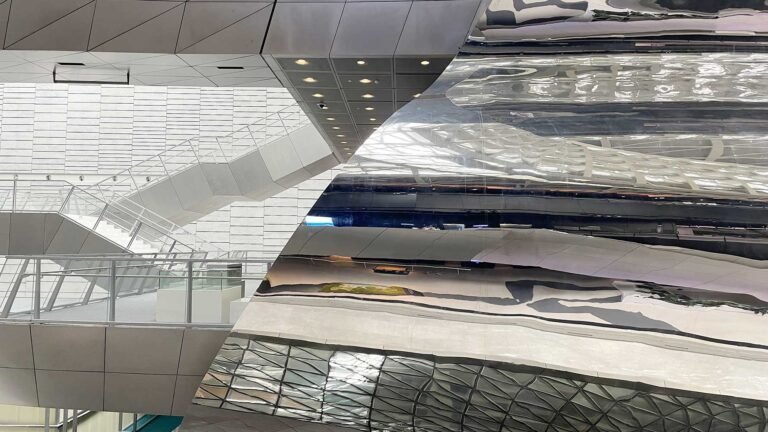
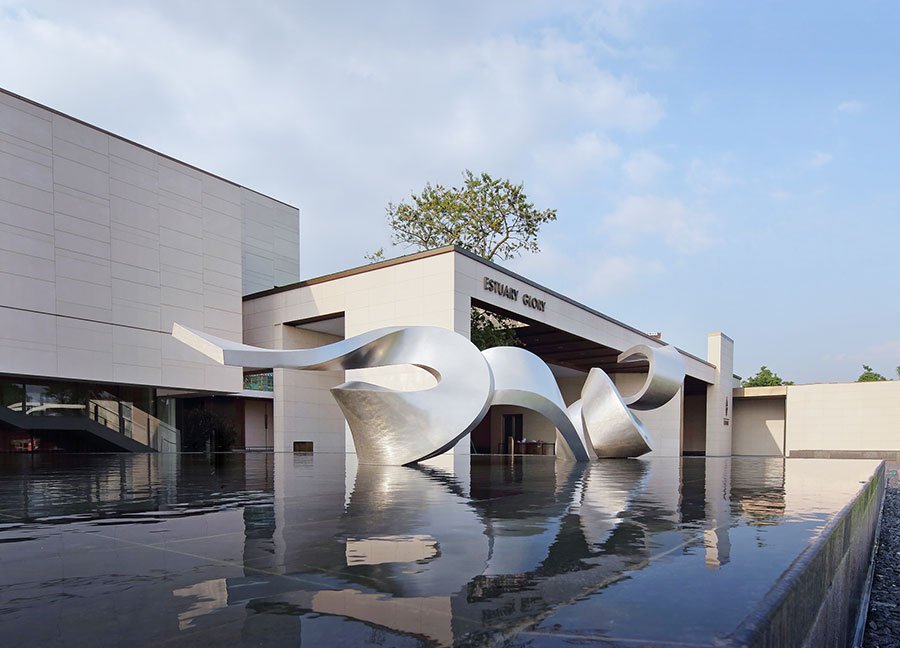
Curved and polished surfaces play with light, casting shadows and reflections, giving the static sculpture a sense of movement. It could be flowing organic forms, accurate geometrical patterns, or abstract compositions-they all change according to the observer’s perception and at different times during the day. Surface finishing techniques-such as brushing, mirror polishing, or subtle texturing-further pitch contours into relief and defeat perception depth; every detail thus contributes to the attractiveness of these sculptures, imbue them with a speculatively sensory experience that changes as one moves around the piece.
Calculating Weight Distribution for Long-Term Stability
To make a structure strong, weight should be carefully calculated and balanced across it, as well as an understanding of the center of gravity of the sculpture itself. Hollow sections, internal bracing, or tubular supports can be found in some large-scale installations, while usually also saving material. Indeed, such methods allow for making large or complicated designs without compromising stability. Correctly weighing and supporting arrangements prevent tilting or structural breakdown, thus ensuring safety and a clean visual link of the sculpture with its environment.
Collaborative Approach Between Artists, Engineers, and Fabricators
Making complex metallic sculptures is not typically a singular task. It would comprise the artist who does the conceptual and aesthetic directing; the engineer who does the stress evaluations and integrity tests of the structure; and the fabricator who turns everything to reality using precise tools and techniques. Improvisation at every step of the process of production ensures that creativity merges with sensible execution in the resulting sculpture, which is artful and sound from an engineering perspective. Multiple perspectives by different branches increase the chance of a unique design solution that cannot be found from just one discipline could be found here.
Integrating Complementary Materials for Enhanced Structural and Aesthetic Effect
For instance, in a project, stainless steel has been paired with other materials like glass, stone, or wood to give unique textures, luminosity, or additional structural support. These characters of hybrid constructions allow for multidimensional forms, deeper experience, and a more interesting sensory experience-resonating figuratively and literally with different voices in architecture. These also help with stress redistribution and stability for more complex works in ensuring aesthetic play is not built at the cost of durability or safety.

Addressing Engineering Challenges in Complex and Custom Metal Forms
While the creative potential chips away at and elevates an artist’s vision, translating it into an actual object of their imagination engenders intricacies in the nature and degree of technical challenges, be it in design or fabrication. Transitioning from imaginings to objects fundamentally requires careful consideration of structural stress points, load-bearing supports, and exacting manufacturing methods; with proper planning, the artist can bring into being an ambitious form without compromising stability by which the sculpture is required to maintain its original shape and function over the long term. Advanced engineering permits the structure to endure even moody or heroic designs.
Utilizing Advanced Fabrication Technologies for Precision Sculpting
A designer can build some of the most exceptional designs with advanced capabilities in fabrication today; laser cutting, CNC bending, robotic welding, and cold forming are among some of the advanced fabrication techniques used. Shakable surfaces, layered panels, and sharp angles are often impractically or exceedingly difficult to create using traditional ways of metalworking techniques. The assurance of process precision guarantees consistency across components, which can be quite necessary in modular or multi-part installations, thus realizing deep-seated artistic vision with reliability.
Internal Reinforcement Strategies to Ensure Structural Reliability
To secure internal stability for large or irregular sculptures over time, a number of internal support structures are installed within them: lattice frameworks, triangular braces, hollow tubular supports to name a few. These properties ensure an even distribution of weight and reduce stress concentrations. Structural integrity can be maintained with careful integration of these reinforcements rich enough to preserve the aesthetic style of flowing or open designs. These supports are hidden but also applied to allow much artistic freedom with the assurance of safety in those ambitious forms whether indoor or outdoor.
Environmental Considerations for Outdoor Sculptures
Outdoor sculptures are subject to potent environmental influences such as wind, rain, variations in temperature, and UV rays. Areas likely weak to stress or deformation are discerned through structural simulations and CAD modeling. These are foreseen in the design phase, and informed decisions are made by the artist-engineer duo to adapt measures like ideal supports or anchoring systems, and even treatments to save the sculpture from deterioration structurally and aesthetically over time.
Balancing Structural Constraints with Innovative Design Intent
Innovative designs are not faultless. They push the frontiers of form and sometimes result in a serious engineering problem. For this reason, care must be taken by the artist by working very closely with engineers to avoid having imaginative shapes that may not be safe or reliable. Thus, strikingly different works of art can be created while strength and longevity are maintained, miracle works inspiring yet structurally sound.
Material Performance, Surface Treatments, and Longevity in Sculptural Works
Material will be one of the most important factors in deciding how a sculpture is to be maintained, as “metal” is the common term describing this type of media but really emphasizes stainless steel due to its high strength, excellent corrosion resistance, and the lowest need for maintenance. Proper materials should be chosen in such a way that sculptures are able to enjoy structural integrity, aestheticity, and flexible performance for decades without being disturbed by what is taking place outside.
Selecting Corrosion-Resistant Stainless Steel for Diverse Environments
Grades of stainless steel vary according to environments in which they will be used. A standard stainless steel would be sufficient for installations exclusively indoors as it provides good resistance and hardly any need for maintenance. For outdoor or coastal installations, a higher grade of stainless steel is corrosion-free from moisture, pollutants, and salt exposure. This brings in the idea that this selected strategy will make the sculpture endure many years of structural and aesthetic sustainability while minimizing maintenance after a long time.
Applying Finishing Techniques to Enhance Durability and Visual Depth
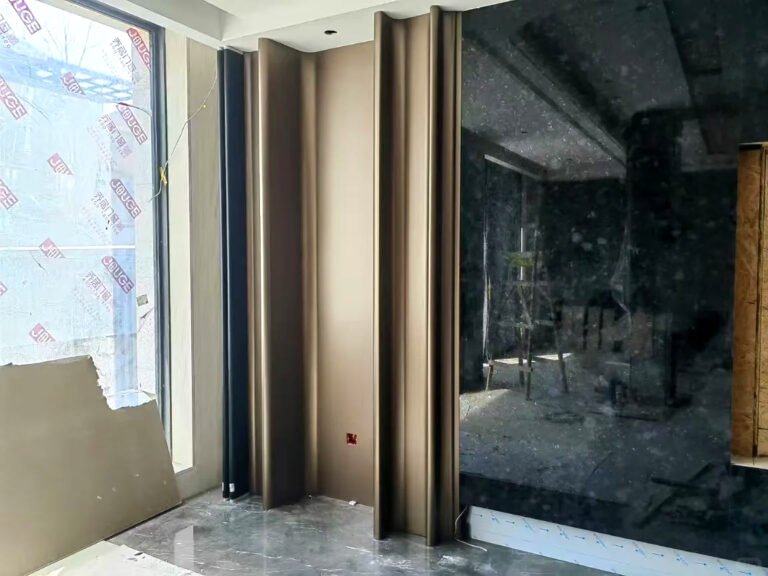
Environmental damage is prevented in this sculpture through surface treatments like polishing, brushing, or application of protective coatings, and highlights the visual elements in this piece. Layer upon layer of textures and reflective finishes will accentuate contours, cause depth, and give dimension to a piece that will interact dynamically with light and perspective. These finishing processes not only contribute to the aesthetics of the artwork, but they also enhance resistance to wear and tear.
Reducing Maintenance Requirements Through Thoughtful Material Choices
Materials naturally have characteristics such as increased durability, which, for an artist, could mean the difference between and less ongoing maintenance. Because of its inherent corrosion resistance and maintenance-free structural soundness, stainless steel allows the sculpture to maintain its shape over time, needing only the occasional cleaning or inspection to remain in its originally intended condition. In this way, the artform remains sustainable and low-maintenance while still being visually phenomenally attractive over decades of time.
Integrating Sculptures into Indoor and Outdoor Environments
Placement and placement of a sculpture within a space are of utmost importance to its effectiveness and durable endurance. Sculptures are designed to really complement their environment, while insuring that they are safe and functional. Planning truly considers scale, materials surrounding, lights, and environmental elements, enabling sculptures to maximize the possibility of getting into engagement and the beauty of a space.
Outdoor Landmark Sculptures and Public Art Installations
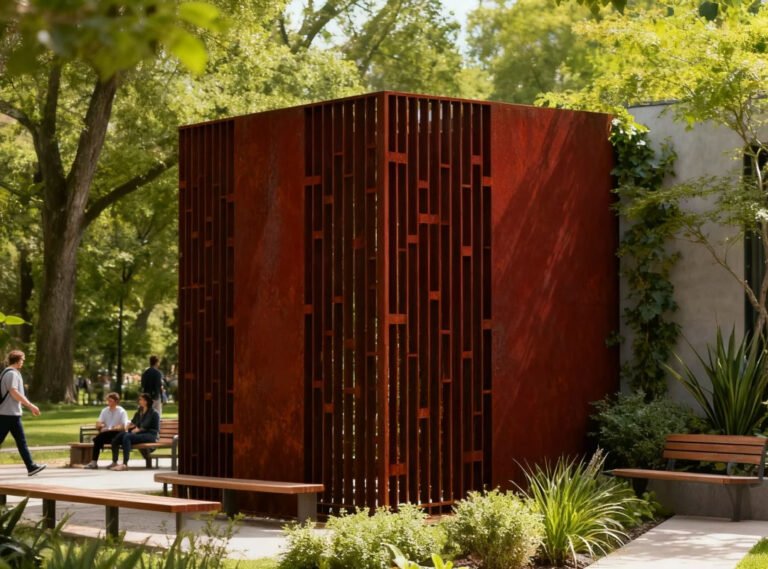
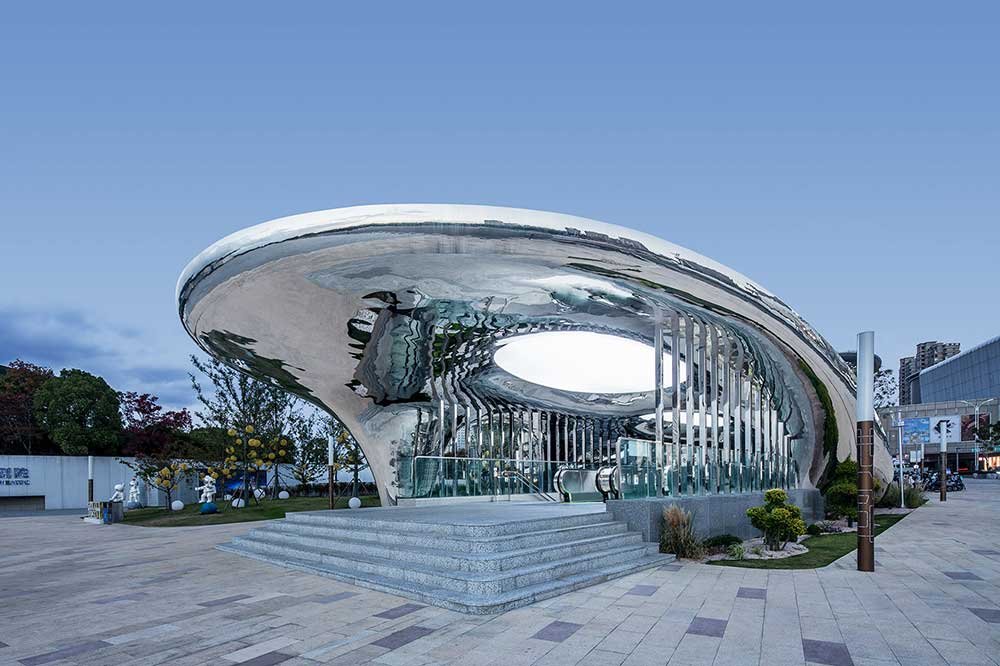
Outdoor installations will have special foundations and anchoring and supporting structures. No less need to be carried out is the design of sculptures that withstand environmental pressures like wind, rain, and temperature variations without losing visibility. For that reason, supports are purposely designed for durability but do not interfere with the artistic form, which makes it possible for sculptures to take place as symbolic icons within public spaces.
Indoor Installations Enhancing Spatial Dynamics
Indoor sculptures are of interactive nature with architectural elements and lighting and surrounding decor. This means that intelligent siting can enhance sightlines and depth formation and mirror reflection creating an immersive experience for the viewer. Indoor sculptures are well done to complement gallery spaces, lobby areas, or exhibition halls while engaging people and accentuating the entire environment’s aesthetic.
Designing Custom Forms for Site-Specific Integration
Custom sculptures are meant to be site specific according to the dimensions, light, and architectural specifics of their environment. This means that a unique size and even bespoke finishes result in the work being integrated into its surrounding world while maintaining its integrity. This method allows perfect integration and maximization of visual impact while being safe.
Conclusion
Sculptures require a careful balance of artistic vision, structural planning, and material choice. Stainless steel provides durability and visual appeal, while metal allows creative flexibility. By combining advanced fabrication, proper installation, and routine maintenance, these works remain striking and stable over time. Choosing these high-quality stainless steel sculptures ensures long-lasting beauty and reliability, providing both aesthetic and structural satisfaction for any space—explore more at JYF METAL.