
How to Install Stainless Steel Screens? A Field Guide to Professional Mounting Methods
Table of Contents
Based on JYF METAL’s over a decade of experience in engineering support, we have observed that many designers and buyers, when ordering custom partitions, often focus solely on whether the laser-cut patterns are aesthetically pleasing and whether the PVD vacuum-plated colors are uniform. However, on actual construction sites, how to install them securely, accurately, and quickly is what truly determines the success or failure of a project.
Stainless steel screens are not mere decorative pieces, and they typically serve as partitions or feature walls within architectural spaces. Because stainless steel is hard, heavy, and highly susceptible to surface damage, the cost of rework can be enormous if, once shipped from the factory to the construction site, it is discovered that the installation location does not match or the structure cannot be secured. Therefore, this guide aims to help our clients clarify the installation logic before placing an order, ensuring that every piece of art is seamlessly integrated into the architectural space.
3 Key Scenarios for Stainless Steel Screen Installation
Before discussing the structure of a screen, it is essential to determine its position within the space. This directly determines what load-bearing points we need to provide for the screen.
Scenario 1: Secured to the Wall at the Bottom and Sides (Double-Sided Fixation)
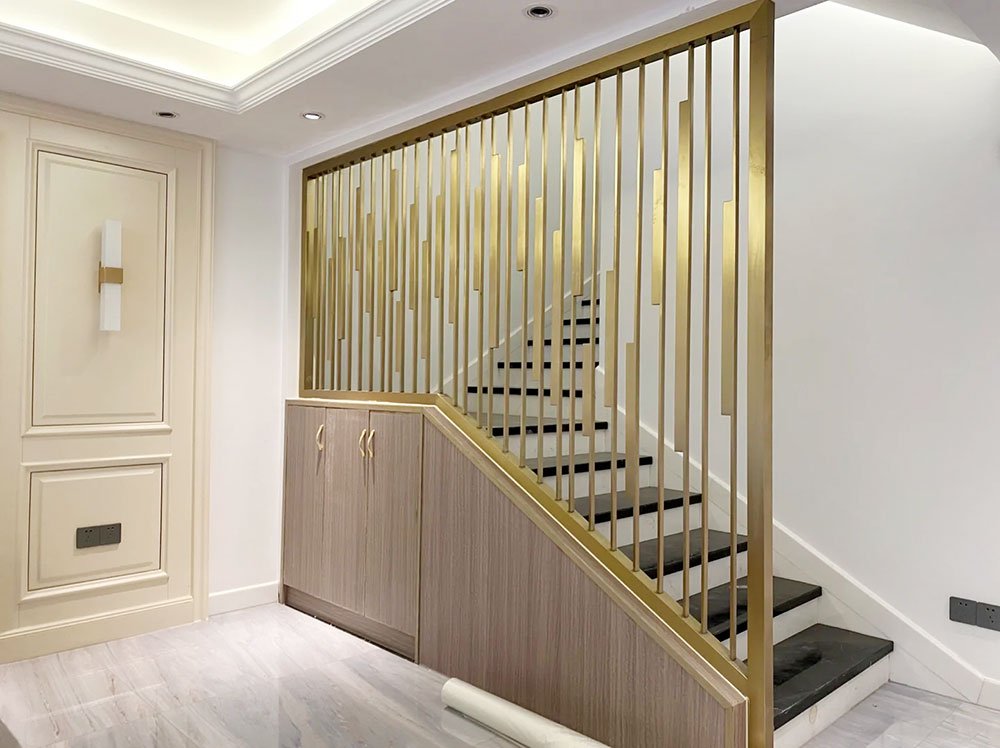
This scenario is commonly seen in entryway cabinet partitions or semi-open space dividers. One side of the screen is supported by the wall, while the bottom is supported by the floor.
- Technical Key Point:
Since the top is unsupported, the screen’s overall center of gravity shifts outward. Therefore, the strength of the bottom and side fixings must be sufficient to resist lateral thrust.
- Recommendation:
If the screen is taller than 2.4 meters, at least three fixing points should be installed along the side against the wall to prevent wobbling during long-term use.
Scenario 2: Top-to-Bottom Installation (Fixed at Both Ceiling and Floor)
This is the most stable and common installation method, where the partition rests directly against the ceiling and extends to the floor.
- Technical Key Point:
Top-to-bottom installation requires extremely precise height measurements. If the ceiling sags or the floor is uneven at the construction site, the partition may not fit properly or gaps may form.
- Recommendation:
Customers should check in advance whether there are light-gauge steel studs or reinforcing wooden battens inside the ceiling, as the weight of the screen cannot be supported by drywall alone.
Scenario 3: Single-sided wall-mounted installation (side-mounted cantilever)
This solution is typically used for decorative backdrop screens, which are hung or mounted on the wall like a painting.
- Technical Key Point:
All tension is borne by the side frame.
- Recommendation:
This structure imposes strict requirements on the wall’s load-bearing capacity, and it is generally recommended to install it on solid brick walls or steel structural support points.
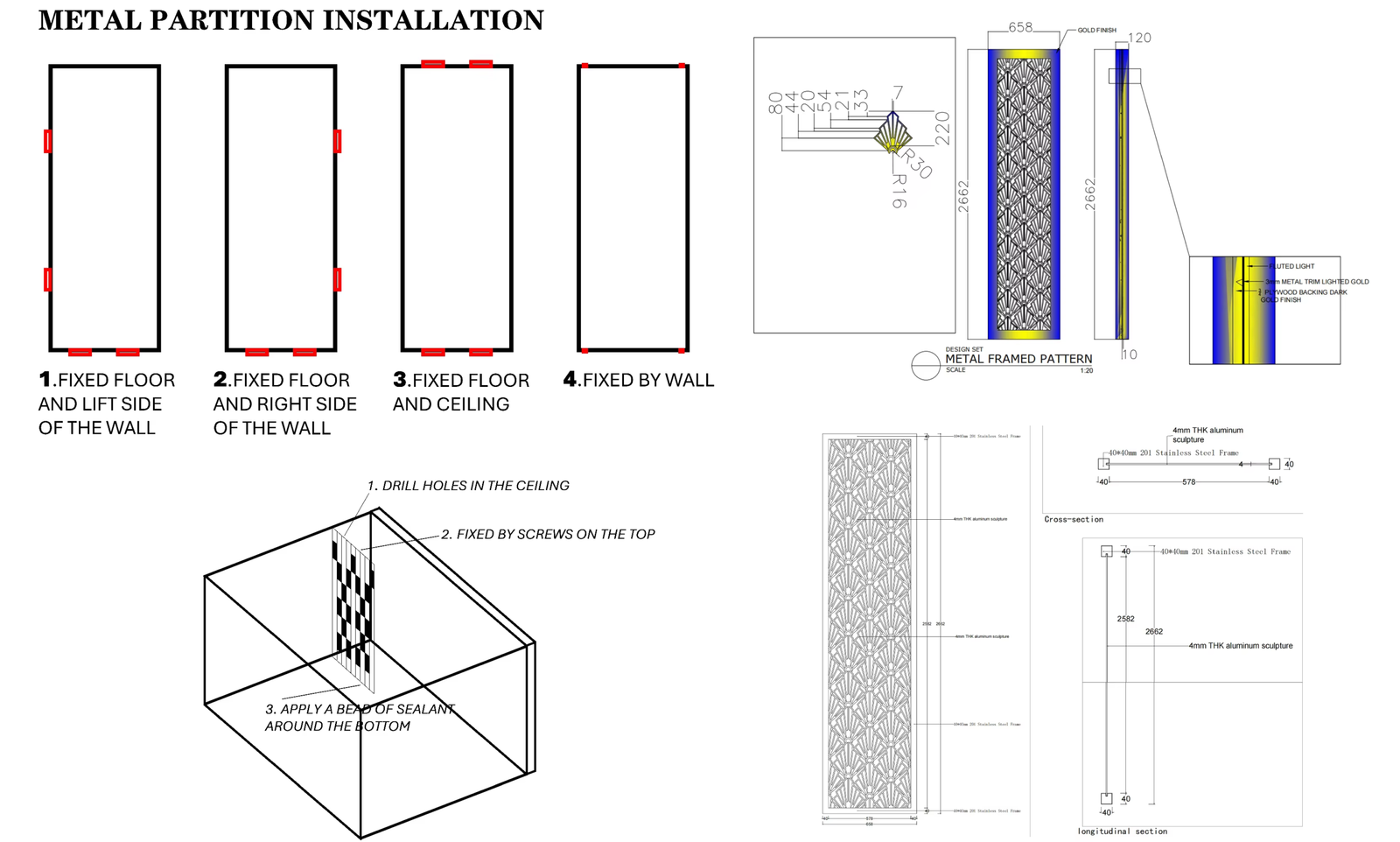
Framework Design for Stainless Steel Screens
Based on the scenarios described above, JYF METAL has developed three complementary structural solutions for the client. These solutions share a single core objective: to reduce on-site construction complexity and enhance visual appeal.
Installation Option 1: Track-Slide Installation (U-Channel/Square Tube Insertion Method)
This is our most recommended option because it achieves a “nearly seamless” visual effect.
- Manufacturing Process:
During production, the factory machines the frame into a special “grooved track” shape. We also provide matching U-channels or square tube components.
- Installation Steps:
Pre-install the Track: The installation team first secures our supplied U-channels to the designated locations on the floor, wall, or ceiling using large screws (expansion bolts) or high-strength structural silicone.
Align and Slide In: Align the slots on the stainless steel partition frame with the pre-installed track and slide it into place. This “nesting” structure automatically corrects minor installation misalignments.
Secure and Seal: After insertion, apply transparent structural silicone sealant into the gaps along the frame. This not only enhances stability but also prevents rattling caused by metal friction.
- Target Audience:
High-end commercial clients seeking ultimate aesthetics and a finish where no screw holes are visible on the surface.
Installation Option 2: Surface-Mounted Screw Holes + Matching Decorative Covers
If on-site construction conditions are complex, or if it is not possible to pre-install tracks in the substrate, surface-mounted screw holes are the most reliable option.
- Manufacturing Process:
We pre-drill countersunk screw holes at specific load-bearing points on the partition frame.
- Advantages:
The installation process allows for a high degree of flexibility, the structure is extremely sturdy, and maintenance is convenient, as the panels can be easily removed at any time.
Installation Option 3: Ceiling-Suspended Structure (Suspension Rod Installation)
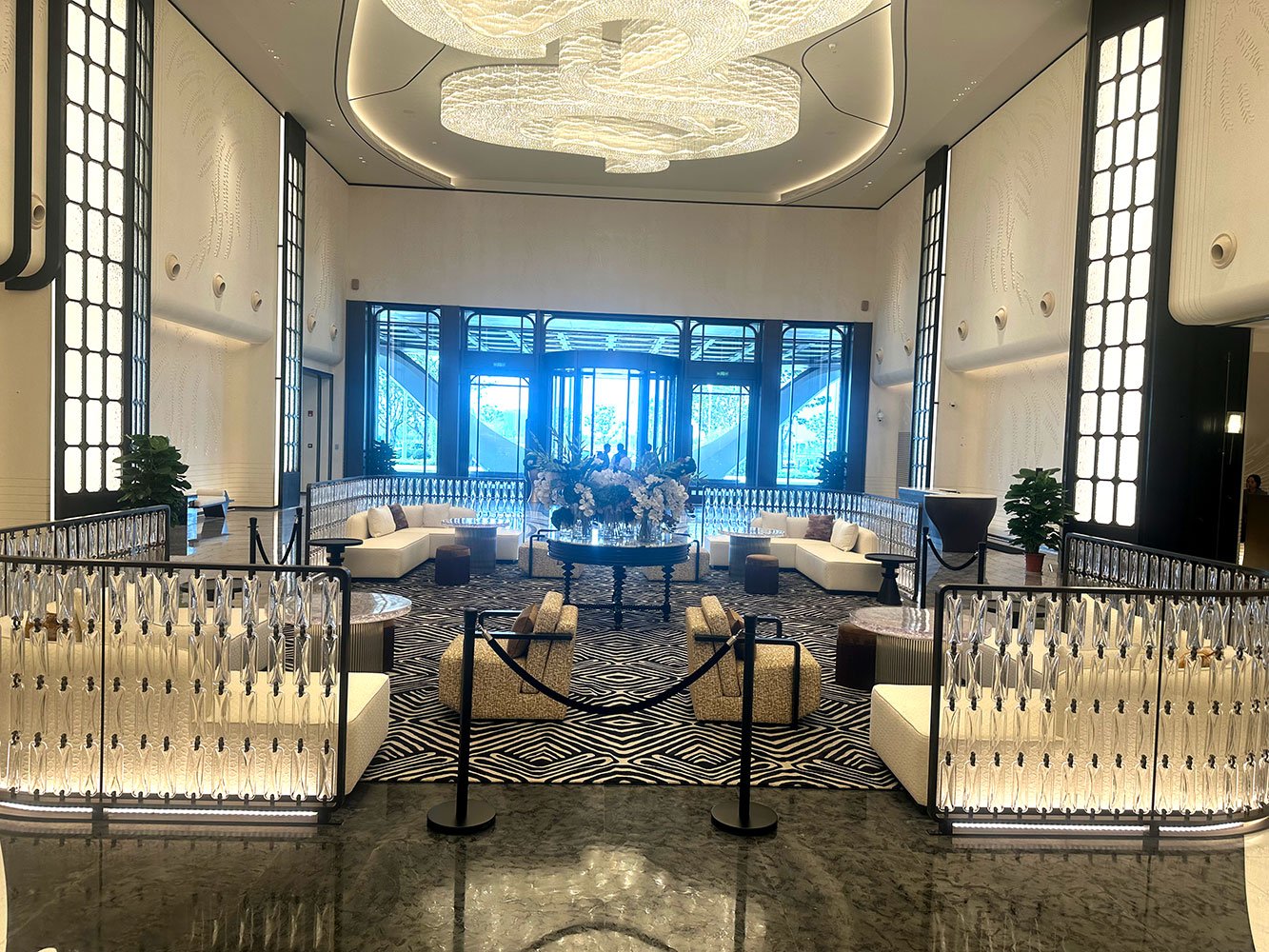
Designed for suspended screens in large shopping malls or hotel lobbies.
- Manufacturing Process:
High-strength reinforcing members and threaded holes are pre-installed inside the top frame of the screen.
- Installation Steps:
Suspension Rod Installation: First, install load-bearing rods (typically threaded rods or custom steel rods) on the ceiling structure.
Suspension Locking: Align the top of the screen with the suspension rods and secure it in place.
Decorative Covers: Specially designed decorative caps or circular trim pieces are provided to conceal the complex structural components, making the screen appear as if it “grows” directly from the ceiling.
Precautions and Installation Recommendations
This is the most practical section of the entire article; we strongly recommend that clients forward it to the on-site construction crew and cleaning team.
Verify the Substrate Type: Avoid Blind Installation
Before installation, you must determine whether the wall is made of solid brick, hollow brick, or drywall. Drywall walls must never bear a load directly! If the wall is drywall, you must require the site carpenter to install plywood or a steel frame inside. The screen has significant weight. If the substrate is unstable, the screen will settle or even tilt over time, causing gaps to widen.
The Level Is the “Eye” of Installation
Before installing the screen, you must use a laser level to project a crosshair. Even a 1-degree tilt will result in a visual deviation of several centimeters on a 3-meter-long screen. For ceiling-to-floor installations, you must first identify the vertical alignment points between the ceiling and the floor.
Choosing Silicone Sealant
You must use neutral silicone sealant. Low-quality acidic sealants will corrode the PVD coating on the stainless steel surface, causing discoloration.
Critical Warning: Strictly Avoid Contact with Acidic or Alkaline Cleaners (Core Warning)
This is the area where things most commonly go wrong during post-installation maintenance.
Prohibited Actions: Never use any cleaning solutions containing acidic or alkaline ingredients (such as heavy-duty degreasers, oxalic acid, toilet cleaners, etc.) to directly wipe the stainless steel partition.
Scope of Impact: Extreme caution must be exercised not only on the screen’s surface but also in the 3-meter radius surrounding it (e.g., floor tiles, walls) during chemical cleaning.
Consequence Warning: Splashes of acidic or alkaline liquids, or acidic fumes from evaporation, will rapidly corrode the PVD vacuum-deposited coating upon contact with the screen. This chemical reaction is irreversible and can cause discoloration, staining, or even large-scale peeling of the coating.
Repair Difficulty: Such damage cannot be repaired through simple on-site polishing or repainting. Once corrosion occurs, the only solution is typically to dismantle the screen and return it to the factory for re-surfacing; in some cases, the entire unit may need to be scrapped and remade, which is extremely costly.
Proper Post-Installation Maintenance Plan
Daily Cleaning: Simply wipe dry with a clean, soft microfiber cloth.
Stubborn Stains: For fingerprints or dirt, use a neutral detergent (such as diluted dish soap) or a specialized stainless steel care oil.
Environmental Protection: If acid washing is being performed in the surrounding area, be sure to tightly wrap the screen with plastic sheeting until the surrounding work is completely finished and the area has been thoroughly ventilated.
Conclusion
The installation of stainless steel screen partitions is a multidisciplinary art. It requires the factory to possess precision machining capabilities, the construction team to demonstrate a meticulous craftsmanship, and the sales staff to exhibit a forward-thinking service mindset.
Through this guide, we hope that every customer will gain a thorough understanding of screen installation. If you have any questions regarding specific project details, please feel free to contact our Technical Department at any time. We will provide you with one-on-one structural drawing detailing services.